Call or book
Describe the Issue
Tell us the dryer brand, the issue and your town so we can plan the right visit.

MS Appliance Repair
Honest Repairs, Right at Home
Complete Appliance Repair Services
Expert repairs, accurate diagnostics, routine maintenance, and in-home service for major home appliances.
Same-Day Service Available
All Major Brands. One Trusted Team
We service and repair major appliance brands with careful diagnosis and genuine parts when available.
LG Authorized Provider


Serving Your Area
Local technicians across Aurora, the Fox Valley, and nearby Illinois communities we serve.
Aurora HQ Coverage
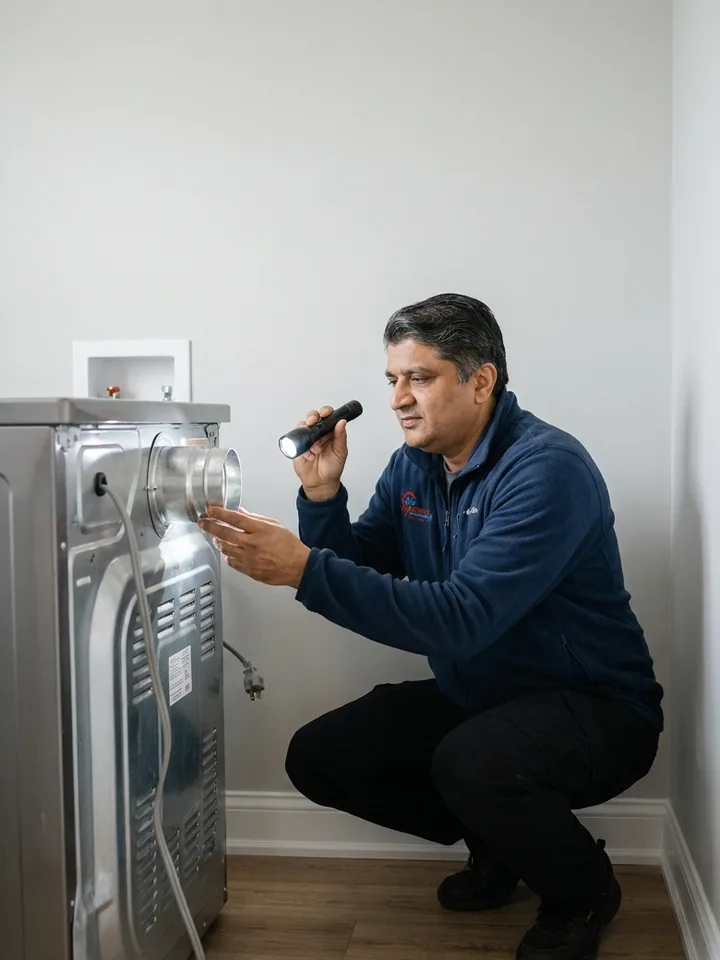
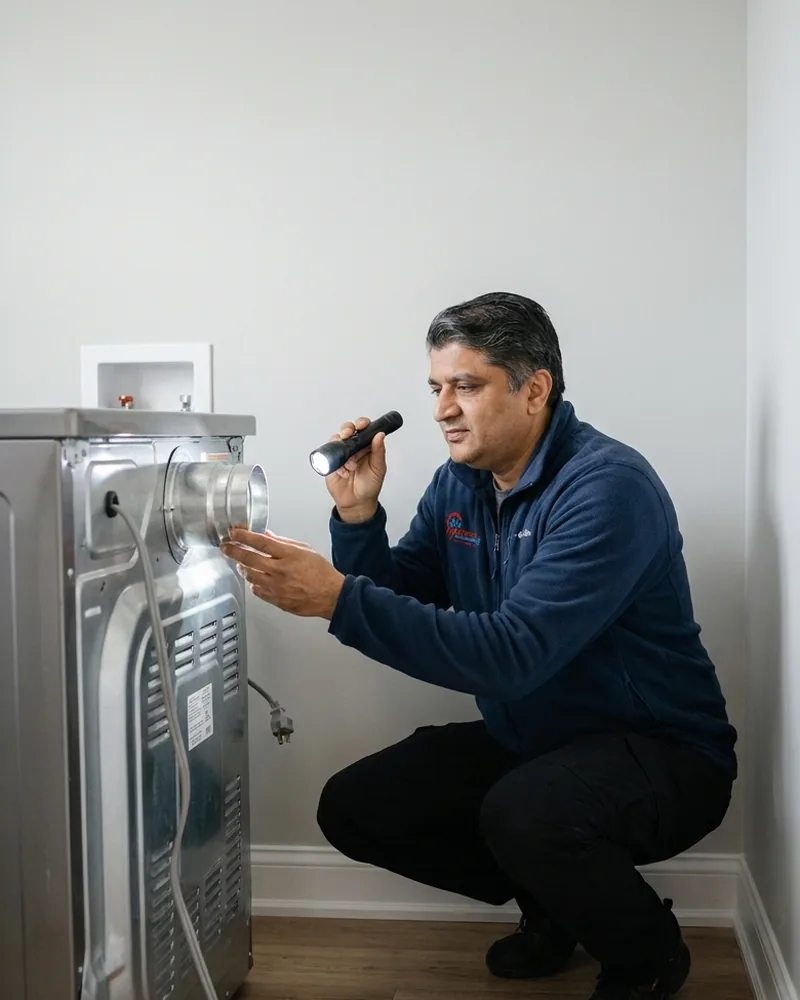
Need fast, reliable dryer repair in Aurora, IL? We fix gas and electric dryers that won't heat, dry slowly, squeal or won't start, and each visit begins with diagnosis and inspection at your dryer.
Real Google reviews, including a same-day dryer fix.
Posted on Google Aaysha KapilaTrustindex verifies that the original source of the review is Google. Excellent technician Mr.Ejaz. Very knowledgeable and helpful. He was able to come promptly and help us with the refrigerator.Posted on Google Patricia JohnsonTrustindex verifies that the original source of the review is Google. He got the job done. Where several other repair companies failed. I would recommend your company to my friends.Thank you very much.Posted on Google Brian GroteTrustindex verifies that the original source of the review is Google. Quick response. Provided me instructions on how to fix my problem in the future rather than having to pay for another service call.Posted on Google Steve ShrokaTrustindex verifies that the original source of the review is Google. Ejez, from MS Appliance Repair in Aurora, IL, was very knowledgeable about our Kenmore Elite refrigerator. He replaced the compressor and then showed us how to know if the fan was running. He always answered his phone when we called (other repairmen didn’t answer to return our voicemails).Posted on Google Jacki HTrustindex verifies that the original source of the review is Google. MS Appliance repair is a 5-star business. After 2-days of national companies scheduling a time, delaying the time and then not showing, I called MS Appliance repair and he said he could be there within a 1-hour window later that day. He had the part to fix my LG refrigerator and he fixed it immediately when other companies wouldn’t touch my fridge or told me just to buy a new refrigerator. Thank you MS Appliance - I will call you everytime for appliance repairs!Posted on Google Carlos WongTrustindex verifies that the original source of the review is Google. Ejaz was very professional and came to my house twice to replace the part that was damaged in my refrigerator. I would recommend his company. 07/29/26 UPDATE: I am having the same water leak in my refrigerator that this technician was supposed to have fixed a couple of months ago. The ice maker is also not making ice again. This technician was sent by a home warranty company, but I have the same issues with the fridge after just two months. I had to contact the home warranty and request a different service provider and pay the deductible again.Posted on Google Abby SchulerTrustindex verifies that the original source of the review is Google. Same day service and after a few minutes knew what the problem was. Had parts on the truck. Great price. Will use them again.
From a drying machine that tumbles without drying to one that won't start at all, we find the real fault, not a guess.
Electric: heating element, thermal fuse or thermostats. Gas: igniter, flame sensor or valve coils. We test each one.
Usually a blocked vent or coated sensor. Soaking-wet loads? Have our washing machine repair technicians check the washer.
We check the door switch, start switch, thermal fuse, belt switch and drive motor, plus both breakers.
Most often a broken drive belt or a worn idler pulley. We check the motor too before fitting a new belt.
Worn drum rollers, drum glides, an idler pulley or a rear bearing. Where the noise starts tells us where to look.
Stop using it. Lint near the heat source, a blocked exhaust or a failed cycling thermostat are the usual causes.
Codes point to a system, not a part. LG d80 to d95 codes flag a clogged duct, so we test before replacing anything.


A broken dryer quickly turns into damp clothes and longer laundry days. Book an in-home check.
Dryer appliance repair for 11 brands, from premium laundry units to everyday household dryers.
Browse all brands
LG-authorized. No heat, long dry times and sensor faults, plus FlowSense duct alerts.
View brand
We diagnose HC and tS codes and dryers that are not heating, not drying or shutting off.
View brand
No heat, squeaking sounds, poor drum movement, timer issues and airflow drying problems.
View brand
No heat, damp clothes after a cycle, squeaking sounds and drums that stop turning.
View brand
Heating failures, loud drums and airflow problems that slow every load down.
View brand
Weak heat, noisy operation, drum trouble and electrical or control-related dryer faults.
View brand
Heating problems, squeaking, drum issues and dryers that stop drying properly.
View brand
Compact 24-inch condensation dryers that need no duct, serviced in place.
View brand
Heat failure, poor airflow, control faults and drum or motor problems fixed.
View brand
Amana dryers not heating, not drying or making unusual noises, and common service needs.
View brand
Miele heat-pump dryers: heating failure, cycle issues, drum problems and control faults.
View brand
Our clothes dryer repair service: quick scheduling, accurate diagnosis and safe, dependable repairs.
More than 5,000 customers served and a 4.9 Google rating from 199+ reviews.
We verify the failed system or component before recommending dryer parts.
You receive the finding, proposed work, and practical repair-or-replace context before approval.
Our service is built for household dryer needs in Aurora and nearby communities.
Five clear steps cover dryer service and repair, and you approve the work before we start.

Call or book
Tell us the dryer brand, the issue and your town so we can plan the right visit.
Choose a time
Choose a preferred time window, same day if available, and we confirm your appointment.
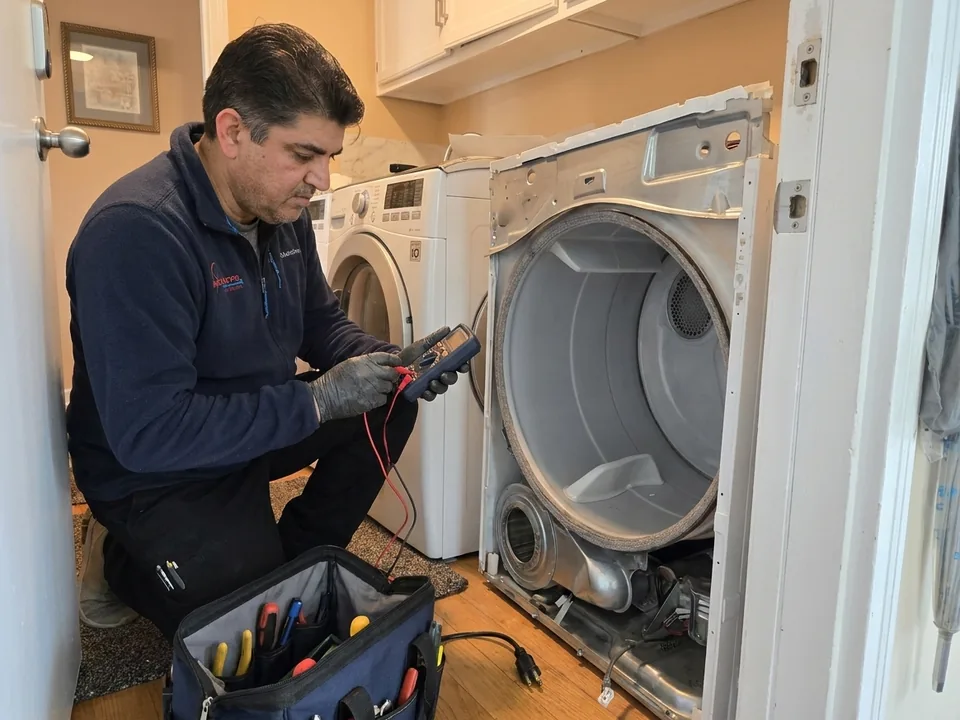
At your home
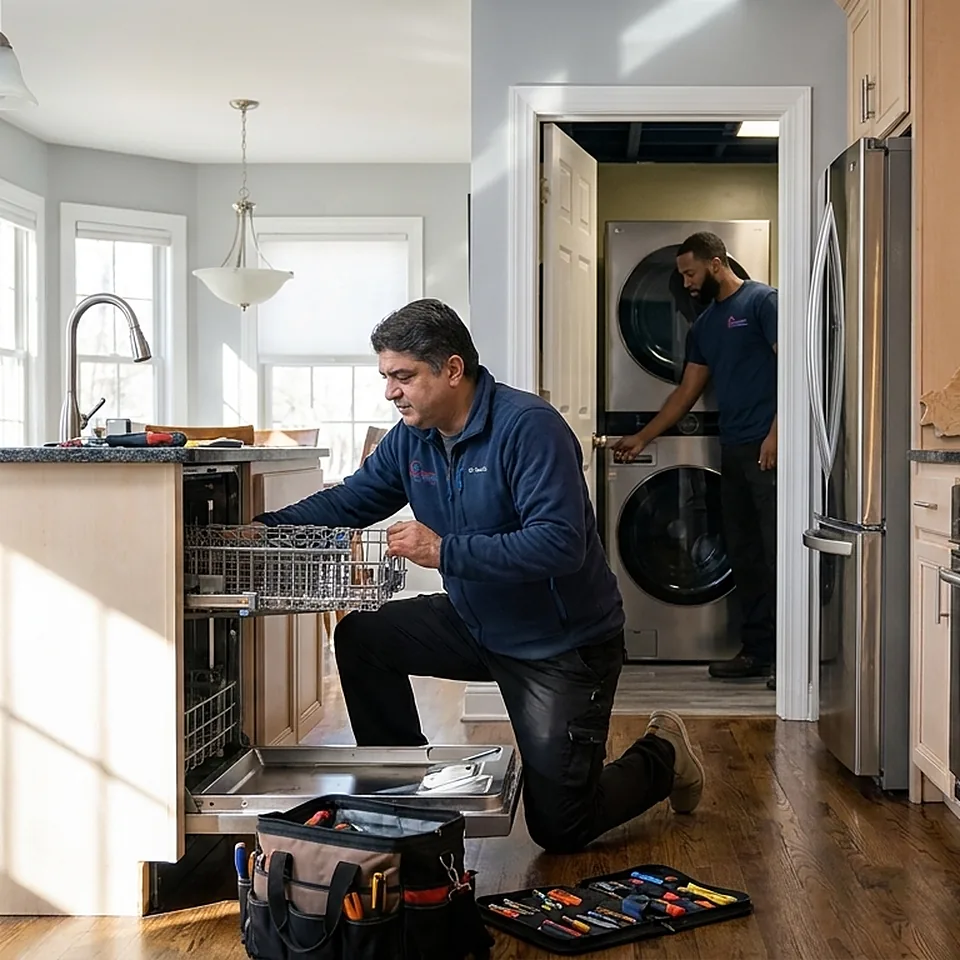
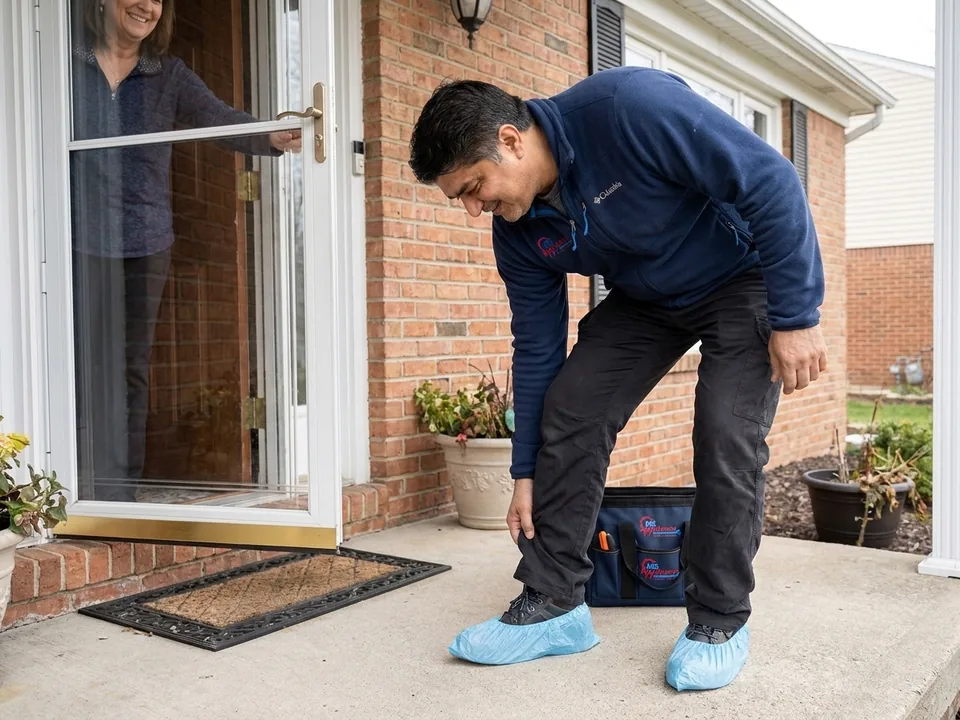
We show up prepared with tools and common parts, work cleanly and keep you informed.
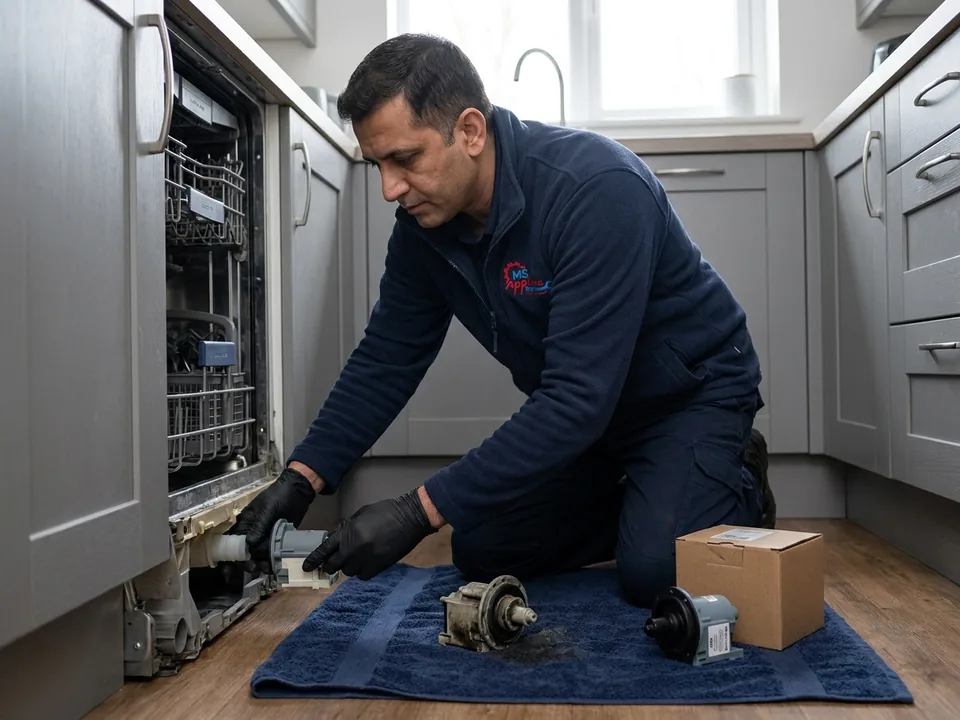
Find the fault
We identify the real fault before recommending any repair, with a written estimate.
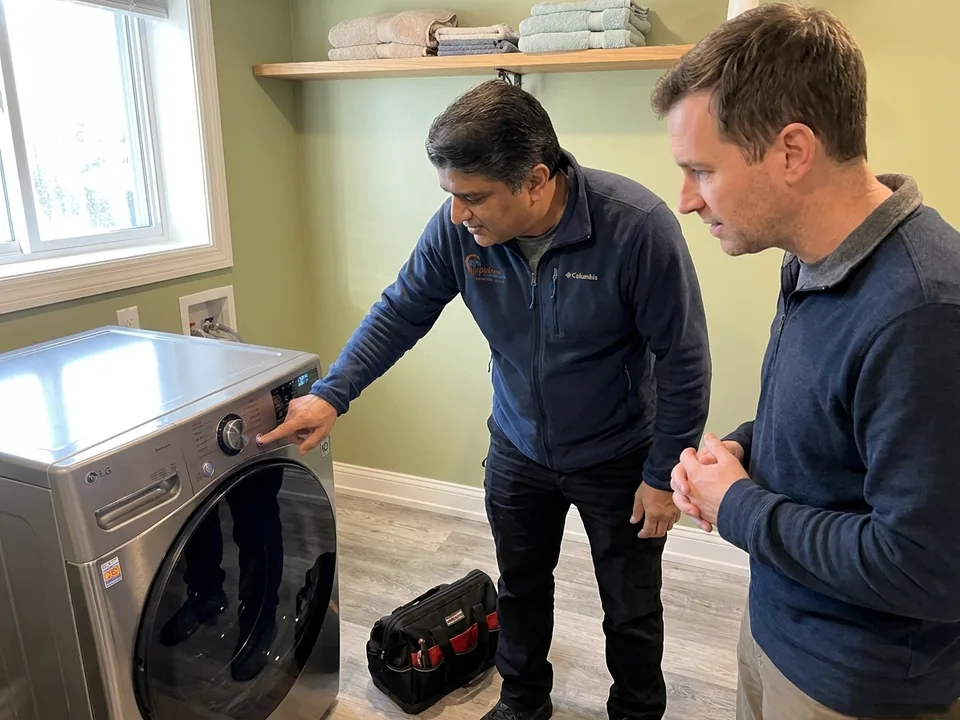
Fix and verify
We finish the approved repair, test a full cycle and share aftercare tips.
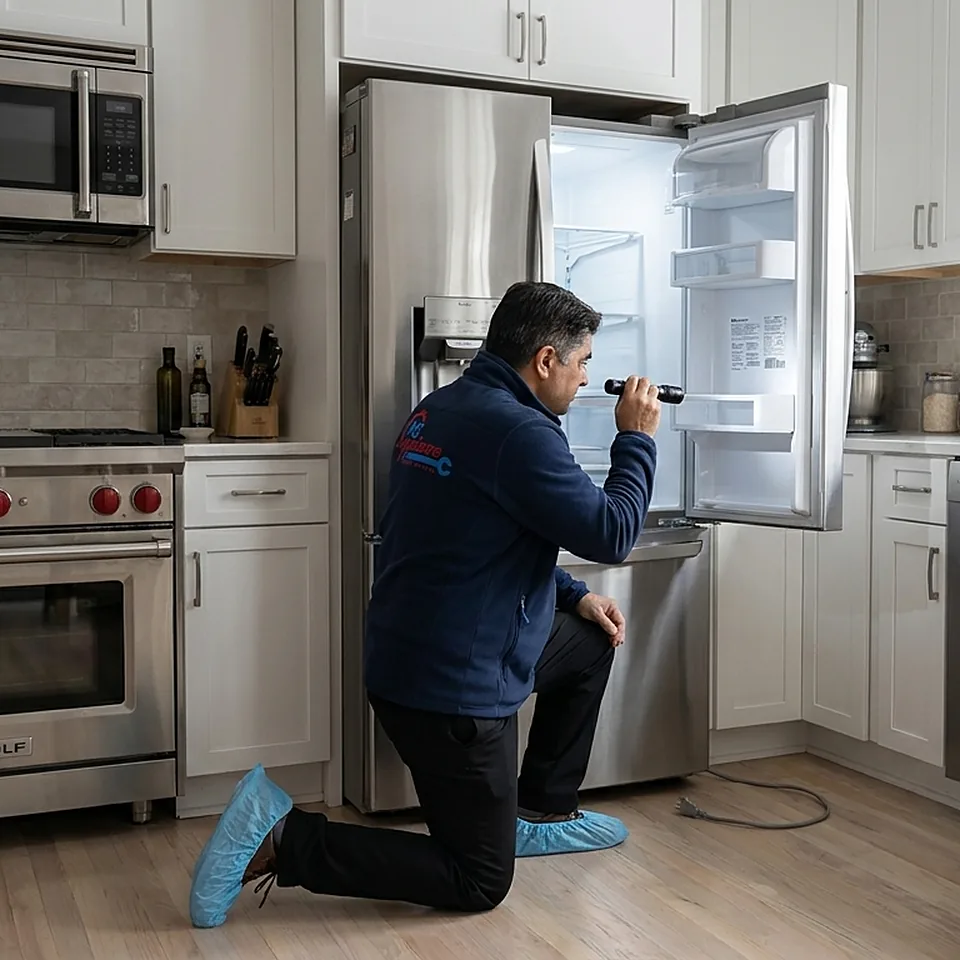
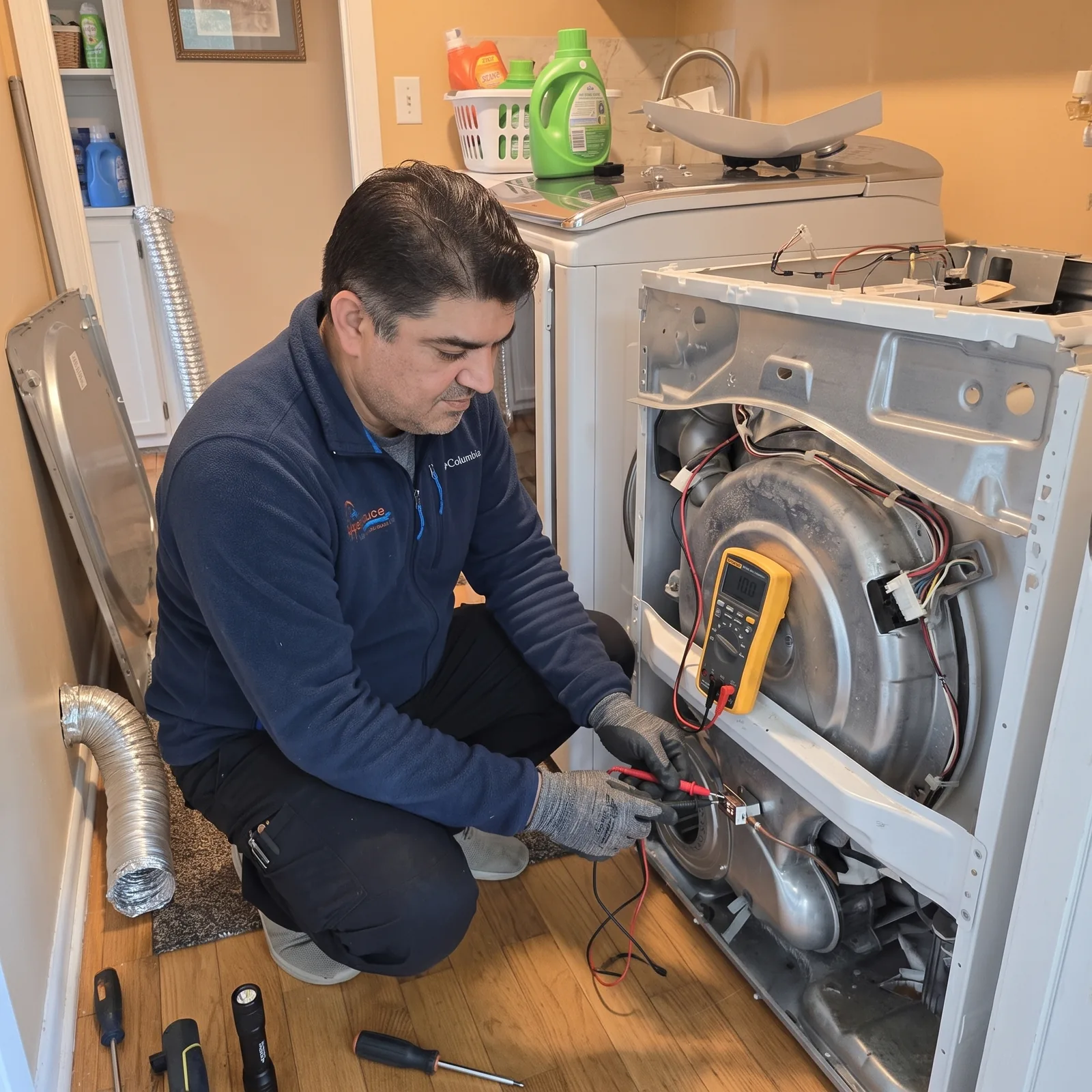
A faulty appliance can lead to wasted time, higher energy use and repeat breakdowns if the real issue is not found early. So we test instead of guessing. The main diagnostic tool is a meter on switches, sensors, motors and elements, backed by the maker's own test mode and any stored code.
We confirm the fault before recommending a part or a replacement. You get a clear explanation and a written estimate before any repair begins.
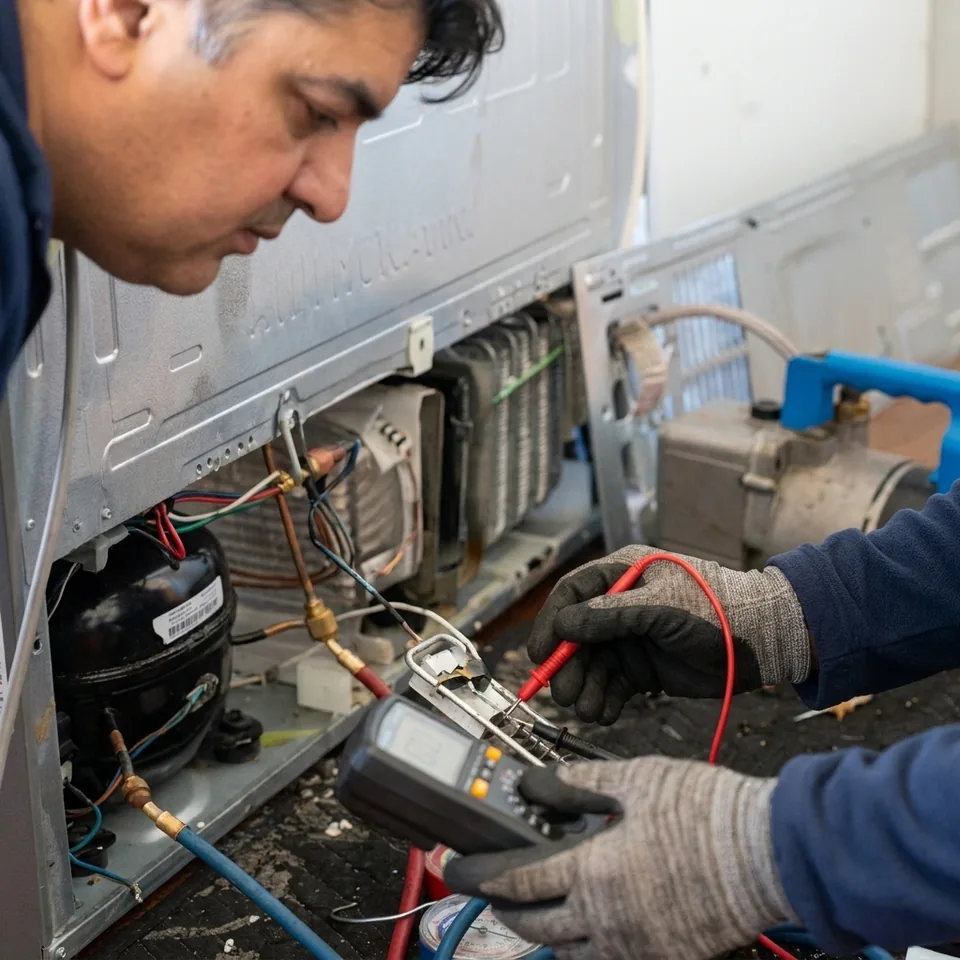
Some dryer repair companies waive the service call fee and then push a part you may not need. We don't. We charge a fair, upfront service call fee that depends on your location and appliance, confirmed before we come. Then we inspect the dryer properly, give an honest assessment and recommend a part or a replacement only when it is actually needed.
We don't guess. We inspect the dryer, find the real fault and tell you plainly whether repair or replacement is better value.
We look at the dryer's overall condition, how heavily it is used, whether parts are easy to source and its age.
Book a diagnosis
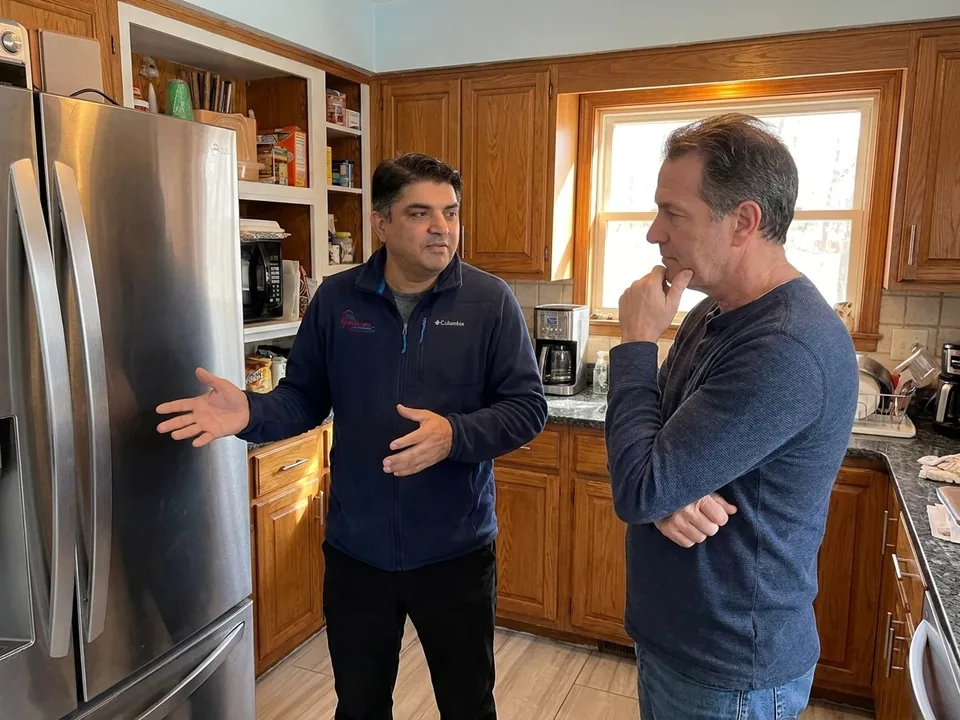
Our parts replacement service fits OEM parts whenever available, for repairs that hold up, not just one load.
See our maintenance service
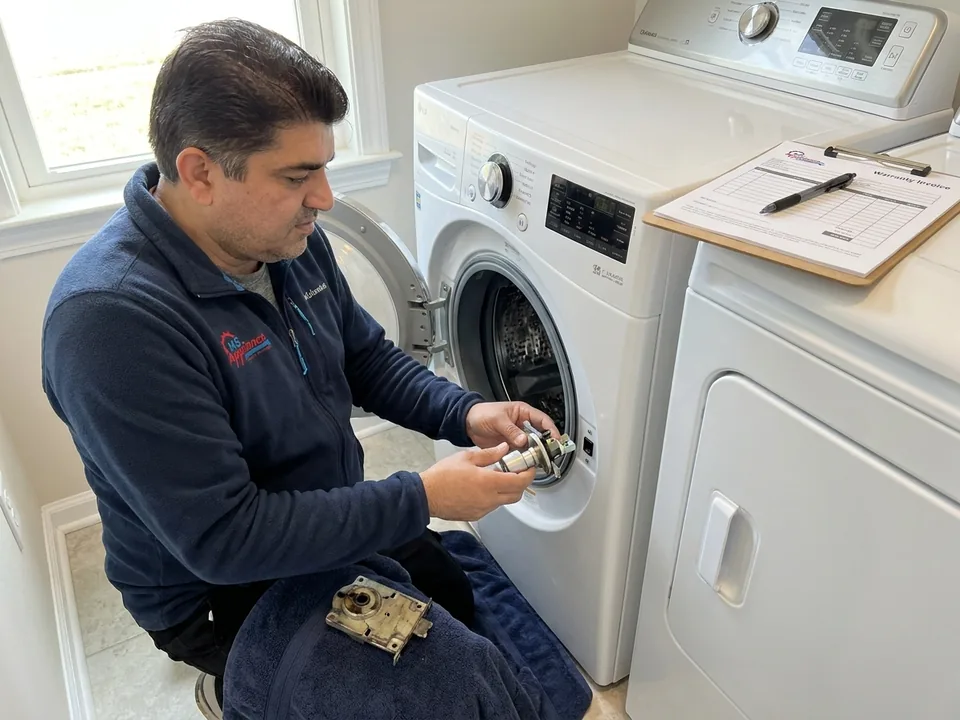
Before we fix your dryer, three safe checks can solve a simple problem or help us bring the right part.
Electric dryers use two breakers. If one trips, the drum turns but gives no heat. Reset it once.
On gas dryers the valve handle runs parallel to the pipe when open. Air Only cycles add no heat.
Clean the lint screen, then check that the outside vent hood flap opens while the dryer runs.
Based in Aurora, we cover 30+ cities across DuPage, Kane, Kendall, Will and nearby counties.
Call (773) 574-8629 or use the form above. We confirm your arrival window when you book.
From our Aurora base, the same team behind our appliance repair in Aurora, IL service covers nearby cities 7 days a week, with same-day service available. We confirm your arrival window when you book. Same-day service is available in every city we serve, including the farther ones. Need dryer repair in your area but don't see your town? We cover 30+ cities in northern Illinois; call (773) 574-8629 to confirm.
Aurora → Aurora
Local Aurora drive estimate. Click another city to compare.
Aurora areaNo heat, slow drying, gas safety, error codes, cost and what to expect from our visit. Start with our guide to a dryer that runs without heat.
The most common dryer complaint is "runs but does not heat" or "takes forever to dry." Thermal fuse, heating element and thermostat failures are very common causes of no-heat problems. On an electric dryer we test the element, the thermal fuse, the high-limit and cycling thermostats and the power reaching the heater. On a gas dryer we watch the igniter: if it never glows, the igniter, a fuse or the flame sensor is the suspect; if it glows and no flame follows, the valve coils usually are. Our appliance diagnosis in Aurora, IL finds the failed part before anything is ordered, and we check the airflow too, because a blocked vent is often why that part failed.
Weak heat is a different fault from no heat, and it usually points to airflow or to a part that switches the heat off too early. A clogged lint screen or a crushed duct traps hot air, so the high-limit thermostat keeps cutting the heat and the load comes out warm but damp. A worn cycling thermostat can do the same even with good airflow. On gas dryers, valve coils that weaken as they warm up let the flame light, go out and struggle to relight. We measure the exhaust temperature, check the airflow and test those parts in that order. Check the setting as well: a low or delicate heat choice on a full load of towels feels like a weak dryer.
Start with the checks that need no tools. Make sure you picked a heated cycle, because Air Only or Air Fluff adds no heat. An electric dryer needs 240 volts on two breakers; if one has tripped, the drum can turn while the element stays cold, so switch that breaker fully off and back on once. On a gas dryer, the supply valve handle should run parallel to the pipe. Clean the lint screen and make sure the outside vent flap opens while the dryer runs. If there is still no heat, stop there and unplug the dryer. Testing a fuse or an element means opening the cabinet next to live wiring, and on gas models next to the burner, so that part is our job.
With a new dryer, check the simple things first. On gas models, the shutoff valve behind the dryer is sometimes left closed after delivery; its handle runs parallel to the pipe when it is open. On electric models, the heat needs both legs of the 240-volt circuit, so one tripped breaker leaves the drum turning with no heat. Also confirm the cycle is a heated one and not Air Only. If those are fine, a heating fault on a dryer that new is normally a warranty matter, so call the maker's support line first and keep your receipt handy. If your new dryer is an LG, we are LG-authorized and can do the in-warranty repair ourselves.
Only very slowly. Without heat, the dryer just tumbles clothes in room-temperature air, which is what the Air Only or Air Fluff setting does on purpose. Light items may dry after hours, but towels and jeans stay damp, and damp loads left in the drum start to smell. Running it that way also wears the belt, rollers and motor for nothing. No heat on a heated cycle means a part has failed or power or gas isn't reaching the heater, so it's worth finding out which. Some of those parts exist to protect you: a thermal fuse blows because something overheated, often lint in the vent, and that cause needs fixing along with the fuse.
Yes, on dryers with a mechanical dial timer. The timer's contacts switch the heat circuit on and off during the cycle, and worn or burnt contacts can leave the drum turning with no heat on some settings, or stop the timer from advancing. On electronic models the control board does that job, and a failed heater relay on the board gives the same symptom. It is rarely our first suspect, though. We test the thermal fuse, the element or igniter and the thermostats first, because they fail far more often, and we only replace a timer or a board after the meter shows it is the part cutting the heat. Timers and boards cost more, so guessing is expensive.
An electric dryer normally has one heating element: a coil of resistance wire in a metal housing inside the cabinet. Gas dryers have no element at all; a burner lit by an igniter makes the heat, and heat pump models use a small heat pump instead. An element has no set lifespan. How long it lasts depends mostly on airflow, and the ones we replace early usually worked behind a clogged vent, because trapped heat makes the coil run hotter and cycle harder until it breaks. A broken coil can't be spliced, so the element is replaced, and we check the thermostats and the vent at the same time so the new one lasts. With the right element on the van, it is usually a one-visit repair.
Check the breaker and that the door closes firmly. Past that, it's usually the door switch, the start switch, a blown thermal fuse, a broken belt switch or the drive motor. On many dryers the thermal fuse cuts the motor as well as the heat, so a dryer that goes completely dead after running hot often points to a blocked vent. A dryer that hums but won't turn usually has a motor or belt problem, and one with a lit display that won't start may be showing a door code. If the breaker trips even with the dryer unplugged, call an electrician: that's a wiring fault, not the dryer. We test each switch and the fuse with a meter instead of swapping parts until something works.
A dryer that quits mid-load has usually protected itself. The motor has a thermal overload that shuts it off when it runs too hot, often because lint or a heavy, tangled load makes it work harder, and on many models a blown thermal fuse stops the whole dryer. A loose wire at the terminal block, a failing door switch or a control fault can also cut a cycle short. Let it cool, clean the lint screen and try a smaller load once. If it stops again, call us. A common call for us is a dryer that simply stopped with wet clothes inside, and when the cause is a fuse or a switch, it is often running again within minutes of finding the fault, which saves a trip to the laundromat.
Yes. A broken belt is replaced, never patched, and it is one of the more common dryer repairs we do. The signs are easy to spot: the motor hums or runs, but the drum stays still, or it spins freely by hand with no resistance. On many dryers a belt switch then stops the motor too, so it can look like a dryer that won't start. Belts usually snap after years of wear, or because a seized roller or idler pulley made them slip and fray, so we check the rollers, the pulley and the drum glides before fitting the new belt. On most dryers the job means taking off the front or top panel, and the belt often comes from the van, so it's usually one visit.
Most noises come from the parts that carry the drum: worn rollers, drum glides, the idler pulley, the belt or a rear bearing. A squeal often means a pulley or roller, a thump a flat-spotted roller, and grinding a bearing. We confirm it on site. A rhythmic thump can also be shoes or a blanket balling up, so try an empty run first. A scraping or rattling sound is sometimes a coin, a zipper pull or a bra wire caught at the drum seal. Don't let a squeal run for weeks: a seized roller or pulley can wear through the belt, and a failing bearing lets the drum sag. We usually replace worn rollers in pairs, so the drum runs evenly again.
If the dryer heats but the cycle drags on, the usual cause is restricted airflow: a full lint screen, a crushed duct or a blocked hood. Overloading, a coated moisture sensor and soaking-wet loads from the washer do the same. We treat long drying as a system problem, not a part swap. A few checks help: wash the lint screen in warm soapy water if dryer sheets have left a film on it, wipe the two metal sensor bars inside the drum, and feel the air at the outside hood while the dryer runs. Maytag's product help says that air should move at least as hard as a hair dryer on high. If clothes come out of the washer dripping, the washer isn't spinning properly.
Yes, it can. We regularly see clogged or restricted venting cause dryers to overheat, shut down heat or dry poorly. Trapped heat makes the high-limit thermostat keep cutting the heat, and it can blow the thermal fuse, a one-time safety part that must be replaced. Replacing that fuse without checking airflow invites a repeat. A clogged vent is also a fire risk: the U.S. Fire Administration lists failure to clean as the leading factor in home clothes dryer fires, at 31% of those fires. We check airflow at the dryer and tell you if the restriction is in the wall or roof run, so you can have the vent cleaned.
It depends where the problem is. Inside the dryer and right behind it, we do: with the cabinet open, we clear the lint that builds up around the drum, heater and blower, and we check that the short duct behind the dryer isn't crushed or kinked. We also measure the airflow, so we can tell you whether the restriction is in the dryer or further along. The duct run inside your walls or up to the roof is a job for a dryer vent cleaning company, because it needs their brushes and roof access. We tell you plainly when that is what you need, rather than fitting parts the vent would only burn out again. Once the run is clean, a dryer that kept cutting out often heats normally.
Only if it was built to. Condenser dryers, heat pump dryers and all-in-one washer-dryer combos are ventless: they pull the moisture out of the air and send it down a drain or into a water container, so they need no duct to the outside. Many compact Bosch and Miele dryers work this way, and we repair them. A standard vented dryer is different. Running it with no duct, or venting it into the room, blows lint and moist air into your home, and on a gas dryer it also releases combustion gases indoors, so never do it. When a ventless dryer takes too long, the usual culprit is a clogged condenser, lint filter or drain, which we check first.
Clean the lint screen before or after every load, as the National Fire Protection Association advises, and have the vent pipe cleaned about once a year, or sooner if drying times creep up. In northern Illinois winters, also check that snow hasn't covered the outside vent flap. Dryer servicing has no fixed interval, but a check every year or two suits a busy household, and right away if it gets noisier or slower. A seasonal tune-up visit covers the lint inside the cabinet, the rollers, belt and idler, the door seal and a heat test. Several of our Google reviews mention the lint we clear from inside the dryer while it's open.
Yes, both. On gas models we test the igniter, flame sensor, gas valve coils and burner. When needed, we safely disconnect and reconnect the gas line as part of the repair, for example to slide the dryer out or replace the valve. Electric dryers are often worth fixing too, because many common failures, such as heating elements, thermal fuses, belts, rollers, switches and thermostats, are repairable and don't automatically justify replacement. The gas and electric versions of a model share most of their parts, so drum, belt and motor repairs are the same job; only the heat source differs. Tell us which one you have when you book, so we bring the right parts.
A gas dryer lights its burner in a set order: the igniter glows, the flame sensor passes power to the gas valve coils once the igniter is hot enough, the valve opens and the flame lights. Where that chain breaks tells us the part. If the igniter never glows, we test the igniter, the thermal fuse, the flame sensor and the high-limit thermostat. If it glows but no flame follows, or the flame lights and then drops out after a load or two, the valve coils are the usual fault, and they are a common repair. Before you call, check that the supply valve behind the dryer is fully open. A gas dryer also needs its 120-volt plug, so a tripped outlet stops it too.
Don't look for the leak yourself, and don't touch anything that could spark: light switches, the dryer's controls, a phone or a plug. Leave the home, then call 911 and Nicor Gas from outside (Peoples Gas in Chicago). Aurora homes get their natural gas from Nicor Gas, and the utility's crew finds the leak and makes the line safe. Stay out until they say you can go back in. Once they have, call us to repair the dryer if it was the source: we test the gas valve and the burner and check the connection behind the dryer before we light it again. Never run a dryer that smells of gas just to finish a load.
Stop the dryer, take the clothes out and let it cool with the door open. If you see smoke or flames, get everyone out and call 911. A burning smell usually means lint has collected near the heater or burner, the exhaust is blocked, or a cycling thermostat has failed and let the dryer overheat. A hot cabinet or clothes too hot to touch point the same way. A smell of melting plastic can also come from an overheated wire connection at the terminal block, which needs attention before the next load. Don't restart the dryer until the cause is found. We open the cabinet, clear the lint, test the thermostats and the thermal fuse, and check the airflow before it goes back into use.
For basic maintenance, yes. Cleaning the lint screen, checking the outside vent hood for blockage and unplugging the dryer before inspection are sensible first steps. But for real repair work involving heat, electrical parts, gas components, motors or internal wiring, the answer is usually no. Dryers combine high heat, moving parts, electrical systems and sometimes gas, which means a DIY mistake can create shock, overheating or fire-risk conditions. Dryer manuals tell owners not to repair or service the unit beyond the user-maintenance steps they list. We recommend that homeowners handle routine lint and airflow upkeep, then call a technician for diagnosis and internal repair. That protects both your safety and the appliance.
A code tells you which system tripped, not which part failed, and many codes point at airflow or power rather than a broken part. LG's d80, d90 and d95 mean the exhaust duct is about 80, 90 or 95% blocked; Whirlpool and Maytag show AF or Check Vent for the same problem; and Samsung's HC means the dryer is getting too hot, usually from lint. Door codes such as dE on LG and Samsung mean the dryer doesn't sense the door as closed. Note the code, clean the lint screen and check the vent flap, then switch the dryer off at the breaker for a minute. If the code comes back, we read it with the model's service data and test the circuit it points to before replacing anything.
Kenmore dryers were built for the brand by other manufacturers, so the first step is the model number on the tag inside the door. A number starting 110 means a Whirlpool-built dryer, and 417 means Frigidaire built it. That tells us which thermal fuse, element, thermostats or gas valve coils fit your dryer. On the Whirlpool-built models, a blown thermal fuse also stops the motor, so no heat can turn into no start. The checks are the same as on any dryer: a heated cycle, both breakers on electric models, the gas valve open on gas models, and a clear lint screen and vent. Our Kenmore appliance service covers older Kenmore dryers as long as parts are still made.
Industry estimates put the average at about 13 years. From our service perspective, lifespan depends heavily on lint management, vent airflow, load habits and whether small problems were repaired early. In practice, brand matters, but model, venting and maintenance matter just as much. We see great dryers fail early because of clogged vents and neglected lint systems, and we see average models last longer because they were maintained properly. A well-maintained dryer can justify repair at 6, 7 or even 9 years old if the rest of the machine is still solid.
For a trained technician, most dryers are among the simpler appliances to fix. A standard vented dryer has no refrigerant or water system, the parts that fail are few and well known, and on most models the front or top panel comes off to reach the drum, belt, rollers and heater. What makes a dryer job harder is access and electronics: a stacked unit or a dryer in a tight closet has to be moved safely, gas models need the gas line handled with care, and newer control boards need proper testing rather than guesswork. So most dryers can be fixed, and many repairs finish in a single visit at your home. The hard part is finding the real cause behind a blown fuse.
We don't sell dryers, so we have no brand to push, and we won't name one make as the answer for everyone. What we tell customers is what makes a dryer easy to live with and to repair. Match gas or electric to the hookup you already have. Choose a model whose parts are widely stocked, since a common element or belt is quick to get. Simple controls tend to outlast complicated ones, and extras like steam add parts that can fail. Keep the vent run short and straight, because airflow decides drying time more than the badge does. If space is tight, a stacked pair or a ventless model can work, and we repair all major brands of both.
Call us at (773) 574-8629 or book online, and there's nowhere to take it: we repair dryers in your home, where they are connected and vented, so we can test them under real conditions. Hauling a dryer to a shop means disconnecting the power, the gas and the duct, and the fault often depends on your venting anyway. When you call, you reach owner Ejaz Haq's own team, not a call center or a referral line, and the dryer repairman who arrives works for us. We work in homes only, 7 days a week. If your dryer is still under the maker's warranty, call the maker first; for an LG, that can still be us.
Look at who actually comes to your home, whether they work weekends, and whether the warranty covers labor as well as parts, in writing. Ask how the service call fee works before you book, and for gas dryers, ask about gas experience. A good dryer technician also checks your airflow, not just the failed part, and tells you when the vent caused the problem. Then read real Google reviews from people nearby. We are owner-led, open 7 days including Sundays, and offer a 90-day limited parts and labor warranty on qualifying repairs, with a 4.9-star Google rating from 199+ reviews.
Drying machine repair in Aurora covers residential gas and electric dryers, including front-load dryers on pedestals, washer and dryer pairs in laundry closets, and compact 24-inch and ventless models from Bosch and Miele. We also repair all-in-one washer-dryer combos, which wash and dry in the same drum and dry without a vent, using a condenser or a heat pump. Drying faults on a combo often trace to the condenser, a lint trap or the drain rather than a heater, so we test those first. We repair all major brands, from LG and Samsung to Whirlpool, GE and Electrolux. We work in homes only, not in businesses.
Yes. We are LG-authorized, so we handle in-warranty LG dryer repairs as well as out-of-warranty ones. You can call us directly, and we take care of the the covered repair. A typical warranty job is an LG dryer or WashTower that stops heating or shows a code: we diagnose it, order the covered part by model and serial number, and come back to fit it as soon as it arrives. Have your proof of purchase ready when you call. If the dryer turns out to be outside LG's coverage, we tell you before any work starts and give you a written estimate instead, so the decision stays yours.
Most of the time, repair wins. We usually recommend repair when the dryer has a specific, isolated fault, such as a heating element, thermal fuse, belt, roller, switch or thermostat, and the machine is still within its normal service life. Those parts cost far less than a new dryer, and the drum, cabinet and motor usually have years left. The 50/50 idea is a fair filter: once a repair costs about half the price of a comparable new dryer and the dryer is past the middle of its life, replacing starts to look smarter. We use it as a starting point, not the final answer. Our advice is simple: repair when the machine still has life left and the fix is targeted; replace when the economics stop making sense.
Very often, yes. A 7-year-old dryer is usually still inside its normal expected life if it has been maintained and the cabinet, drum and core structure are in good condition. Since industry estimates put the average dryer at about 13 years, a 7-year-old model often has enough life left to justify a sensible repair. Parts for a dryer that age are usually still easy to get. We look at the exact failure. If it is a belt, roller, fuse, thermostat, heating element or igniter, we usually view it as a strong repair candidate. If an older dryer needs an expensive motor or board repair, replacement may be the better move, and we will say so plainly. Many of our no-heat calls are dryers about this age.
It depends mostly on which part failed. A simple belt, roller, switch or fuse repair usually costs far less than a motor or electronic control issue, so we don't quote from a symptom over the phone. A squeal, for example, can be a single idler pulley or a worn drum bearing. We charge a fair, upfront service call fee that depends on your location and appliance, confirmed before we come. Then we diagnose first, explain the problem in plain English and give you a written estimate before any work begins, so there are no surprise charges. Many repairs stay affordable when the fault is caught early, before a clogged vent burns out the element as well as the fuse.
It depends on which link in the heat circuit failed, which is why we test before we price it. On electric dryers, a blown thermal fuse or a thermostat is at the lower end, and a heating element costs more, especially when the fuse blew because the element shorted. On gas dryers, an igniter or a set of valve coils is a common, moderate repair, while a complete gas valve or a control board sits higher. If the real cause is a clogged vent, clearing the airflow is part of the fix, or the new part fails again. You get a written estimate for the exact part before we start, and nothing is fitted until you say yes.
Yes, and we are upfront about it. The fee is fair, depends on your location and appliance, and is confirmed before we come. We don't waive the fee and then make it back on parts you may not need. Our technician inspects the dryer properly, including the heat circuit and the airflow at the vent, gives you an honest assessment and recommends a part or a replacement only when it is actually needed. You get a written estimate before any work, and nothing is done without your approval. If you decide not to go ahead, or the dryer isn't worth fixing, you pay only the service call. You can pay by cash or Zelle.
Qualifying repairs carry our limited 90-day limited parts and labor warranty, in writing. It covers the part we fit and our labor on that repair, and we explain the coverage before you approve the work. On a dryer, that means if the new element, igniter, belt or switch we fitted fails within 90 days, we come back and put it right. If a different part wears out later, that is a new repair, and we will tell you so plainly. Keep your invoice, because it names the part and the date. LG dryers still under LG's own warranty are repaired under that coverage instead.
Often, yes. Same-day service is available 7 days a week, 8:00 AM to 7:00 PM, Sundays included, from our Aurora base and across all the cities we serve, as our schedule allows. Calling early in the day helps, and we confirm your arrival window when you book. The repairman who comes is part of Ejaz Haq's own team, not a contractor from a referral line, and the van carries common parts, so many dryers are working again before we leave. Tell us whether yours is gas or electric and what it is doing, so we can plan for the likely part.
It depends on three things: how quickly the fault shows up in testing, whether the part is on the van, and how easy the dryer is to reach. A blown fuse, a door switch or a belt on a freestanding dryer is often found and fixed in the same visit, sometimes within minutes of opening the cabinet. An intermittent fault that only appears when the dryer is hot takes longer, because we have to run it and test under load. A stacked unit or a gas dryer in a tight closet adds time to move it safely. If a part has to be ordered, we explain the lead time and book the return trip, which is usually just fitting and testing. Once we've diagnosed it, we tell you what to expect.
Open the dryer door and look around the door opening for a sticker or a metal plate; on some models it is on the back panel instead. It lists the brand, the model number and the serial number. Take a clear photo and send it when you book. The model number tells us exactly which parts fit, including whether the dryer is gas or electric, and the serial number matters where parts changed during production. On an LG WashTower, for example, we order parts by the serial number. If the tag has worn off, the brand, the width and whether there is a gas pipe behind the dryer still help us narrow it down before the visit.
The drive motor is often the most expensive part to replace, and the control board can also be costly. Heating problems and motor failures tend to cost more than simpler switch replacements. That matters because a motor or board repair can push the job close to replacement territory on an older dryer. When we see that situation, we do not automatically push the repair. We compare the repair cost with the dryer's age, condition and replacement value first, and you get a written estimate before you decide.
The parts that fail most often are the ones tied to heat, airflow and drum movement: the thermal fuse, heating element or igniter, thermostats, belt, rollers, idler pulley, door switch, motor or electronic controls, depending on the symptom. When you call us, we match the symptom to the likely failure path. No heat points one way, squeaking another, and a drum that won't turn somewhere else entirely. That makes the repair faster and more accurate. It is also why we treat no-heat and slow-drying calls as a system problem, not a part-swapping exercise.
Yes. We fit genuine OEM parts when available, matched to your model and serial number. When a part is needed, we confirm the failure first, then replace the correct component and test the unit again. A broken element coil or a snapped belt is replaced, not patched. From belts and rollers to thermostats, heating parts, motors and controls, we focus on repairs that make sense and last. If an older dryer's part is discontinued, we explain the options and lead time before our part replacement service goes ahead.
Look at the display first. On LG dryers, nP means no current is reaching the heater, usually a tripped leg of the 240-volt breaker; gAS on a gas model means the gas supply isn't getting through, so check the valve is fully open; and tE1 or tE3 is a thermistor fault. LG's own reset is to unplug the dryer, hold Start/Pause for 5 seconds, then restore power. With no code, we test the element or igniter, the thermal fuse and the thermostats. A common call for our LG-authorized technicians is an LG dryer around 7 years old that runs cold. Finding the fault can take more than one visit when the exact part has to be ordered, but a dryer that age is usually worth saving.
On a Samsung dryer, HC means the dryer is getting too hot, and Samsung points first to a clogged lint screen or vent, so clean both. tS or tO means a problem with the temperature sensor or its reading. Switching the dryer off at the breaker for a minute clears a code, but no reset fixes a failed heater. If the heat is still missing, the usual causes are the heating element, the thermal fuse or a thermostat, or on gas models the igniter and valve coils. Heating elements are a common part in our Samsung appliance repair work, including on stacked units, where the dryer on top has to be reached without disturbing the washer below it.
Whirlpool and Maytag dryers come from the same maker and share many parts, so we troubleshoot them the same way, and Amana dryers follow the same pattern. If the Check Vent light is on or the display shows AF, the dryer has sensed restricted airflow: the lint screen or vent is clogged, or the duct is crushed, kinked or has too many turns. The dryer keeps running with that warning on, but the heat keeps cutting out. With no warning, the usual no-heat parts are the thermal fuse, the heating element, the high-limit or cycling thermostat, or on gas models the igniter and valve coils. Our Whirlpool repair service carries the common parts for both brands.
Start with GE's own checks. Confirm a heated dry cycle, not Fluff or Cool Down. Then turn the dryer's circuit breaker off and back on: GE notes that an electric model can run on a partly tripped breaker at 120 volts but won't heat without the full 208 or 240 volts. GE also points to the power cord, which can have a burned or loose connection at the back, and that check is a job for a technician. A breaker reset clears a power problem, but it can't fix a failed part. If the heat is still missing, the fault is inside: the element, thermal fuse or thermostats on electric models, or the igniter and valve coils on gas models. Our GE technicians repair GE, GE Profile and GE Cafu00e9 dryers.
Yes. Stackable dryer repair is a common call for us, on stacked pairs and on single-unit towers like the LG WashTower. The dryer sits on top, so the work starts with safe access: we check the clearance, slide the unit out where needed and protect your floor. A Samsung stacked pair with a failed heating element is a typical job of this kind. On a WashTower, the washer and dryer share one control panel, so we test which half has the fault before ordering anything, and parts are matched by model and serial number. If the part has to come from LG, we fit it as soon as it arrives. If the washer below needs work too, we can check it while we are there.
Honest Repairs, Right at Home. From urgent no-heat problems to repeated drying failures, call for an accurate diagnosis, with same-day service available 7 days a week.