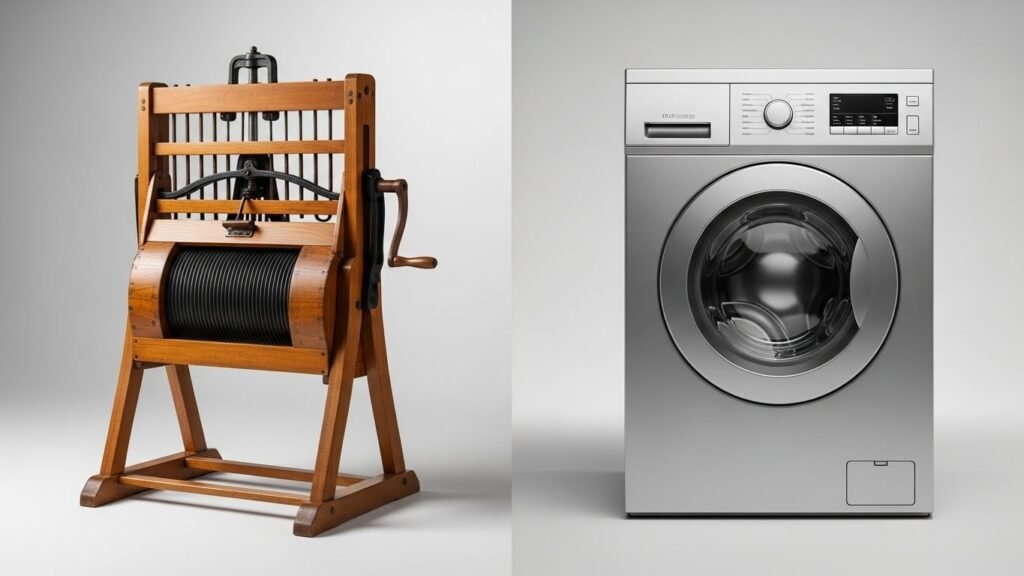
The history of washing machines is closely tied to how households evolved over time. What started as manual labor intensive washing methods slowly transformed into the modern, efficient machines we rely on today.
Understanding how washing machines developed helps explain why maintenance and professional washing machine repair is still so important for modern homes.
The Washing Machine Origin
Before machines existed, washing clothes was done entirely by hand using rivers, tubs, and washboards. This process required hours of physical labor and large amounts of water.
The washing machine origin dates back to the late 1700s when inventors began experimenting with mechanical ways to agitate clothes in water. These early designs laid the foundation for future innovation but were far from convenient.
Early Washing Machines and Manual Designs
The first early washing machines were hand powered devices made of wood and metal. They used cranks, paddles, or rotating drums to move clothes through water.
These machines reduced physical strain but still required significant effort. They were large, slow, and often unreliable. Repairs were common, even in early models, showing that washing machine maintenance has always been part of ownership.
The Invention of the Washing Machine
Many people ask, when was a washing machine invented? The answer depends on how it is defined.
The first patented mechanical washing machine appeared in the mid 1800s. These machines used hand cranks and basic gears. Over time, inventors improved agitation methods, drainage systems, and drum design.
This period marks the true invention of the washing machine as a household appliance rather than a tool.
Gas Washing Machine Era
Before electricity became widely available, some homes used a gas washing machine. These machines used gas powered motors to turn the drum.
While innovative for their time, gas powered machines were:
- Noisy
- Difficult to maintain
- Potentially dangerous if not properly ventilated
This era highlighted the growing need for trained technicians to keep machines running safely.
Washing Machines in the 1920s
The washing machine 1920s period was a major turning point. Electric motors became more common, allowing washing machines to operate more efficiently and consistently.
During this time:
- Electric washing machines entered middle class homes
- Drainage and wringer systems improved
- Safety features slowly began to appear
This is also when washing machines started becoming a regular household appliance rather than a luxury.
When Did Washing Machines Become Common
Many people wonder when did washing machines become common in everyday homes. By the 1940s and 1950s, electric washing machines were widely adopted across urban and suburban households.
Mass production made machines more affordable, but increased complexity also meant more components that could fail. This shift created the demand for professional appliance repair services.
Modern Washing Machines and Advanced Technology
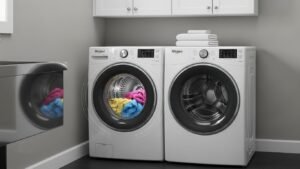
Today’s washing machines include:
- Digital control boards
- High efficiency motors
- Smart sensors
- Water saving technology
While modern machines are more efficient, they are also more complex. Professional diagnosis and repair is often required when problems occur, which is why experts in home appliance repair remain essential.
Why Understanding Washing Machine History Still Matters
Knowing the history of washing machines helps homeowners understand why regular maintenance is important. Each technological improvement added convenience but also increased mechanical and electronic complexity.
When modern machines break down, trained technicians use advanced diagnosis and inspection methods to identify issues accurately.
Professional Washing Machine Repair for Modern Homes
No matter how advanced washing machines become, wear and tear is unavoidable. Motors fail, pumps clog, and electronic components wear out over time.
At MS Appliance Repair Services, we provide reliable and professional appliance repair services to keep your washing machine working efficiently. Our technicians handle both older models and modern high efficiency units with expert care.