




















Whirlpool Washer Making Loud Noise? What Each Sound Means
Banging, grinding, clunking or a hum: what each sound usually means on a Whirlpool washer, which ones are normal, and the safe checks to try first.

On this page
Quick answer
A Whirlpool washer making loud noise usually has an off-balance load, a washer that isn't level, hoses tapping the cabinet, or something caught in the drum or pump. Some sounds are normal, like one clunk between wash and spin. A deep grinding or roar that grows with spin speed often points to the tub bearing, which needs a technician.
Key takeaways
- Note when the noise happens: fill, wash, spin, drain or with the washer off.
- One clunk as the washer shifts from washing to spinning is normal on Whirlpool top-loaders.
- Banging in spin is most often an off-balance load or a washer that rocks on its feet.
- Coins, pins and hair ties in the drum or pump filter cause rattles and grinding on drain.
- Call a technician for a grind or roar that gets louder with speed, a squeal, or a burning smell.
It started as a thump during the spin. Now the laundry room shakes and you can hear it from the kitchen. The sound itself is a clue, and when it happens in the cycle narrows the cause down fast.
Start with the checks below. They fix a lot of noisy washers in a few minutes. If the noise is coming from inside the machine, our washing machine repair service comes to your home and finds the part that's making it, on Whirlpool top-loaders, front-loaders and stacked units.
Below: what each sound usually means, which ones Whirlpool calls normal, and the noises that mean it's time to stop.
Match the noise to the moment it happens
Listen for two things: what the noise sounds like, and which part of the cycle it happens in. A bang during spin and a bang during fill come from different places.
| Noise and when | Likely cause | Safe check | Call a pro? |
|---|---|---|---|
| Banging or thumping in spin | Off-balance load, or the washer rocks | Spread the load out, level the feet | If it bangs with a balanced load |
| One clunk between wash and spin | The drive shifting modes (normal) | None needed | No |
| Clicking at the start of a cycle | The lid locking (normal) | None needed | No |
| Knocking or clicking in spin | Hoses or items touching the cabinet | Secure the hoses, clear the sides and top | No |
| Rattle or grind while draining | Coins, pins or a sock in the pump | Clean the pump filter (front-loaders) | If it stays |
| Deep grind or roar, louder as it speeds up | Often a worn tub bearing | Spin empty and listen | Yes |
| Squeal or screech in spin | Often a worn drive belt or pulley | None safe for a homeowner | Yes |
| Rubbing sound with heavy loads | Tub touching a drain pan | Extend the leveling legs | If it stays |
Sounds Whirlpool says are normal
First, rule out the sounds that are part of how the washer works. Whirlpool's help pages list several.
- A clunk between wash and spin. On Whirlpool top-loaders, the drive system clunks as it shifts from agitating to spinning and back. Whirlpool says these sounds are part of normal operation.
- Gear and motor sounds. Newer washers make different sounds than older ones. Whirlpool notes that some grinding or rubbing during the wash or spin, motor direction changes and gear sounds are expected. A level washer with a sensible load keeps them quiet.
- Clicking at the start. That's usually the lid locking before the cycle begins.
- Pump noise while draining. On Whirlpool front-loaders, the pump runs until the water is gone and then pulls air, which gurgles. The drain usually takes about 3 to 5 minutes.
What isn't normal: a noise that's new, one that keeps getting louder from week to week, or a grind you can feel through the floor.
Safe checks for a noisy Whirlpool washer
Most loud washers have a cause on the outside. Work through these in order.
Safe checks for a loud Whirlpool washer
- Unplug the washer first. Pull the plug or switch off its breaker before you reach into the drum, move the washer or open the small pump filter door.
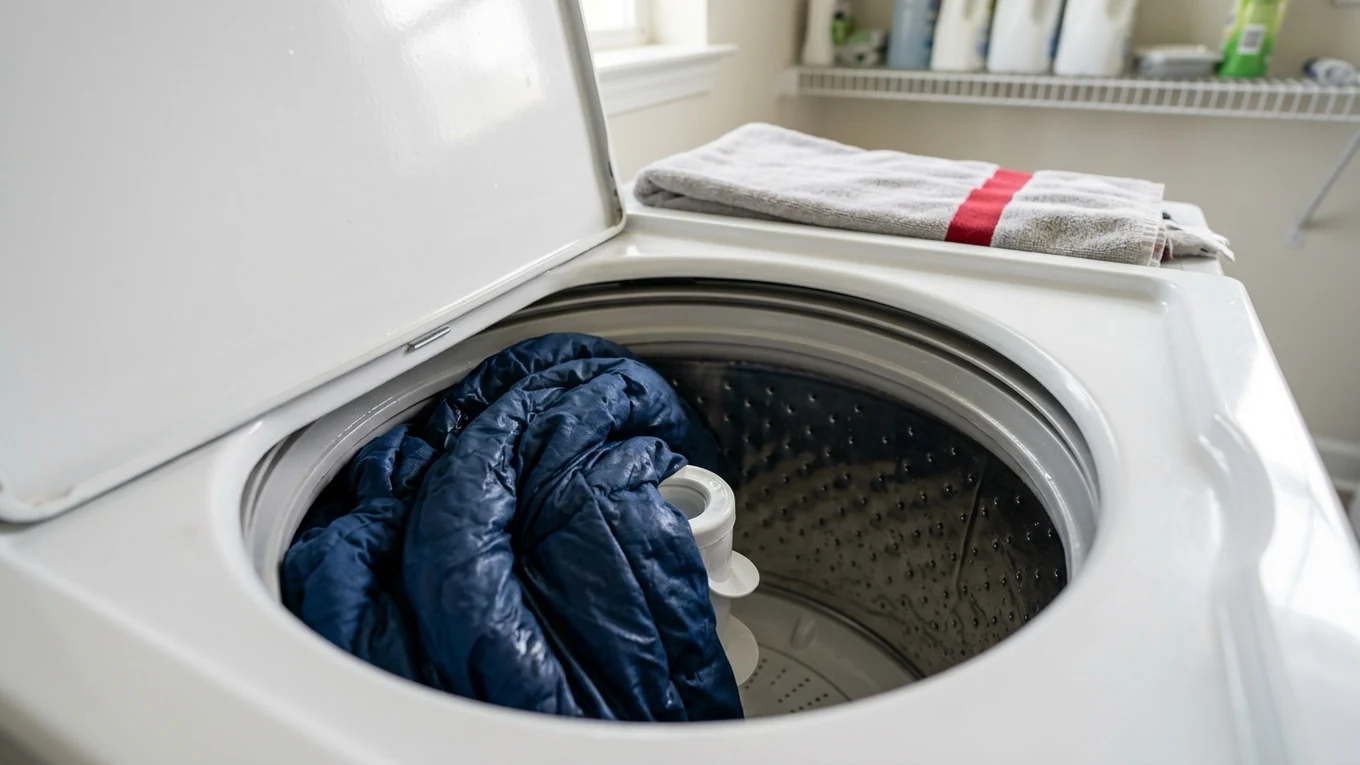
- Fix the load. Spread clothes in loose heaps evenly around the basket. A single comforter, rug or pair of jeans bunched on one side is enough to make a top-loader bang, and Whirlpool says to balance a single bulky item with a few extra items and not to pack the drum tightly. Whirlpool top-loaders sense an off-balance load and add water and agitation to correct it, so a longer cycle can be normal.
- Rock the washer corner to corner. Push diagonally on the top. If it rocks, adjust the leveling feet until all four sit firmly on the floor. If the washer stands in a drain pan, Whirlpool says the legs may need extending so the tub can't rub the pan. Whirlpool also says to check the floor for flexing or sagging, because a washer on a springy floor vibrates even when it is level.
- On a new front-loader, check the shipping bolts. Whirlpool says all four shipping bolts and the plastic spacers must be removed from the rear before the washer is used, and that leaving them in can cause noise, vibration or error codes (Whirlpool, Banging Noise, Front Load Washer). If a new washer is shaking, look at the back before anything else, and follow your manual's removal steps.
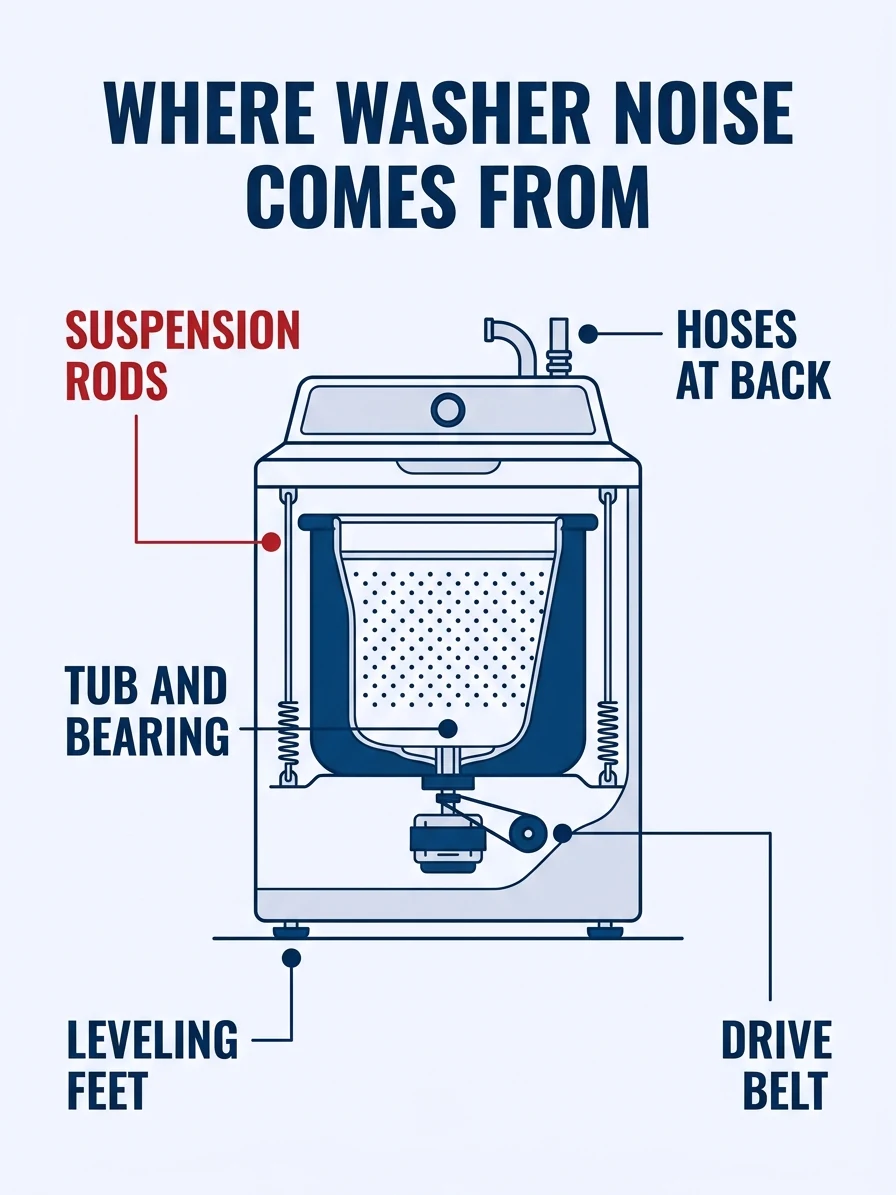
- Check the hoses at the back. Drain and fill hoses that touch the cabinet knock when the washer spins. Secure them with the beaded strap that came with some models, or a wire tie.
- Clear the top and sides. Coins, detergent bottles and a broom or drying rack leaning on the washer all vibrate and click, especially at high spin speeds.
- Search the drum. Run your hand around the basket and under the door seal on a front-loader for coins, keys and underwire.
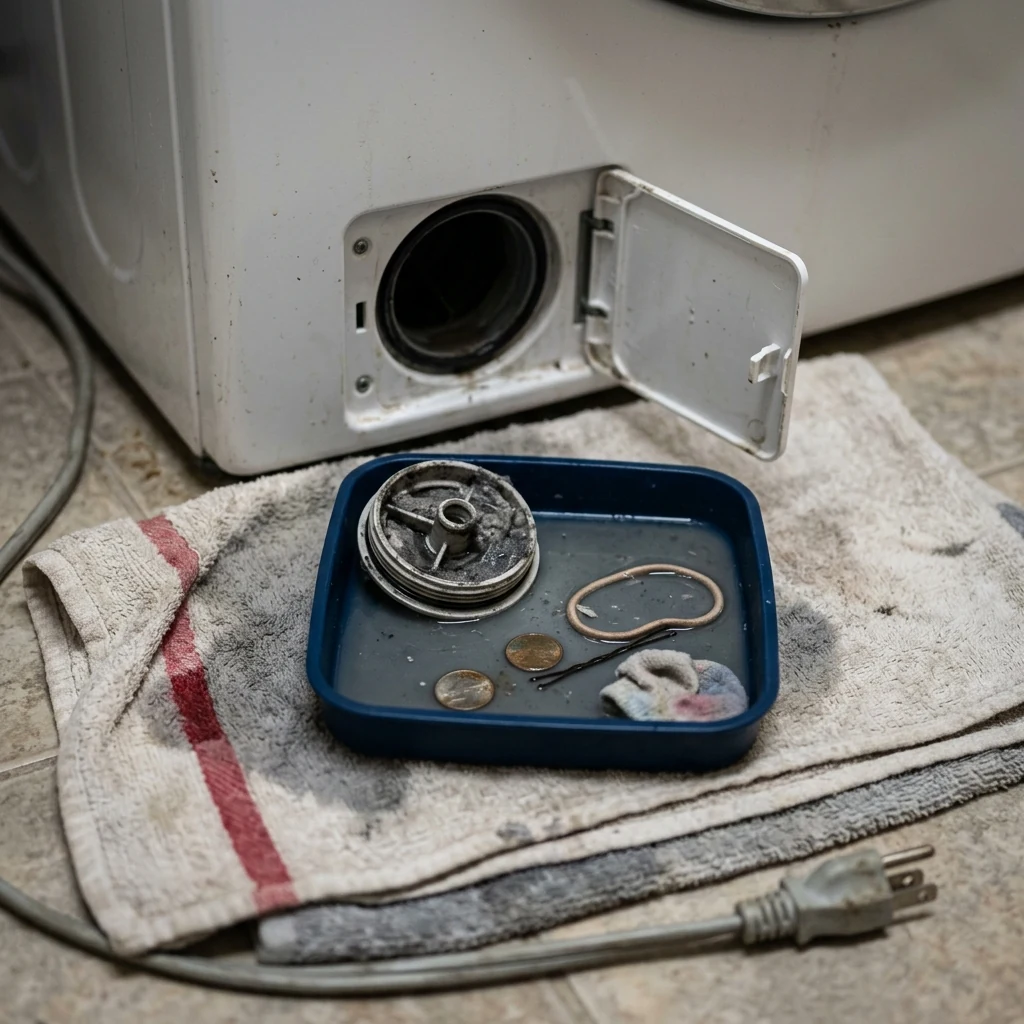
- Clean the pump filter on a front-loader. Drain it into a shallow tray first, then twist the filter out and clear what's caught. Our guide to a washing machine that won't drain shows the safe way to empty it.
- Run an empty Rinse and Spin. Plug it back in and listen. A noise that disappears empty was the load. A noise that stays is the machine.
Those signs point to parts inside the cabinet, near the motor and the wiring. This is where homeowner checks stop.
Loud in spin: banging, roaring or squealing
Spin is where most washer noise lives, because the basket turns fastest. If the safe checks didn't quiet it, these are the usual causes.
Worn suspension rods or dampers
The suspension holds the tub steady as it spins. On a top-loader, rods hang from the top corners down to the tub. When they wear, the tub can swing wider and knock the cabinet, and a squeak or bang in spin can be the first sign. On a front-loader, shock absorbers and springs do the same job.
Tub bearing
A deep grinding or roaring that rises with the spin speed often points to a worn tub bearing. It needs a technician. The tub usually has to come apart, and on an older washer it can be the point where replacing makes more sense.
Drive belt, pulley or motor coupler
A squeal or scraping in spin often comes from the drive: a worn belt, or a pulley that has cracked or bent. Some top-loaders also have a coupler linking the motor to the transmission, and a worn one can growl in spin.
First comes the service call, a fair, upfront fee set by your location and appliance and confirmed with you before the technician heads out. You get a written estimate before any work, and if you decide not to repair it, you pay only the service call and we give you the part number. We repair Whirlpool washers and every other major brand.
Noise during the wash cycle, the drain or with the washer off
Not every noise happens in spin. Each of these points somewhere different.
- During fill: a hum or buzz while water runs in. Whirlpool's front-load guidance is to check that both the hot and cold faucets behind the washer are fully open and that the fill hoses aren't kinked.
- During the wash: grinding or rubbing gets louder when the washer is overloaded or unlevel. Take a few items out and level it.
- During the drain: a rattle or grind is often something caught in the pump. Clean the filter on a front-loader. If the pump hums and no water moves, the pump needs testing.
- With the washer off: if you hear water trickling and the tub slowly fills while the washer is off, the water inlet valve isn't closing. Turn off both faucets behind the washer and call a technician; it can overflow.
If the squeal turns out to come from the dryer next to it, see our guide to a squeaking dryer.
Repair or replace a noisy washer?
Most noise fixes are small: a load, a foot, a hose or a coin. Whether a suspension, belt or bearing repair makes sense depends on the washer's age and any other faults. A tub bearing is the big one, and on an older washer with other faults, a new machine may be the better buy.
Our guide to whether to repair or replace a washing machine walks through that decision by age and part, and professional vs. DIY appliance repair shows where the safe line is.
Frequently asked questions
Why is my Whirlpool washer so loud when spinning?
The most common reasons are an off-balance load, a washer that rocks on its feet, or hoses and nearby items knocking the cabinet. Spread the load out, level the feet and secure the hoses. If it still bangs with a balanced load, the suspension rods may be worn. A grinding or roaring sound that gets louder as the spin speeds up often points to the tub bearing.
Why is my new Whirlpool washer so loud?
On a new front-loader, check the back first. Whirlpool says all four shipping bolts and the plastic spacers must be removed before use, and leaving them in can cause noise, vibration or error codes. Then check that it is level on a firm floor and that the hoses aren't touching the cabinet. If it is still loud with all of that done, contact the seller or Whirlpool while it is under warranty.
Is it normal for a Whirlpool washer to clunk?
Yes, one clunk at the right moment is normal. Whirlpool says its top-load washers clunk as the drive system shifts between agitation and spin. A clicking sound at the start of a cycle is usually the lid locking. Repeated hard banging during spin is something else and is worth checking.
How do I stop my washer from banging?
Unplug it, open the lid and spread the load evenly, especially single heavy items like comforters. Then push diagonally on the top corners. If the washer rocks, adjust the leveling feet until all four sit firmly on the floor. Move hoses away from the back of the cabinet. If it still bangs with a level washer and a balanced load, the suspension needs a technician.
What does a bad washer bearing sound like?
A worn tub bearing often shows up as a deep, steady grinding or roaring that rises with the spin speed. It tends to be loudest in the final spin and to get louder over weeks. Stop using the washer once you hear it, because running it only makes the noise and the damage worse. Bearing replacement is a technician job.
Is it safe to keep using a noisy washer?
For a balanced-load bang that you've fixed, yes. Stop using it if it grinds louder with speed, squeals, smells like burning rubber, leaks or trips the breaker. Those point to the bearing, the drive or the electrical side, and running it can turn a single repair into a bigger one. Unplug it and have a technician look at it.
Why does my washer make noise when it's off?
Check whether water is trickling into the tub. If the tub slowly fills while the washer is off, the water inlet valve isn't closing fully, and it can overflow. Turn off both faucets behind the washer and call a technician.
What to do next
Unplug the washer, spread the load, rock it corner to corner and secure the hoses. Then run an empty Rinse and Spin and listen. If the noise is gone, it was the load or the feet.
If it still grinds, bangs or squeals after the checks, book a visit through our washer repair page. We're open 7 days a week across Aurora and 30+ nearby cities, and same-day service is available.
Sources
- Whirlpool Product Help: Bang or Banging Noise, Top Load Washer: Hoses banging the cabinet (secure with the beaded strap or a wire tie), unbalanced loads and the washer's balance correction, the diagonal rock test for leveling, drain pan and leg height
- Whirlpool Product Help: Banging Noise, Front Load Washer: Four shipping bolts and plastic spacers must be removed before use or the washer can have noise, vibration or error codes; hoses knocking the rear of the cabinet; brooms, dustpans, dryer racks or hangers leaning on the washer rattle at high spin
- Whirlpool Product Help: Vibration, Walking or Off Balance, Front Load Washer: Shipping materials must be removed to avoid excessive noise; all four feet in firm contact and washer level; rock test; check the floor for flexing or sagging; avoid tightly packing the load; balance a single bulky item with a few extra items
- Whirlpool Product Help: Clicking or Clacking Noise, Top Load Washer: Clicking at the start of a cycle is usually the lid locking; loose items on top, hoses and items leaning on the washer
- Whirlpool Product Help: Clunk or Clunking Noise, Top Load Washer: A clunk as the drive shifts between agitation and spin is part of normal operation
- Whirlpool Product Help: Grinding or Rubbing Noise, Top Load Washer: New washers make different noises; grinding or rubbing in wash or spin, motor direction changes and gear sounds are expected; unlevel or overloaded washers are louder; the tub can rub a drain pan, so extend the legs
- Whirlpool Product Help: Gurgling, Slurping or Humming Noise, Front Load Washer: Pump noise during drain is normal and usually lasts about 3 to 5 minutes; a hum during fill means checking that both supply valves are fully open and the hoses aren't kinked
- Elliott Advocacy: My Whirlpool washing machine is making loud noises: Grinding may point to worn tub bearings, which need a professional; a growl in spin may point to the part linking the motor and transmission; squeaking suspension rods as a cause of spin noise. No Whirlpool Product Help page covers these
Written by
About us
MS Appliance Repair Services
Honest Repairs, Right at Home
Rated 5 stars on Google by 190+ homeowners in the Chicago suburbs
- Open 7 days, 8 AM to 7 PM
- Same-day service available
- 5-star Google rating from 190+ reviews
- 90-day limited parts and labor warranty on qualifying repairs
- LG-authorized
Serving Aurora, Naperville, Plainfield and 30+ cities across the Chicago suburbs.
Keep reading
All articles →
Washing Machine Won't Drain? How to Empty It and Find the Cause
Washer full of water? Drain it safely, clean the pump filter, check the hose and standpipe, and learn which drain codes mean the pump.
Repair or Replace Washing Machine? The Rule Our Technicians Use
Washer broke and you're not sure it's worth fixing? The age, part and cost rule we use, plus the repairs that usually mean it's time for a new one.
Professional vs. DIY Appliance Repair: What You Can Fix Yourself
What you can safely fix yourself on each appliance, the 4 hard lines that need a technician, and the hidden cost of buying parts on a guess.