



















What Not to Put in Dishwasher: Dos and Don'ts, Item by Item
The kitchenware the dishwasher ruins, the items that damage the dishwasher itself, and how to tell what's safe before you load it.
On this page
Quick answer
What not to put in dishwasher loads: cast iron, wood, copper, pewter, brass, tin, hollow-handle knives, disposable plastics and gold-colored flatware. For nonstick pans and good knives, follow the maker's care label or wash by hand. Never use hand dish soap, because its suds can leak out under the door. Loose labels and broken glass can clog the filter.
Key takeaways
- Cast iron loses its seasoning and rusts, wood warps and cracks, and copper and pewter discolor in a dishwasher.
- Stainless flatware and most glass are fine; plastics go on the top rack only.
- When an item has no label, check with its manufacturer or wash it by hand.
- Hand dish soap, loose labels, broken glass and sharp tools can damage the dishwasher itself.
- Call a technician if water won't drain after you clean the filter, the leak keeps coming back, or water reaches wiring.
A cast iron pan that comes out rusty. A wooden spoon split down the middle. A dishwasher with foam pouring out under the door. Most dishwasher mistakes fall into two groups: items the dishwasher damages, and items that damage the dishwasher.
The first group costs you kitchenware. The second can leave you with a leak or standing water, and that's where our dishwasher repair service comes in. This guide covers both.
You'll find a quick table, the cookware and utensil rules from the manufacturers, the mistakes that hurt the dishwasher, safe checks if something already went wrong, and how to load it so it cleans properly.
How to tell if something is dishwasher safe
Start with the item, not the dishwasher. Look for a dishwasher-safe mark on the bottom or the packaging. If there isn't one, Whirlpool's dishwasher-safe guide says to check with the item's manufacturer. No label and no answer? Wash it by hand.
| Item | Dishwasher? | What happens | Do this instead |
|---|---|---|---|
| Cast iron | No | Seasoning stripped; iron rusts | Hand-wash, dry, re-season as the pan's care label says |
| Wooden spoons and boards | No | Warps, cracks, loses its finish | Hand-wash in hot soapy water, dry |
| Copper, pewter, brass, bronze | No | Discolors, pits or loses its finish | Hand-wash, dry right away |
| Hollow-handle knives | No | Whirlpool says the handle adhesive can loosen | Hand-wash |
| Good kitchen knives | Check the knife maker's label | Sharp blades can gouge the rack coating | Hand-wash and dry, or blade down in the basket if the label allows |
| Nonstick pans | Check the pan's label | Whirlpool doesn't list them, so the pan maker decides | Warm soapy water and a soft sponge if the label says hand wash |
| Aluminum | Yes, with care | Anodized finishes can be affected | Hand-wash anodized pieces |
| Stainless flatware and pots | Yes | Long contact with salt, vinegar, dairy or juice can damage the finish | Run a rinse if you can't wash right away |
| Plastics marked safe | Top rack only | Plastics vary in how much heat and detergent they take | Top rack only |
| Disposable plastics | No | They can't take the high water temperature and detergent | Recycle or hand-wash |
| Disposable aluminum pans | No | Whirlpool says they can shift and leave black marks on other items | Recycle, or hand-wash if you reuse them |
| Tin | No | Can rust | Hand-wash and dry right away |
| Bottles and cans | No | Glued-on labels can loosen and clog the spray arms or pump | Hand-wash; peel labels first |
| Sterling silver and silver plate | Only with care | Salt, acid and sulfides (eggs, mayonnaise, seafood) can damage the finish, and touching stainless flatware can pit the silver | Rinse if you can't wash right away; keep it apart from stainless |
| Crystal and fine china | Check the maker | Whirlpool says some leaded crystal can etch with repeated washing, and gold-leaf or hand-painted patterns can fade | Hand-wash anything you value or can't replace |
| Milk glass | Not for long | Whirlpool says it yellows with repeated washing | Hand-wash |
| Insulated mugs, travel tumblers and pressure cooker lids | Check the maker | The maker's label decides, because Whirlpool's list doesn't cover them | Hand-wash unless the label says dishwasher safe |
Cookware: cast iron, copper, aluminum and nonstick
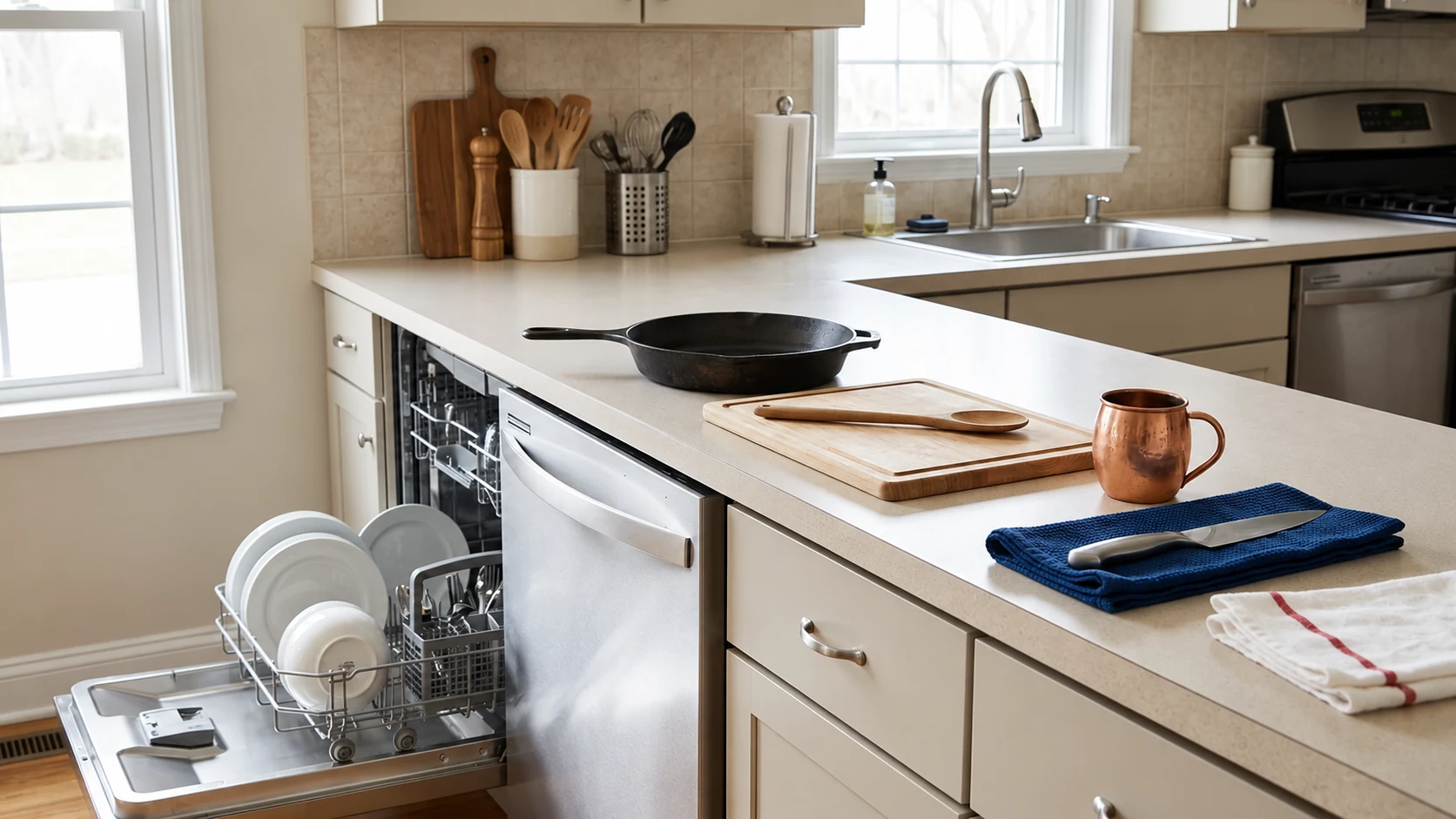
Cast iron. Whirlpool says plainly that the seasoning will be removed and the iron will rust. Wash it by hand, dry it right away, and re-season it the way the pan's care label says.
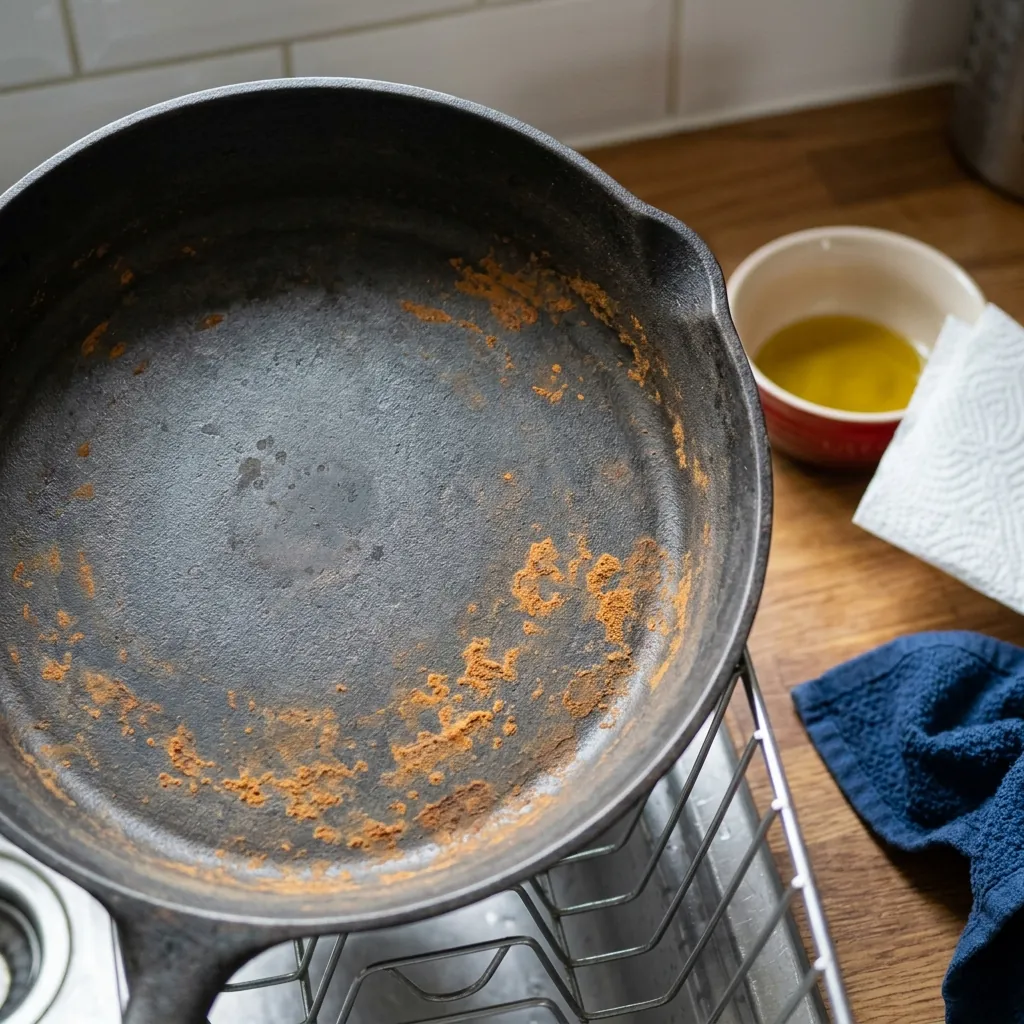
Copper, pewter, brass and bronze. Whirlpool's loading guide says copper and cast iron can be damaged or lose their finish. Its dishwasher-safe guide adds that high heat and detergent can discolor or pit pewter, brass and bronze. Hand-wash them, including copper mugs.
Aluminum. Whirlpool lists plain aluminum as dishwasher safe but warns that high water temperatures and detergent can affect the finish of anodized aluminum. Many nicer pans are anodized, so check the label.
Nonstick. Whirlpool's guide doesn't list nonstick pans, so the pan maker's label decides. If the label says hand wash only, believe it. A soft sponge and warm soapy water take a minute.
Stainless pots and pans. These are fine. Whirlpool's only warning is that long contact with salt, vinegar, dairy or fruit juice can damage the finish, so run a rinse if a dirty pot has to wait for a full load. For rust spots on stainless, see our guide to cleaning rust from stainless steel.
Knives, wood and plastics
Knives. Whirlpool lists hollow-handle knives as not recommended, because some handles are attached with adhesive that can loosen. Maytag adds that sharp knives, peelers and graters can gouge the rack's vinyl coating if they sit against the tines. For good kitchen knives, follow the knife maker's care label, or hand-wash and dry them. Everyday table knives are fine: load them blade down.
Wood. Whirlpool's loading guide says wooden utensils should never be loaded, because heat and moisture can warp or crack them. Its dishwasher-safe guide says untreated wood can also lose its finish. Treat cutting boards, rolling pins and salad bowls the same way.
Plastics. Whirlpool says plastics vary in how much heat and detergent they can take: load dishwasher-safe plastics on the top rack only, and keep disposable plastics out completely. Light containers flip over and fill with dirty water, so wedge them in place.
Gold trim and hand-painted china. Whirlpool says gold-colored flatware will discolor, and that antique, hand-painted and gold-leaf patterns can fade. Check with the maker, or wash those pieces at the sink.
Things that damage the dishwasher itself
This is the part most lists skip, and it's the part that leads to a repair call. A few mistakes hurt the machine, not just the dishes.
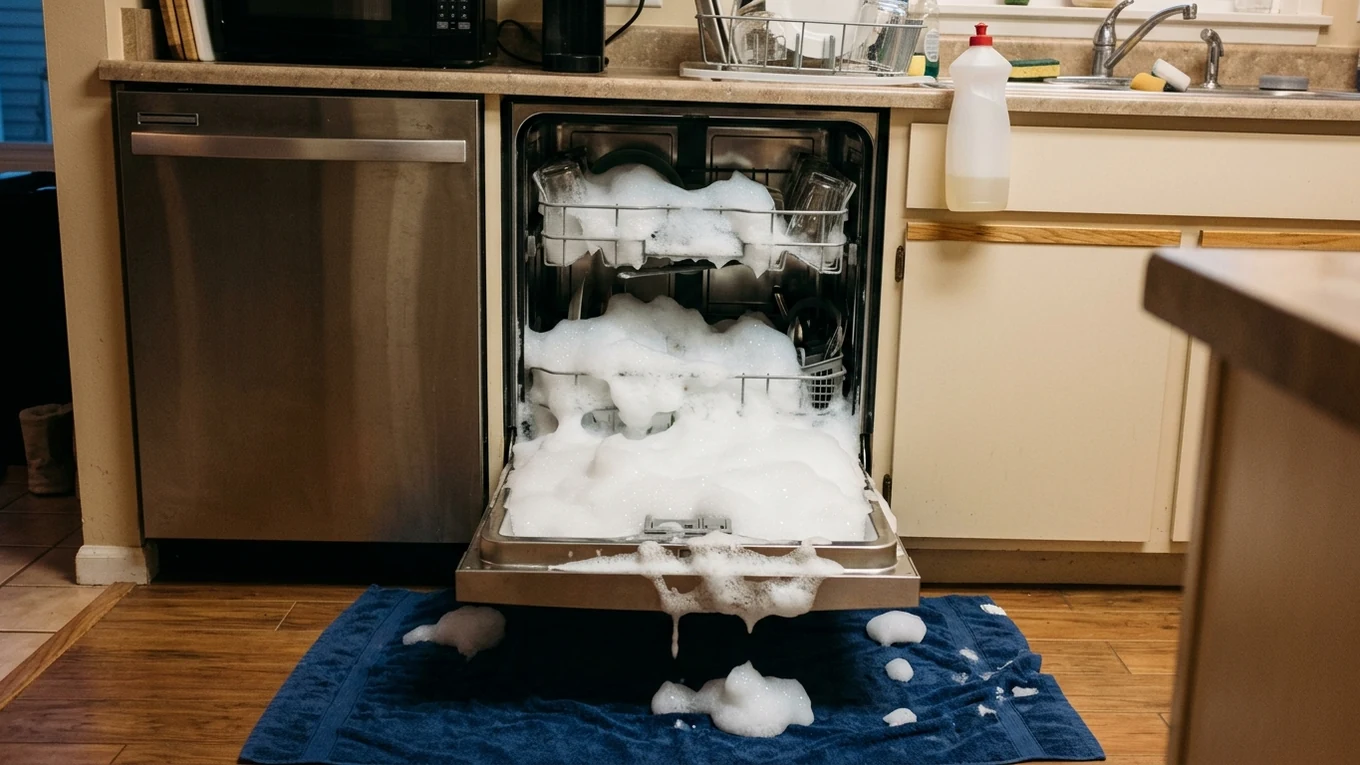
- Hand dish soap. It foams. In a dishwasher, the suds can overflow and push water out under the door. Use only detergent made for automatic dishwashers.
- Paper labels. Whirlpool says glued-on labels from bottles and cans can loosen and clog spray arms or pumps, and lists bottles and cans as not recommended. Peel labels off first if you wash a jar.
- Broken glass and small items. A chipped glass, a bottle cap or a twist tie can slip past the rack and end up at the filter or the drain pump.
- Sharp tools against the tines. Maytag's rack tine help page says chipped racks are typically caused by improper loading, and that steak knives, potato peelers and cheese graters can gouge the vinyl coating. The bare wire can then rust.
If something already went wrong, these checks are safe to do yourself.
Safe checks after a dishwasher mishap
- Turn off the power. Cancel the cycle, then switch off the dishwasher at its breaker or unplug it before reaching inside.
- Clean up any water. Whirlpool's leak guide says to mop up so water doesn't soak into cabinets or floorboards.
- Suds from dish soap? Whirlpool's fix: remove the dishes, pour about 1/4 cup of cooking oil into the bottom to settle the suds, and run a quick cycle with no detergent and no dishes. Repeat if suds remain.
- Clean the filter. Pull out the bottom rack, lift out the filter, and remove labels, glass and food. Wear gloves if glass broke.
- Check the spray arms. Spin them by hand. They should turn freely, with no item jammed against them.
- Run a short rinse cycle. Watch whether the water drains by the end. If it doesn't, stop there.
The drain pump and anything under the tub sit near wiring, so that's technician work. Our guides to a Whirlpool dishwasher not draining and the causes of dishwasher leaking cover what we check next.
The visit starts with the service call, a fair, upfront fee that depends on your location and appliance, confirmed before we come. If you decide not to repair it, you pay only the service call and we give you the part number.
Dishwasher dos: load it right so it does its job
What you put in matters, and so does where you put it. Whirlpool's loading guide covers the basics:
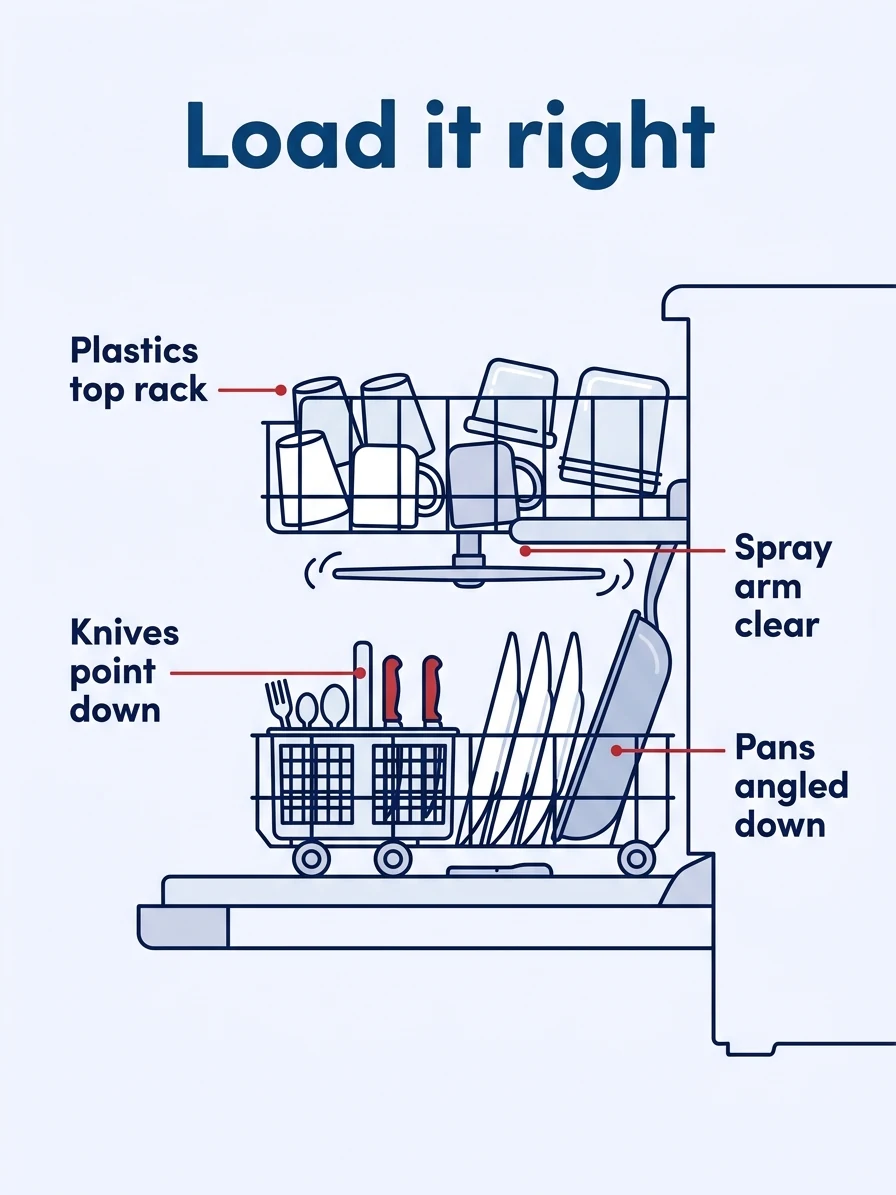
- Bottom rack: larger, dirtier items, with pots and pans at the back and sides, angled down.
- Don't stack or block. Large pans on the bottom rack are a common cause of a blocked spray arm, and Whirlpool says to avoid stacking items.
- Knives down, forks up. Blades down prevents cuts when you unload.
- Glasses, cups and bowls upside down, so water doesn't pool in them.
- Skip the pre-rinse. Whirlpool advises against it, because detergent is designed to work on food particles. Scrape off large scraps instead.
If dishes still come out dirty with a good load, our guide to the signs a dishwasher needs repair helps you decide what's normal and what isn't.
Frequently asked questions
How do you know if something is dishwasher safe?
Look for a dishwasher-safe mark on the item or its packaging. If there isn't one, check with the manufacturer, as Whirlpool suggests, or wash it by hand. As a rule, glass, stainless flatware and plastics marked safe (top rack only) are fine, while cast iron, wood, copper, pewter and disposable plastics are not. Check the maker on antique or hand-painted china.
Can you wash stainless steel in the dishwasher?
Yes. Stainless flatware, pots and pans are dishwasher safe. Whirlpool's one warning is that long contact with salt, vinegar, dairy or fruit juice can damage the finish, so run a rinse cycle if dirty stainless has to wait. Keep sterling silver or silver-plated pieces from touching stainless flatware, which Whirlpool also advises.
Can you put knives in the dishwasher?
Table knives, yes, blade down. Whirlpool lists hollow-handle knives as not recommended, because the handle adhesive can loosen, and Maytag says sharp knives can gouge the rack's vinyl coating. For good kitchen knives, follow the knife maker's care label, or hand-wash and dry them. Never leave a blade pointing up.
Can copper pans go in the dishwasher?
No. Whirlpool says copper and cast iron should not be loaded, because they can be damaged or lose their finish. That includes copper mugs and copper-bottom pans. Wash them by hand in warm soapy water and dry them right away to prevent water spots.
Why can't you put nonstick pans in the dishwasher?
Whirlpool's dishwasher-safe guide doesn't list nonstick pans, so the pan maker's care label decides. Coatings differ from pan to pan. If the label says hand wash only, believe it, and use warm soapy water with a soft sponge. If it says dishwasher safe, load it as the maker says.
Can wood go in the dishwasher?
No. Whirlpool says wooden utensils should never be loaded, because heat and moisture can warp or crack them, and untreated wood can lose its finish. Treat cutting boards, rolling pins and salad bowls the same way. Wash them by hand in hot soapy water and let them dry fully.
What happens if you put dish soap in a dishwasher?
Hand dish soap foams, and the suds can overflow and push water out under the door. Stop the cycle, clean up the water, remove the dishes, and follow Whirlpool's fix: about 1/4 cup of cooking oil in the bottom and a quick cycle with no detergent or dishes. If it still leaks with proper detergent, call a technician.
What to do next
Hand-wash the short list: cast iron, wood, copper and its cousins, and anything whose label says hand wash only. Keep disposable plastics out. Use only automatic dishwasher detergent, peel labels, and keep loose and broken items out of the racks.
If something already got past the filter and the dishwasher is leaking or holding water, book our in-home dishwasher repair. We're out 7 days a week across Aurora and 30+ nearby cities, and same-day service is available.
Sources
- Whirlpool Product Help: Is this Item Dishwasher Safe?: Check with the item's manufacturer when in doubt; plastics on the top rack only and disposable plastics not recommended; aluminum safe but anodized finish affected; stainless finish damaged by long contact with salt, vinegar, dairy or fruit juice; silver not touching stainless flatware; cast iron loses seasoning and rusts; tin rusts; pewter, brass and bronze discolor or pit; untreated wood warps, cracks or loses its finish; not recommended list incl. hollow-handle knives, gold-colored flatware, bottles and cans (labels can clog spray arms or pumps), disposable aluminum; china with antique, hand-painted or gold-leaf patterns can fade
- Whirlpool Product Help: Is this Item Dishwasher Safe? (second read): Tin rusts; disposable aluminum pans shift and leave black marks; milk glass yellows; some leaded crystal can etch; sterling silver and silver plate: salt, acid and sulfides can damage the finish and contact with stainless can pit it; china with antique, hand-painted or gold-leaf patterns can fade
- Whirlpool Product Help: Properly Loading a Dishwasher: Wooden utensils should never be loaded; copper and cast iron can be damaged or lose their finish; knives blade down, forks up; pots and pans at the back and sides of the bottom rack, angled down; large pans can block the spray arm; glasses, cups and bowls upside down; no pre-rinsing
- Whirlpool Product Help: Leaking Underneath (Dishwasher): Suds overflow: stop the cycle, mop up so water doesn't soak into cabinets or floorboards, remove the dishes, pour about 1/4 cup of cooking oil in the bottom, run a quick cycle with no detergent or dishes, repeat if suds remain
- Maytag Product Help: Tines are Chipped, Scratched or Damaged (Dishwasher): Chipped racks are typically caused by improper loading; sharp objects like steak knives, potato peelers or cheese graters can gouge the vinyl rack coating; a repair kit covers chips and scratches on tines
Written by
About us
MS Appliance Repair Services
Honest Repairs, Right at Home
Rated 5 stars on Google by 190+ homeowners in the Chicago suburbs
- Open 7 days, 8 AM to 7 PM
- Same-day service available
- 5-star Google rating from 190+ reviews
- 90-day limited parts and labor warranty on qualifying repairs
- LG-authorized
Serving Aurora, Naperville, Plainfield and 30+ cities across the Chicago suburbs.
Keep reading
All articles →
Whirlpool Dishwasher Not Draining? What to Check, Step by Step
Water left in your Whirlpool? Clean the two-part filter, read where the water sits, check the hose and suds, then listen to the drain.
Causes of Dishwasher Leaking: Front, Bottom, Sink Cabinet or Basement
Water in front of the dishwasher, under it, or dripping into the basement? Find the cause by where and when it leaks, then try the safe checks.
Signs Your Dishwasher Needs Repair, Not Just a Cleaning: 10 Checks
Ten dishwasher warning signs, each with the 5-minute check that rules out a cleaning or setting cause, and the signs that mean a failed part.