



















How to Clean Rust from Stainless Steel Appliances: Easy Home Remedies
Rust spots on a stainless fridge, dishwasher or range often wipe off. Here is the safe way, what never to use, and when rust points to a leak.
On this page
Quick answer
How to clean rust from stainless steel starts with the finish: coated and black stainless get only mild soap and water. On plain brushed stainless, rub a baking soda and water paste with the grain using a soft cloth, rinse and dry. Never use steel wool, bleach or salt, which cause more rust.
Key takeaways
- Light rust on stainless appliances often wipes off, whether it started on the steel or came from something else.
- Check your finish first: if your manual says fingerprint-resistant or black stainless, use mild soap and water only.
- Rub with the grain using a soft cloth, then rinse and dry completely so the protective layer can reform.
- Steel wool, bleach and salt make rust worse: steel leaves particles that rust, and chlorides attack stainless.
- Call a technician if rust keeps returning near a dispenser, a door edge or wiring, which often means a slow leak.
Small orange specks on the fridge door. A rust-colored streak inside the dishwasher. It looks like your stainless appliance is failing, but light surface rust often comes off with a soft cloth and a gentle paste.
What matters is using the right method for your finish and knowing when rust is a symptom, not the problem. If spots keep coming back near water, our maintenance tune-ups include cleaning and a check of the seals, lines and drains that cause them.
Below: why stainless rusts, how to check your finish, a step-by-step removal method, the products that do damage, rust inside the dishwasher, and the signs of a hidden leak.
Why stainless steel rusts
Stainless steel resists rust because of a thin protective layer on its surface. GE's guide to cleaning rust from stainless steel explains that chromium in the steel reacts with oxygen to form a chromium oxide layer, and that if this layer is damaged, rust forms at the point of damage.
So rust on stainless usually starts with something that broke that layer or sat on top of it:
| Where you see it | Likely cause | What to use | Call a pro? |
|---|---|---|---|
| Specks on a fridge or dishwasher door | A damaged surface layer, or particles from steel wool or a steel brush | Baking soda paste with the grain (uncoated steel only) | No |
| Orange marks on a coated or black stainless door | A dulled clear coat from harsh cleaners, or rust carried over from something else | Mild soap and water; stop the harsh product | No |
| Brown stains inside the dishwasher | Iron in the water supply | A dishwasher cleaner cycle with no detergent | No |
| Rust marks on dishes and the tub | Chipped rack tines rusting | Rack repair kit, or a new rack | Sometimes |
| Spots that return near the water dispenser | Water sitting from a drip or leak | Clean, then watch for drips | Yes, if it keeps dripping |
| Rust under or along a dishwasher door | Water escaping the door seal | Clean, check the seal and the floor | Yes |
Check your stainless finish first
Not all "stainless" is bare steel. Many fridges and dishwashers have a clear coat that resists fingerprints, and your manual may describe a smudge-proof or black finish. Treat those as coated finishes and keep to gentler care.
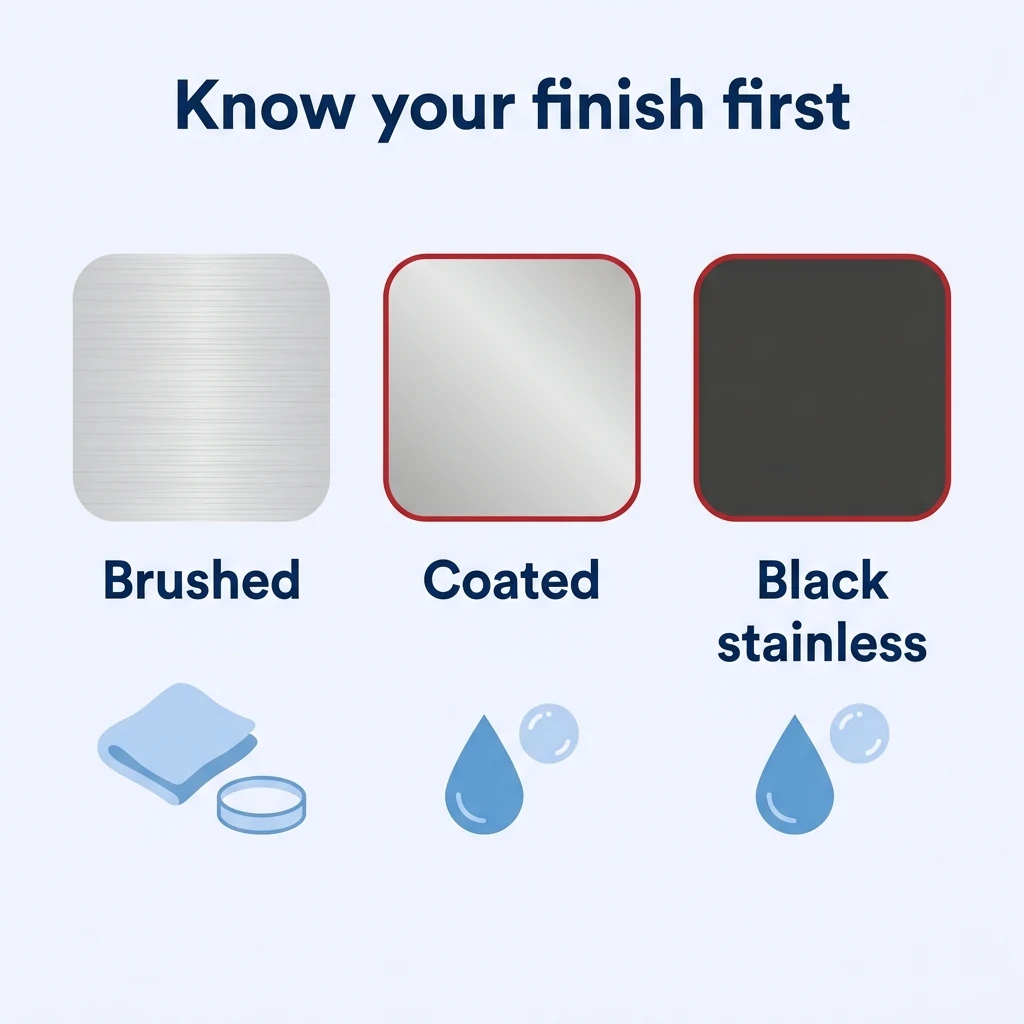
Whirlpool's fingerprint-resistant stainless care page says to wash with warm water and mild soap or detergent and dry with a soft microfiber cloth. It warns that scouring pads, abrasive or harsh cleaners, chlorine bleach, steel wool, gritty cloths and even paper towels can scratch or dull the clear coat.
If your manual mentions a fingerprint-resistant, smudge-proof or black finish, stick to soap and water. If you're not sure, test any method on a hidden spot, like the side panel near the floor.
How to remove rust from stainless steel, step by step
This method is for light surface rust on uncoated, brushed stainless. It follows GE's rust guide, from gentlest to strongest.
Remove light rust from stainless steel
- Make it safe to work. If the spot is near a display, controls or the water dispenser, unplug the appliance or switch off its breaker first. Let a range or oven cool completely.
- Find the grain. Look closely: brushed stainless has fine lines running one way. Every wipe from here on follows those lines.
- Wash with mild soap first. Warm water and a little dish soap on a soft cloth. Some "rust" is just a stain and comes off here.
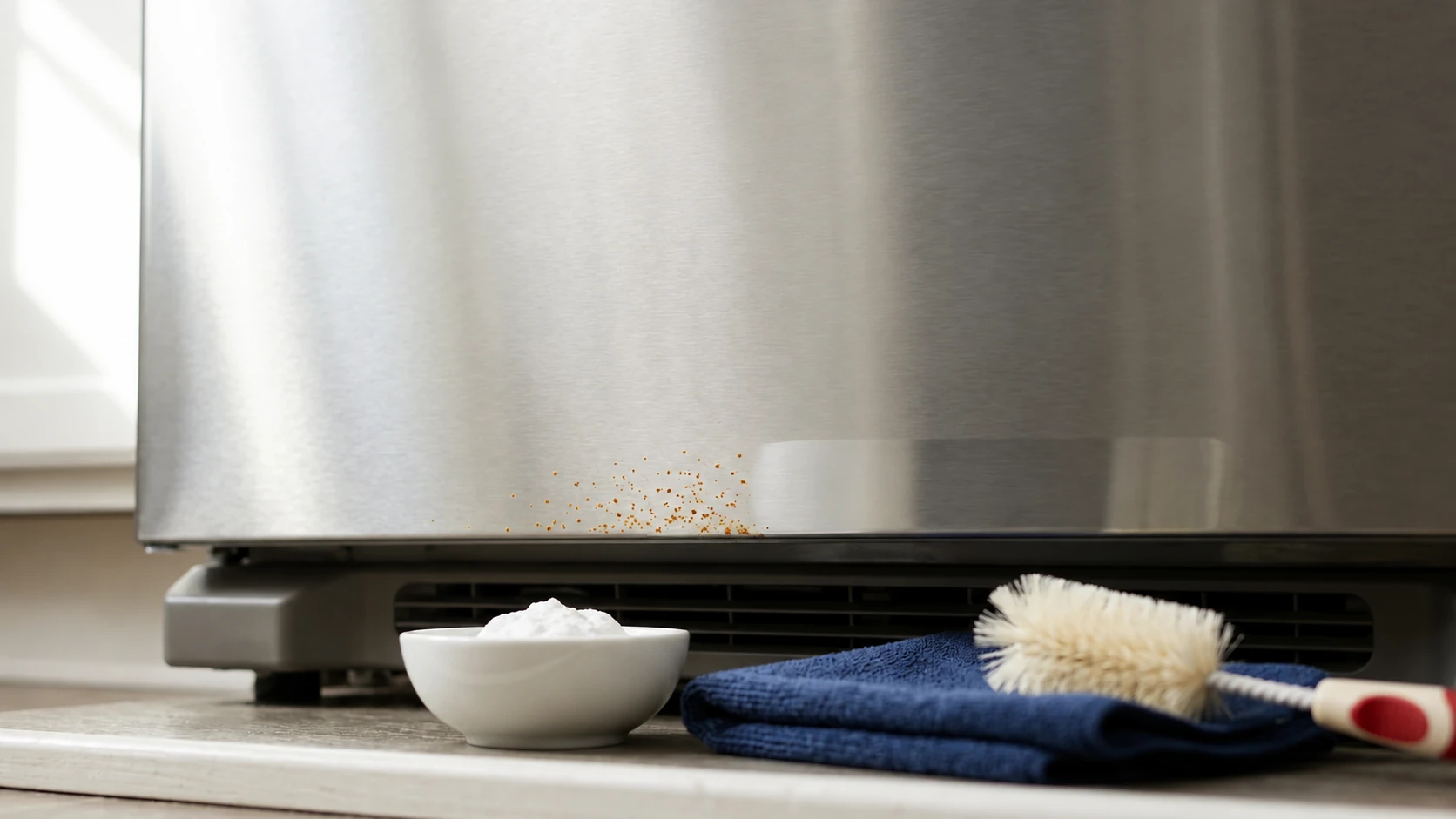
- Apply a baking soda paste. Mix baking soda with a little water into a soft paste. Rub it along the grain with a soft cloth or a soft brush.
- Step up only if needed. For a stubborn spot, GE's guide allows one liquid, grit-free cleanser that contains oxalic acid. Follow its label, and rub with the grain on a damp soft sponge.
- Rinse and dry completely. Wipe with clean water, then dry with a clean cloth. GE then suggests a stainless steel cleaner.
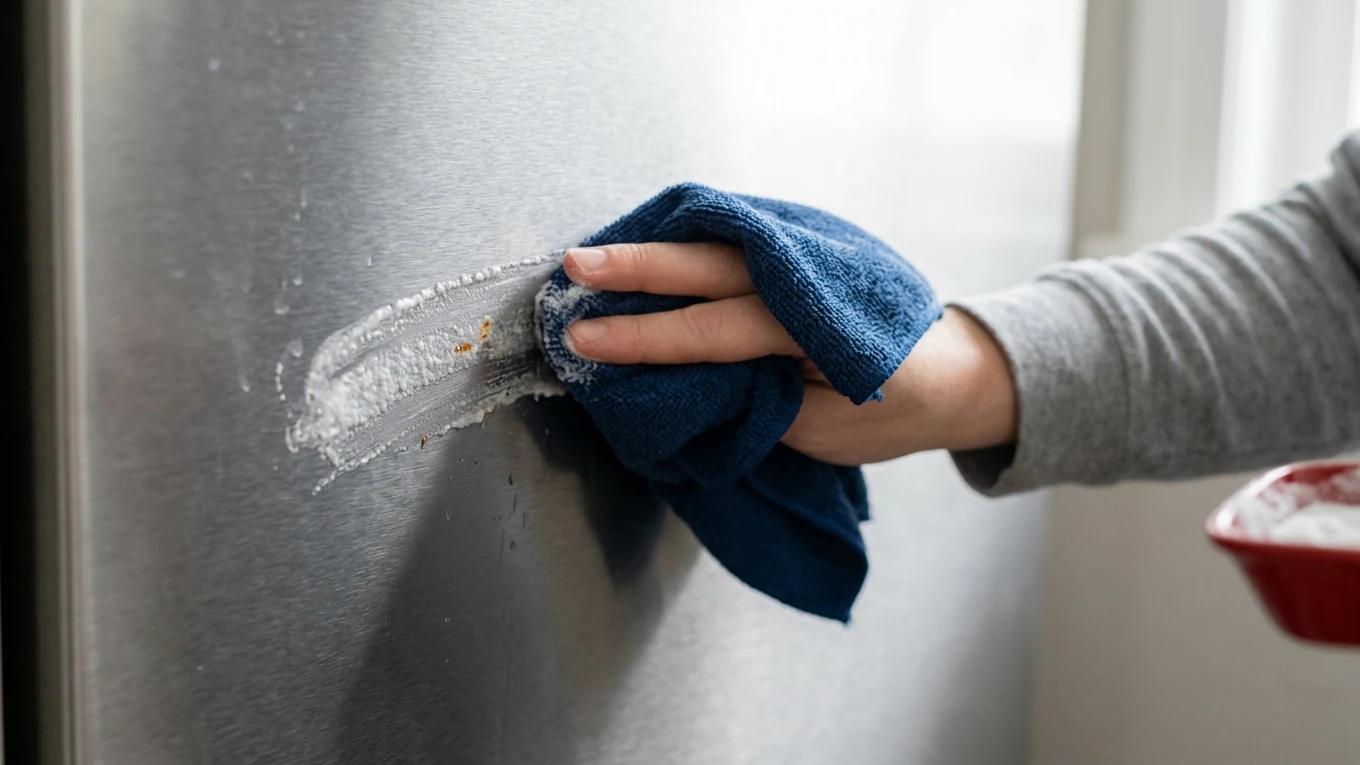
Give it one or two rounds. If a spot won't lift, it may be pitting (small pits in the metal) rather than surface rust. Stop scrubbing at that point: more rubbing only dulls the finish around it.
What not to use on stainless steel
The wrong cleaner causes more rust than it removes. GE lists what to avoid, and why:
- Chlorides. Cleaners with chlorine, fluorine, bromine or iodine compounds attack the protective layer. Chlorine bleach is the common one.
- Steel wool and steel brushes. GE says particles can stick to the stainless and begin to rust. One scrub can leave a field of new specks.
- Alcohol, ammonia and mineral spirits. GE lists these too. If you used one, remove every trace.
For coated finishes, Whirlpool adds scouring pads, abrasive cleaners and gritty cloths, because they can scratch or dull the clear coat.
What about vinegar, lemon juice, salt and WD-40?
These are the remedies most websites list, so here is where the appliance makers stand.
- Vinegar. Whirlpool's stainless care page lists vinegar-based cleaners among the products to avoid, and says damage from them is not covered by the manufacturer's warranty (Whirlpool, stainless steel care). GE says to avoid "vinegar or acidic/vinegar-based cleaners" on its fingerprint-resistant stainless (GE, fingerprint resistant stainless).
- Lemon juice. Whirlpool lists citrus-based cleaners in the same warning.
- Salt. Table salt is sodium chloride, a chloride, and chlorides are what GE says attack the protective layer.
- WD-40. No appliance maker page we read recommends it on stainless.
Some websites say vinegar is fine on plain, uncoated steel. Because it is hard to tell a coated door from a bare one by eye, we leave these out. Stick to the baking soda paste, and on coated finishes use soap and water.
Rust inside the dishwasher
Many dishwasher tubs are stainless, but rust inside a dishwasher often comes from the racks or the water, not the tub. Two causes are common.
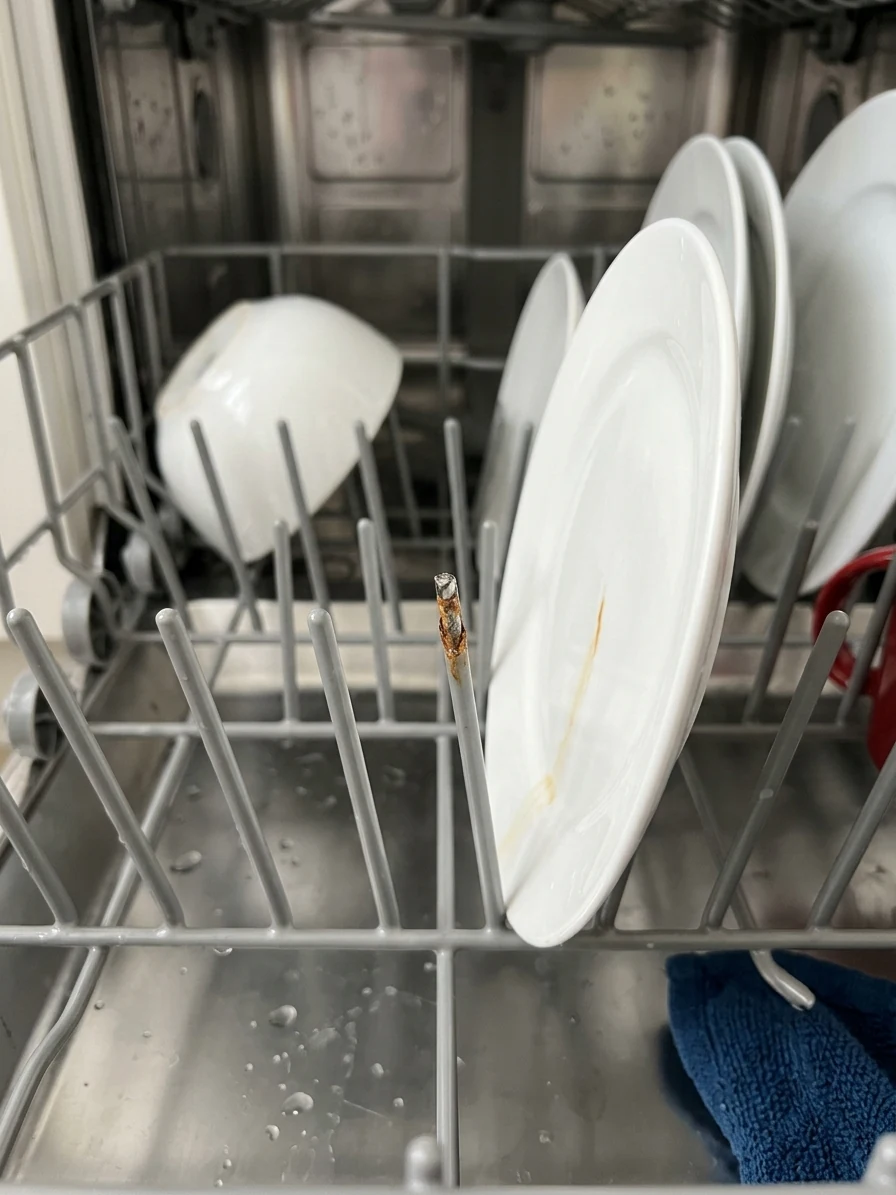
Chipped rack tines. The racks are steel wire with a vinyl coating. Maytag's rack tine help page says chipped racks are typically caused by improper loading, and that sharp objects like steak knives, potato peelers or cheese graters can gouge the coating. The bare wire can then rust and mark dishes. Maytag says a rack repair kit covers chips and scratches on the tines. A rack that is rusted through needs replacing.
Iron in the water. Whirlpool's stained racks page says brown stains are likely due to high iron content in the water supply. Its fix is a dishwasher cleaner run with no detergent, followed by a normal wash, and an iron removal unit if you need the treatment more than once a month.
Keep rusty tools and cast iron out of the dishwasher altogether. Our guide to what not to put in a dishwasher covers the full list.
When rust means a leak or a bigger problem
Rust needs water that sits. If spots come back in the same place within days of cleaning, look for where the water comes from.
A leak near wiring is a job for a technician, not a cleaning cloth. Our guide to the causes of dishwasher leaking explains the usual culprits, and if the fridge dispenser or ice maker is dripping, our ice maker troubleshooting guide is the place to start.
Before we come out, we confirm the service call: a fair, upfront fee that depends on your location and appliance. If we find a leak, you get a written estimate for the refrigerator repair or dishwasher repair before any work.
Keep stainless steel rust-free
- Wipe spills and water splashes the same day, then dry the surface
- Clean with warm water and mild soap, always with the grain
- Keep steel wool, bleach, salt and ammonia sprays away from stainless
- Use a soft microfiber cloth, not paper towels, on coated finishes
- Load sharp tools carefully so they don't chip the rack tines
- Check under the dispenser and the dishwasher door for drips each month
Frequently asked questions
What is the best way to remove rust from stainless steel?
For light rust on uncoated stainless, GE suggests a baking soda and water paste rubbed with the grain using a soft cloth or brush, then a rinse and a stainless steel cleaner. For stubborn spots, GE allows one liquid, grit-free cleanser that contains oxalic acid. Coated, fingerprint-resistant and black stainless finishes should get only mild soap and water.
Does vinegar remove rust from stainless steel?
Many websites say it does on bare steel, but appliance makers say to avoid it. Whirlpool lists vinegar-based cleaners among products that can damage a finish, not covered by warranty, and GE says to avoid vinegar on fingerprint-resistant stainless. GE's rust guide recommends a baking soda paste rubbed with the grain instead, and soap and water on coated finishes.
Why is my stainless steel fridge rusting?
Often because something damaged the protective surface layer or left particles on it: steel wool, a harsh or chloride-based cleaner, or scratches. Water that sits near the dispenser or door edges speeds it up. Rust that keeps returning in one spot often points to a drip that needs fixing rather than more cleaning.
Can I use lemon juice, salt or WD-40 on rusty stainless steel?
We'd skip all three. Whirlpool lists citrus-based cleaners among the products that can damage a stainless finish, salt is a chloride of the kind GE warns attacks stainless, and no appliance maker page we read recommends WD-40 on it. A baking soda paste rubbed with the grain is the method GE gives, and the gentlest place to start.
Can you use steel wool on stainless steel appliances?
No. GE says steel wool and steel brushes can leave particles that stick to the stainless and begin to rust, so the scrub can create new spots. Whirlpool also lists steel wool among the things that scratch or dull a coated finish. Use a soft cloth or soft brush with a baking soda paste instead, always rubbing with the grain.
Why is there rust in my dishwasher?
Often from chipped rack tines, where the vinyl coating has worn off and the steel wire underneath rusts, or from iron in your water, which leaves brown stains. A rack repair kit covers small chips, and a dishwasher cleaner cycle treats iron stains. Rust under the door can also mean a leak, which needs a technician.
What to do next
Start with the finish check, then the mild soap wash, then the baking soda paste, always with the grain. Dry the surface fully when you're done, and keep steel wool, bleach and salt out of the kitchen cleaning kit for stainless.
If rust keeps coming back near water, book one of our appliance tune-up visits and we'll check the seals, lines and drains behind it. We're out 7 days a week across Aurora and 30+ nearby cities, and same-day service is available.
Sources
- GE Appliances: How to Clean Rust from Stainless Steel: Rust forms where the chromium oxide layer is damaged; avoid cleaners with chlorides (chlorine, fluorine, bromine, iodine), alcohol, ammonia and mineral spirits; steel wool and steel brushes leave particles that rust; routine cleaning with warm water and mild detergent, rinse and dry; baking soda paste rubbed with the grain; a liquid, grit-free oxalic acid cleanser with the grain on a damp soft sponge; finish with a stainless steel cleaner
- Whirlpool Product Help: How to clean and care for stainless steel surfaces: Traditional stainless: warm soapy water and a nonabrasive sponge, rub in the direction of the grain, polish dry with microfiber; products to avoid include vinegar-based and citrus-based cleaners, abrasive cloths, paper towels, steel wool pads, ammonia and oven cleaners; damage from them is not covered by the warranty
- GE Appliances: Fingerprint Resistant Stainless Steel: Mild soap and warm water with a soft or microfiber cloth, wipe dry; avoid vinegar or acidic and vinegar-based cleaners, abrasive cleaners, abrasive cloths and paper towels
- Whirlpool Product Help: Cleaning Fingerprint Resistant Stainless Steel (Refrigerator): Warm water and mild soap or detergent, then dry with a soft microfiber cloth; no scouring pads, abrasive or harsh cleaners, chlorine bleach, steel wool, gritty cloths or paper towels, which can scratch or dull the clear coat; damage from high salt, moisture or humidity environments is not covered by the warranty
- Whirlpool Product Help: Racks are Stained (Dishwasher): Brown stains are likely from high iron content in the water; treat with dishwasher cleaner and no detergent, then a normal wash; an iron removal unit if treatment is needed more than once a month
- Maytag Product Help: Tines are Chipped, Scratched or Damaged (Dishwasher): Chipped racks are typically caused by improper loading; sharp objects like knives, peelers or graters gouge the vinyl coating; a rack repair kit covers chips and scratches on tines
Written by
About us
MS Appliance Repair Services
Honest Repairs, Right at Home
Rated 5 stars on Google by 190+ homeowners in the Chicago suburbs
- Open 7 days, 8 AM to 7 PM
- Same-day service available
- 5-star Google rating from 190+ reviews
- 90-day limited parts and labor warranty on qualifying repairs
- LG-authorized
Serving Aurora, Naperville, Plainfield and 30+ cities across the Chicago suburbs.
Keep reading
All articles →
Causes of Dishwasher Leaking: Front, Bottom, Sink Cabinet or Basement
Water in front of the dishwasher, under it, or dripping into the basement? Find the cause by where and when it leaks, then try the safe checks.
Troubleshooting Ice Maker Problems: What to Check, Symptom by Symptom
Fridge ice maker quit, or making small, clumped or bad-tasting ice? Match the symptom to the cause and try the safe checks before you call.
Signs Your Dishwasher Needs Repair, Not Just a Cleaning: 10 Checks
Ten dishwasher warning signs, each with the 5-minute check that rules out a cleaning or setting cause, and the signs that mean a failed part.