



















How to Deep Clean Appliances and Keep Them Looking Like New
A safe, appliance-by-appliance deep clean: how often, what the manuals say to use, what damages each one, and when cleaning won't fix the problem.
On this page
Quick answer
To deep clean appliances safely, turn off the power, remove the parts that come out, and use warm soapy water and soft cloths, not abrasives. Deep clean the fridge every 1 to 3 months, run the washer's cleaning cycle monthly, wash the dishwasher filter every few months, and clean the dryer lint screen every load.
Key takeaways
- Power off first: unplug the appliance or switch off its breaker, and pause the fridge ice maker.
- Warm water and mild dish soap handle most jobs. Manufacturers say no to steel wool, bleach and harsh sprays on glass, liners and gaskets.
- The parts that matter most are hidden: the fridge gasket folds, the dishwasher filter, the washer seal and the dryer vent.
- Follow your manual on ovens: some brands forbid commercial oven cleaner and oven liners.
- Call a technician if cleaning doesn't fix a leak, a smell, slow drying or poor cooling, or if you smell gas.
A deep clean is the one maintenance job almost everyone does, and the wrong product can do damage. Whirlpool says no steel wool or bleach on a glass cooktop and no window sprays or scouring cleansers inside a fridge. And a dishwasher filter that never comes out is easy to forget.
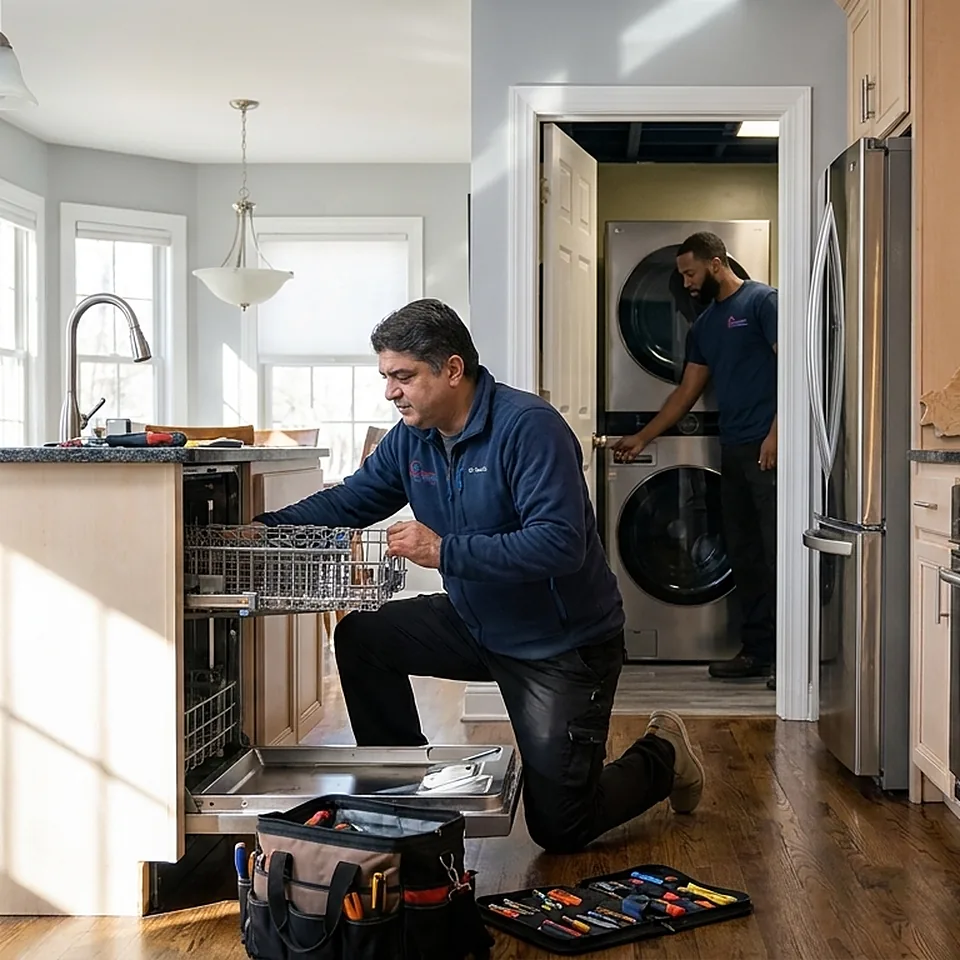
Below, appliance by appliance: what the manufacturers say to use, how often, and what to avoid. If you'd rather hand over the hard-to-reach parts, our maintenance tune-ups include cleaning things like fridge coils, the washer drum and gasket, and the dryer lint path.
Before you start: power, products and what never to use
A safe deep-clean routine for any appliance
- Turn off the power. Unplug the appliance or switch off its breaker. For a fridge, Whirlpool says to unplug it or turn off the cooling if your model allows, and to pause the ice maker.
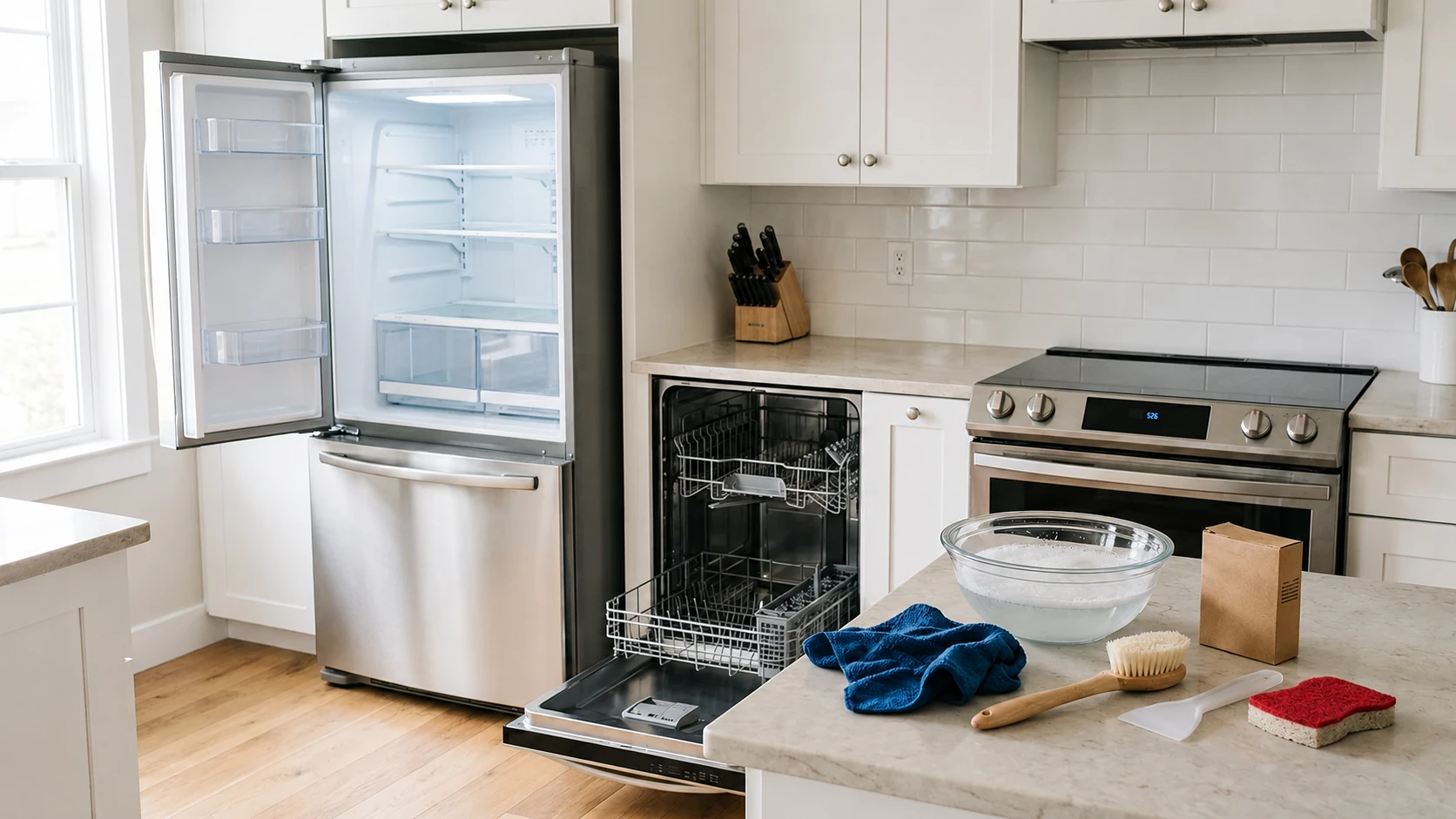
- Empty it and take out what comes out. Shelves, drawers, racks, filters, turntables and dispenser drawers clean better at the sink.
- Wash removable parts in warm soapy water. Let cold glass shelves warm up first; Whirlpool warns against hot water on cold glass.
- Wipe the inside with a mild solution and a soft cloth. Wring the cloth out well near lights, controls and switches.
- Rinse and dry everything. Leftover soap attracts grime, and trapped water feeds smells and mold.
- Put it back together and restore power. Check that shelves, filters and gaskets are seated properly before you close the door.
| Appliance | Deep clean | Use | Never use |
|---|---|---|---|
| Refrigerator | Every 1 to 3 months; gasket check monthly | Warm water and mild dish soap; baking soda for odors | Abrasive or harsh cleaners, window sprays, scouring cleansers, bleach, petroleum-based cleaners |
| Oven | When soil builds up | What your manual allows: self-clean, steam clean or soap and water | Commercial cleaner or liners where the manual forbids them; foil on the floor |
| Glass cooktop | After spills, once cool | Ceramic glass cooktop cleaner and a cooktop scraper | Steel wool, abrasive powder, chlorine bleach, rust remover, ammonia |
| Microwave | Regularly, before soil builds up | Mild soap and water; a cup of water to steam spills | Anything your manual forbids; never remove a cover or panel |
| Dishwasher | Filter every few months | Warm soapy water and a soft brush | Wire brushes, sharp tools on the filter mesh |
| Front-load washer | Cleaning cycle monthly | Washer cleaner or liquid chlorine bleach in the cleaning cycle | Thickened or no-splash bleach; too much detergent |
| Dryer | Lint screen every load; vent yearly | Your hand for the screen; a vent brush or a vent cleaning service | Running it without the lint screen |
Can you deep clean appliances with vinegar?
Not everywhere. Bosch says it does not recommend vinegar in a washing machine because "it may degrade the rubber parts of the machine over time," and points to its own descaler and washer cleaner instead (Bosch, cleaning the washing machine with vinegar).
LG's US tub-cleaning page takes a different line: it lets you use vinegar in place of diluted bleach on the gasket, and adds "Never use the two together at the same time" (LG, how to clean the tub).
So the rule is simple. Check your manual for your brand, never mix vinegar and bleach, and keep vinegar off rubber seals and hoses unless the manual says it's fine. When in doubt, use the cleaner the manufacturer names.
Refrigerator and freezer
Whirlpool's refrigerator cleaning guide suggests a quick wipe of shelves, handles and spills weekly, a deep clean every 1 to 3 months depending on use, and a monthly gasket check.
Use warm water with mild dish soap for the walls, shelves and drawers. For odors, Whirlpool suggests about one tablespoon of baking soda per quart of warm water. Whirlpool says not to use abrasive or harsh cleaners such as window sprays or scouring cleansers, and the list includes bleach and petroleum-based cleaners.
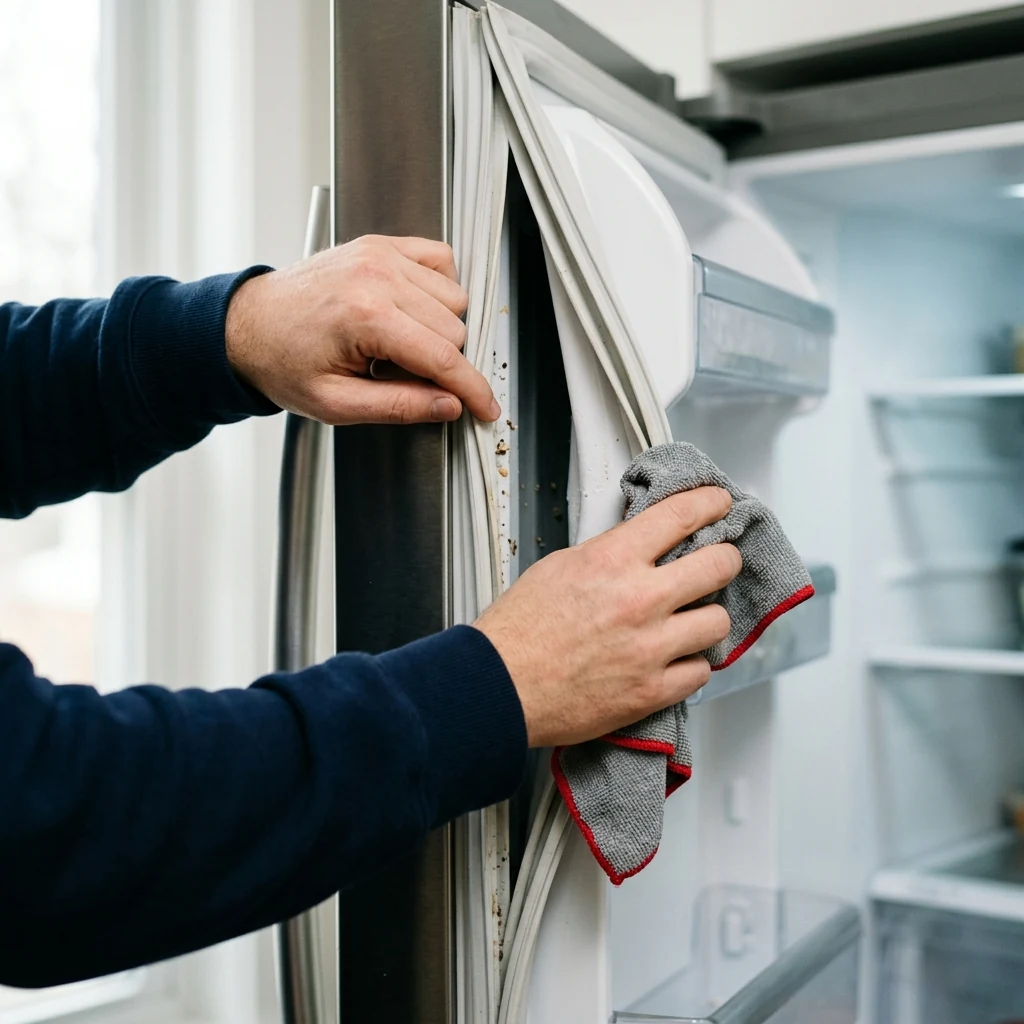
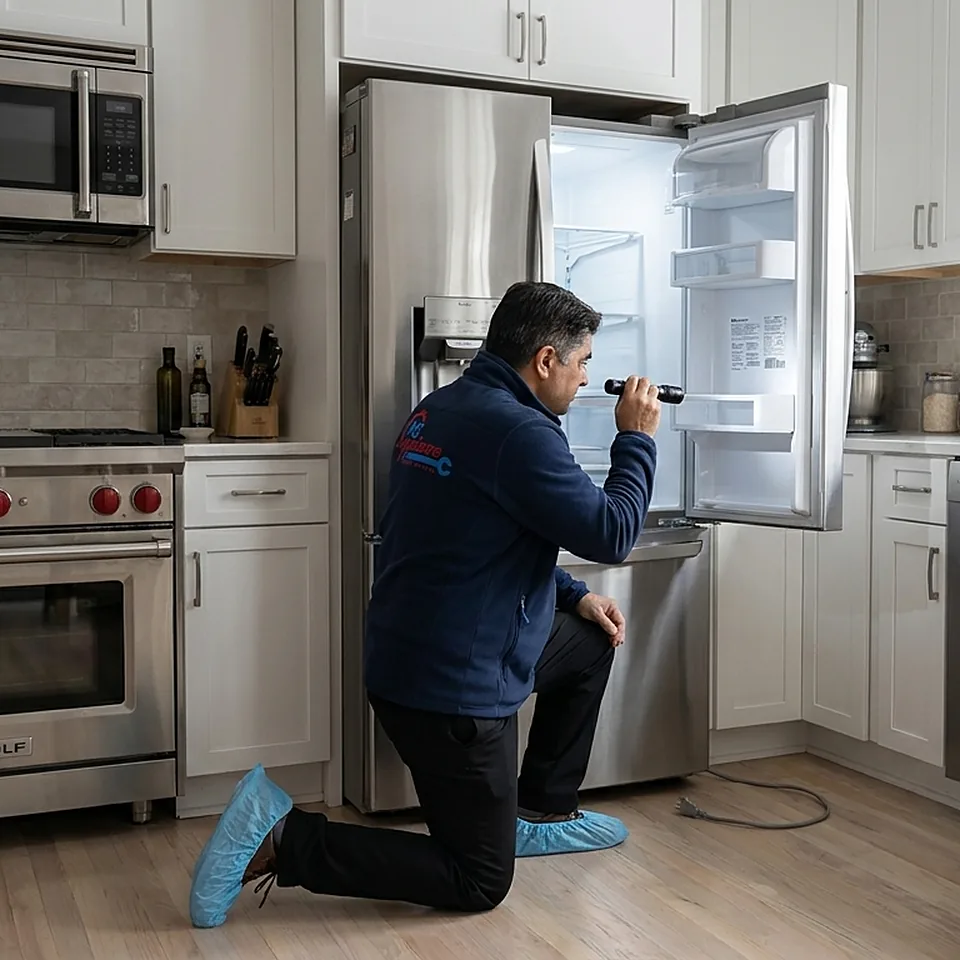
The gasket deserves its own minute. Lift each fold, wipe out the crumbs with a damp cloth and mild soap, and dry it. A clean, dry gasket seals better, and a torn one is worth replacing. On older fridges, vacuum the condenser coils too; ENERGY STAR advises keeping them clean on older models, and dusty coils make the fridge run longer.
Rust spots on a stainless door or panel need a different method; see our guide to cleaning rust from stainless steel appliances.
Our fridge cleaning guide covers the full step-by-step, and while the fridge is empty it's a good time to check how often to change the water filter.
Oven, cooktop and microwave
Oven
Start with your manual, because ovens differ more than any other appliance. Samsung's oven cleaning guide says commercial oven cleaners and oven liners should never be used in or around any part of its ovens, and to take everything out, racks and accessories included, before a self-clean cycle. Other brands' rules differ, so read yours.
Never use a metal brush on the enamel. Keep foil out of the oven too; Samsung warns that foil, like heavy spillage, can cause damage or ignite during a self-clean. If the oven has other problems, like uneven baking or slow preheating, our guide to common oven issues helps you match the symptom.
Glass cooktop
Whirlpool's glass cooktop guide says to make sure all controls are off and the surface is cool. Hold a cooktop scraper at about 45 degrees for burned-on spots, rub in a ceramic glass cooktop cleaner, then polish with a dry cloth. It warns against steel wool, abrasive powder, chlorine bleach, rust remover and ammonia.
On a gas range, wash the grates and burner caps in warm soapy water if your manual allows, and dry them completely before you put them back. Don't take apart anything below the caps.
Microwave
Whirlpool's microwave cleaning guide says regular cleaning helps prevent arcing damage caused by soil buildup. Use mild soap and water on the cavity, the inlet cover, the rack supports and the area where the door meets the frame. For stuck spills, heat a microwave-safe cup with 1 cup of water for 3 to 5 minutes, then wipe. Clean only the inside surfaces: never remove a cover or panel.
If the plate stopped turning, see our guide to a microwave turntable that stopped spinning.
Dishwasher
The filter is the part that matters most, and the part most owners have never seen. Bosch's dishwasher filter guide recommends cleaning it every few months: remove the bottom rack, take out the filter from the bottom of the tub, wash it with warm soapy water and a scrub brush, clean the pieces separately, and seat it back securely. Check your manual, because filters twist out differently by brand.
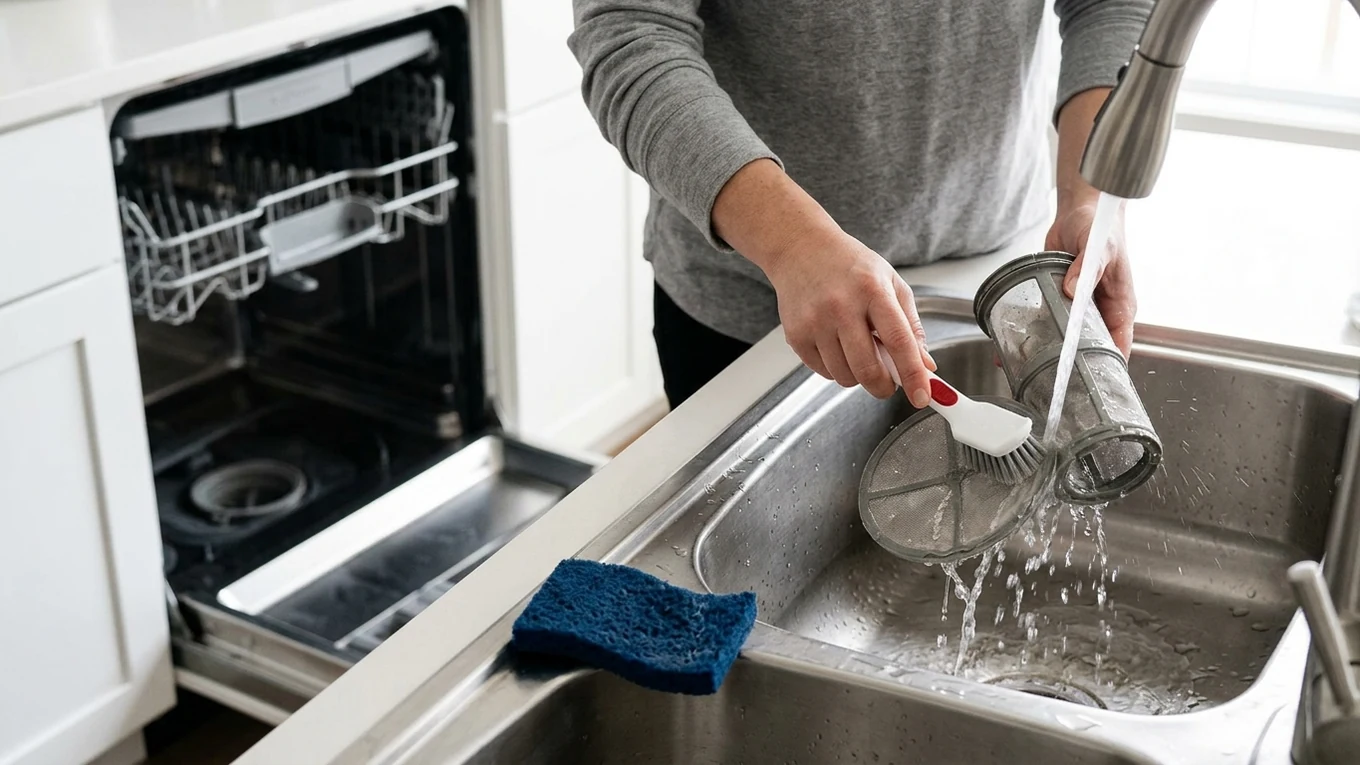
While the rack is out, wipe the door edges and look through the spray arm holes for debris. If water still pools after the filter is clean, our guide to a dishwasher not working walks through the next checks, and what not to put in a dishwasher keeps it cleaner between deep cleans.
Washing machine
For front-load washers, Whirlpool's washer cleaning guide says to run the Clean Washer cycle every month and leave the door open slightly afterward so the inside can dry. On some models a CL code appears after 30 cycles as a reminder, according to Whirlpool's CL code page.
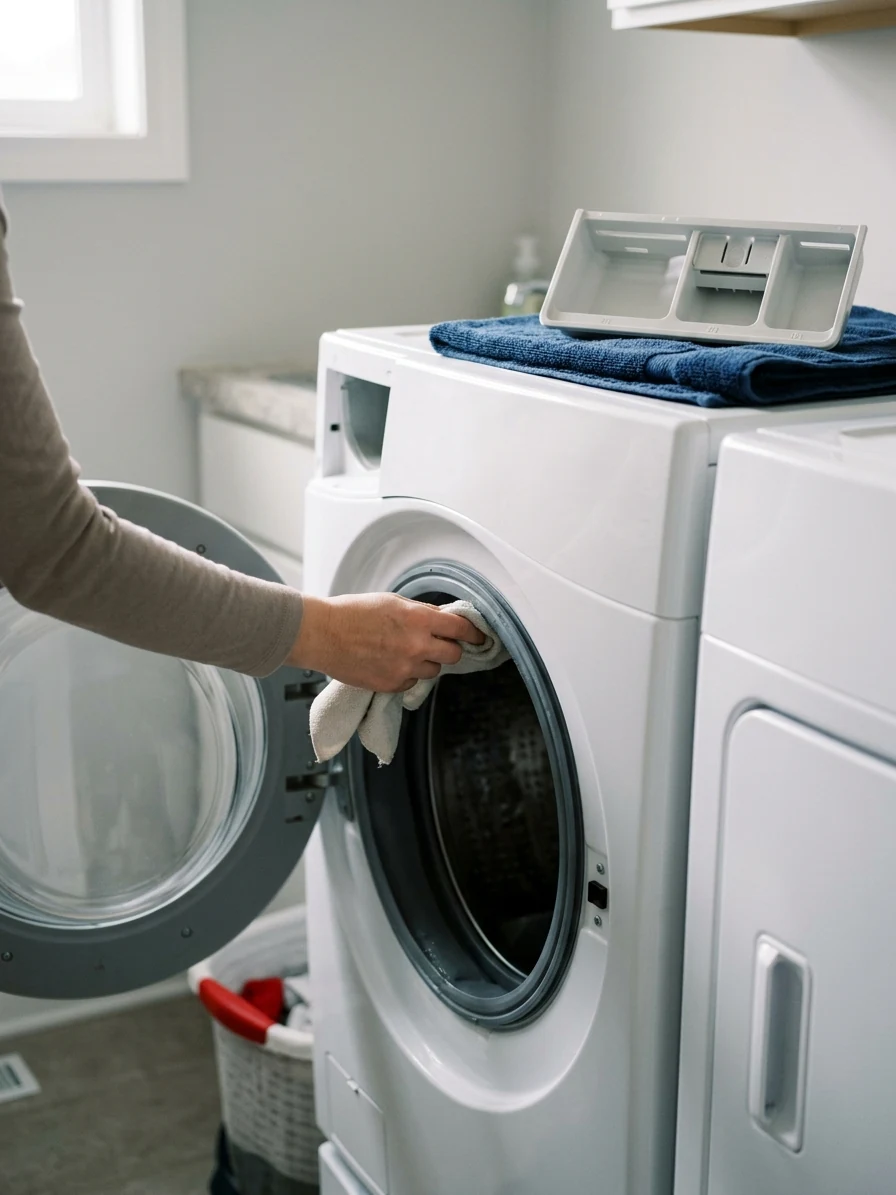
Use a washer cleaner or liquid chlorine bleach in the cycle, as your manual directs, but not thickened, easy-pour or no-splash bleach, which Whirlpool says can cause excess suds. Pull out the dispenser drawer and rinse it, and wipe inside the door seal fold.
If a musty smell is already there, LG's US guide says to run its TUB CLEAN cycle once a week for three weeks in a row, then leave the door and dispenser open to dry.
Whirlpool says to use only HE detergent, because non-HE or excess detergent causes excess suds.
If you see water on the floor after a cleaning cycle, it's not a cleaning problem: our guide on how to fix a washing machine that leaks covers the usual causes.
Dryer
The dryer deep clean is a fire safety job as much as a cleaning one. The NFPA says the leading cause of home clothes dryer fires is failure to clean them, and its dryer safety tips say:
- Never use the dryer without a lint filter, and clean it before or after each load.
- Use rigid or flexible metal venting, and make sure the vent pipe isn't restricted.
- Make sure the outdoor vent flap opens when the dryer runs.
- Clean lint out of the vent pipe once a year, or more often if clothes take longer than normal to dry.
- Turn the dryer off when you leave home or go to bed.
- Have a gas dryer's gas line and connection inspected by a qualified professional to make sure they are intact and free of leaks.
Lint also builds up inside the cabinet, around the drum and heater area, where the lint screen can't catch it. That part means opening panels, so leave it to a technician. If loads already take two cycles, read our guide to a dryer that takes too long to dry.
When cleaning isn't enough
A deep clean fixes smells, film and slow drying caused by lint. It doesn't fix a failed part. These signs mean stop cleaning and call.
In Chicago, the gas utility is Peoples Gas.
You'll know the service call before we arrive: a fair, upfront fee that depends on your location and the appliance. If we find a worn part, you get a written estimate before any work.
Deep clean calendar
- Every dryer load: clean the lint screen
- Weekly: wipe fridge shelves, handles and spills
- Monthly: washer cleaning cycle, dispenser drawer rinse, fridge gasket check
- Every few months: dishwasher filter, door edges and spray arms
- Every 1 to 3 months: full fridge deep clean
- After spills: glass cooktop and microwave, once cool
- Yearly, or sooner if drying slows: dryer vent pipe
- Yearly on older fridges: vacuum the condenser coils, unplugged
Frequently asked questions
How often should you deep clean appliances?
It depends on the appliance. Whirlpool suggests a fridge deep clean every 1 to 3 months and a front-load washer cleaning cycle every month. Bosch says to clean the dishwasher filter every few months. The NFPA says to clean the dryer lint screen every load and the vent pipe once a year. Ovens, cooktops and microwaves get cleaned when soil builds up.
What cleaner should you use on appliances?
For most surfaces, warm water and mild dish soap with a soft cloth. Add baking soda in warm water for fridge odors. Glass cooktops need a ceramic glass cooktop cleaner, and washers need a washer cleaner or the bleach your manual names. Avoid steel wool, scouring powder, ammonia and harsh sprays, which damage liners, gaskets and glass.
Can you use vinegar to deep clean appliances?
Check your manual first. Bosch does not recommend vinegar in a washing machine because it may degrade the rubber parts over time. LG's US guide allows vinegar in place of diluted bleach on the washer gasket, but says never to use the two together. Keep vinegar off rubber seals and hoses unless your manual says it's fine.
Is it safe to use oven cleaner in a self-cleaning oven?
Only if your manual allows it. Samsung says commercial oven cleaners and oven liners should never be used in or around any part of its ovens. Other brands' rules differ, so read yours, including for manual-clean ovens. When in doubt, use warm soapy water or a baking soda paste and the oven's own cleaning cycle.
Do I need to unplug appliances before cleaning?
Yes, for any deep clean. Unplug the appliance or switch off its breaker before you reach inside, remove parts or wipe near lights and controls. For a fridge, Whirlpool says to unplug it or turn off the cooling if your model allows, and pause the ice maker. Cooktops just need the controls off and the surface cool.
Can a deep clean fix a smelly dishwasher or washer?
Often, yes. A dishwasher filter packed with food and residue in a washer's door seal and drum are common smell sources, and cleaning them usually helps. If the smell returns within days, or water stands in the bottom after a cycle, a drain problem is likely, and that's a repair rather than a cleaning job.
What to do next
Pick one appliance this weekend and start with its hidden part: the fridge gasket, the dishwasher filter, the washer seal or the dryer vent. Check the manual before any spray.
If you'd rather we handle the hard-to-reach parts, book one of our maintenance tune-ups with cleaning. We're out 7 days a week across Aurora and 30+ nearby cities, and same-day service is available.
Sources
- Whirlpool Product Help: Cleaning the Interior of the Refrigerator: If the model allows, unplug or turn off cooling and pause the ice maker before a deep clean; warm water and mild dish soap; baking soda about one tablespoon per quart for odors; avoid hot water on cold glass; clean gaskets with a damp cloth and mild soap; no abrasive or harsh cleaners such as window sprays, scouring cleansers, bleaches or petroleum-based cleansers; weekly wipe, deep clean every 1 to 3 months, monthly gasket check
- ENERGY STAR: Refrigerators: Keep condenser coils clean on older models; airtight door seals
- Samsung Canada Support: How to clean your Samsung oven: Before a self-clean, remove everything including the racks and accessories; make sure the oven is free of excessive spillage and aluminum foil, which can cause damage or ignite; commercial oven cleaners or oven liners should never be used in or around any part of the oven (Samsung Canada page; no US equivalent found)
- Whirlpool Product Help: Cleaning Ceramic Glass Cooktop (Electric Range): Controls off and surface cool; no steel wool, abrasive powder, chlorine bleach, rust remover or ammonia; scraper at about 45 degrees; ceramic glass cooktop cleaner; polish dry
- Whirlpool Product Help: Cleaning the Interior or Cavity (Over the Range Microwave): Regular cleaning prevents arcing from soil buildup; keep the inlet cover, rack supports and door contact area clean; mild soap and water; 1 cup of water for 3 to 5 minutes to loosen spills; dry thoroughly
- Bosch: How to Clean your Dishwasher Filter: Clean the filter every few months; remove the bottom rack; filter at the bottom of the tub; wash with warm soapy water and a scrub brush; clean the pieces separately; reinstall securely
- Whirlpool Product Help: Cleaning the Interior (Front Load Washer): Run the Clean Washer cycle every month; leave the door open slightly afterward; remove and clean the dispenser drawer regularly; washer cleaner or liquid chlorine bleach, not thickened, easy-pour or no-splash bleach; use only HE detergent, because non-HE or excess detergent causes excess suds
- Bosch: Cleaning washing machine with vinegar: Bosch does not recommend vinegar because it may degrade the rubber parts over time; recommends its descaler and washer cleaner every few months
- LG USA Support: How to Clean the Tub of Your LG Washing Machine: TUB CLEAN with a washer tub cleaner; run weekly for 3 weeks if already musty; gasket cleaned with diluted liquid chlorine bleach or vinegar in its place; never use bleach and vinegar together; undiluted bleach can deteriorate the gasket
- Whirlpool Product Help: CL Code (Front Load Washer): The CL code is a reminder to run Clean Washer and appears after 30 cycles
- NFPA: Clothes Dryer Safety (tip sheet): Do not use the dryer without a lint filter; clean the lint filter before or after each load and remove lint around the drum; rigid or flexible metal venting; make sure the vent pipe is not restricted and the outdoor vent flap opens when the dryer runs; clean lint out of the vent pipe once a year or more often if drying takes longer; gas dryers inspected by a qualified professional for an intact, leak-free gas line and connection; turn the dryer off if you leave home or go to bed; the leading cause of home clothes dryer fires is failure to clean them
Written by
About us
MS Appliance Repair Services
Honest Repairs, Right at Home
Rated 5 stars on Google by 190+ homeowners in the Chicago suburbs
- Open 7 days, 8 AM to 7 PM
- Same-day service available
- 5-star Google rating from 190+ reviews
- 90-day limited parts and labor warranty on qualifying repairs
- LG-authorized
Serving Aurora, Naperville, Plainfield and 30+ cities across the Chicago suburbs.
Keep reading
All articles →
Oven Issues: What Your Oven Is Telling You and What to Check
Oven not heating, running hot, stuck locked or won't turn off? Match the symptom to the likely cause, try the safe checks, and know when to call.
Causes of Dishwasher Leaking: Front, Bottom, Sink Cabinet or Basement
Water in front of the dishwasher, under it, or dripping into the basement? Find the cause by where and when it leaks, then try the safe checks.
Dryer Takes Too Long to Dry? Find the Cause From How It Feels
Two cycles for one load? Feel the clothes and the vent air to tell an airflow problem from a heat fault, then work through the safe checks in order.