




















Repair or Replace Refrigerator? A Technician's Rule of Thumb
The age, the part that failed and the 50% rule decide most cases. Here is how we weigh them, part by part, before anyone buys a new fridge.
On this page
Quick answer
Repair or replace refrigerator? Repair it when the fault is a fan, defrost part, sensor, gasket or ice maker, at almost any age. Replace it when the compressor or sealed system fails past 10 years, the repair tops half the price of a comparable new fridge, or it keeps breaking. Standard fridges average about 14 years.
Key takeaways
- The age and the part that failed decide most cases; standard refrigerators average about 14 years, per the U.S. Department of Energy.
- Fans, defrost parts, sensors, gaskets and ice makers are usually worth fixing at almost any age.
- A failed compressor or a refrigerant leak past 10 years usually means replace, unless it is a premium built-in or still under warranty.
- Use the 50% rule as a guide, not a law: count food, delivery and a built-in opening too.
- Call a technician for a diagnosis before you buy new, because a warm fridge is sometimes one part away from working again.
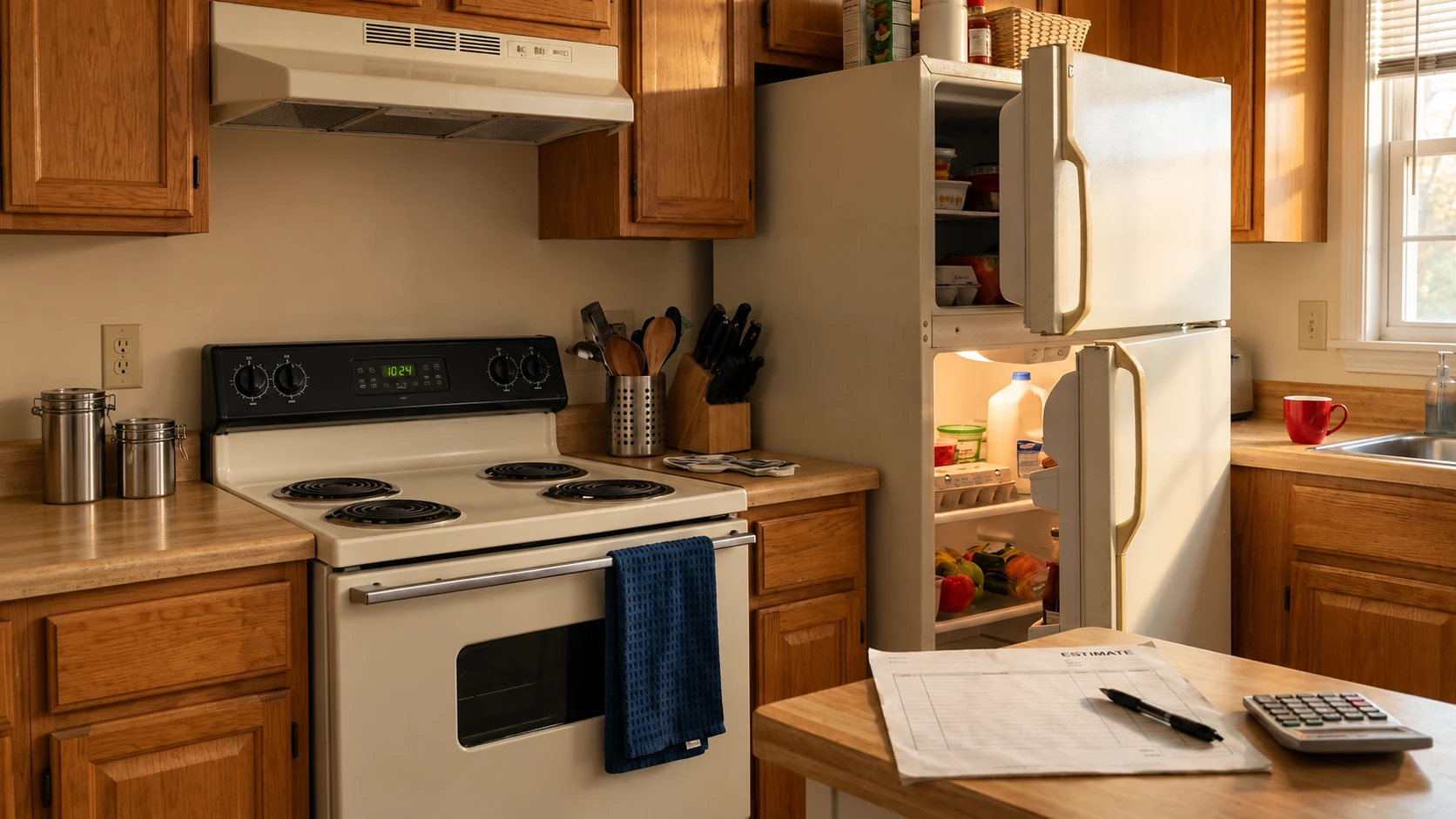
The fridge is warm, a repair estimate is on the counter, and there is a sale on new ones this weekend. Which is the smarter money?
The honest answer depends on two facts: how old the fridge is and which part failed. Our refrigerator repair technicians answer that question in kitchens across Aurora and 30+ nearby cities, and we'll tell you straight when a fridge isn't worth fixing.
The quick rule: age plus the part that failed
Most decisions come down to this table. Find the part in the first column and your fridge's age across the top. "Get a diagnosis" means the answer depends on the estimate and the fridge's condition.
| Failed part | Under 5 years | 5 to 10 years | Over 10 years |
|---|---|---|---|
| Evaporator or condenser fan | Repair | Repair | Usually repair |
| Defrost heater, thermostat or control | Repair | Repair | Usually repair |
| Temperature sensor (thermistor) | Repair | Repair | Usually repair |
| Door gasket | Repair | Repair | Repair if the part is still made |
| Ice maker or water inlet valve | Repair | Repair | Repair, or live without ice |
| Start relay or overload | Repair | Repair | Get a diagnosis |
| Main control board | Repair | Get a diagnosis | Often replace |
| Compressor | Repair; check the warranty | Get a diagnosis | Usually replace |
| Refrigerant leak (sealed system) | Repair; check the warranty | Get a diagnosis | Usually replace |
| Rust through the cabinet or a cracked liner | Rare | Get a diagnosis | Replace |
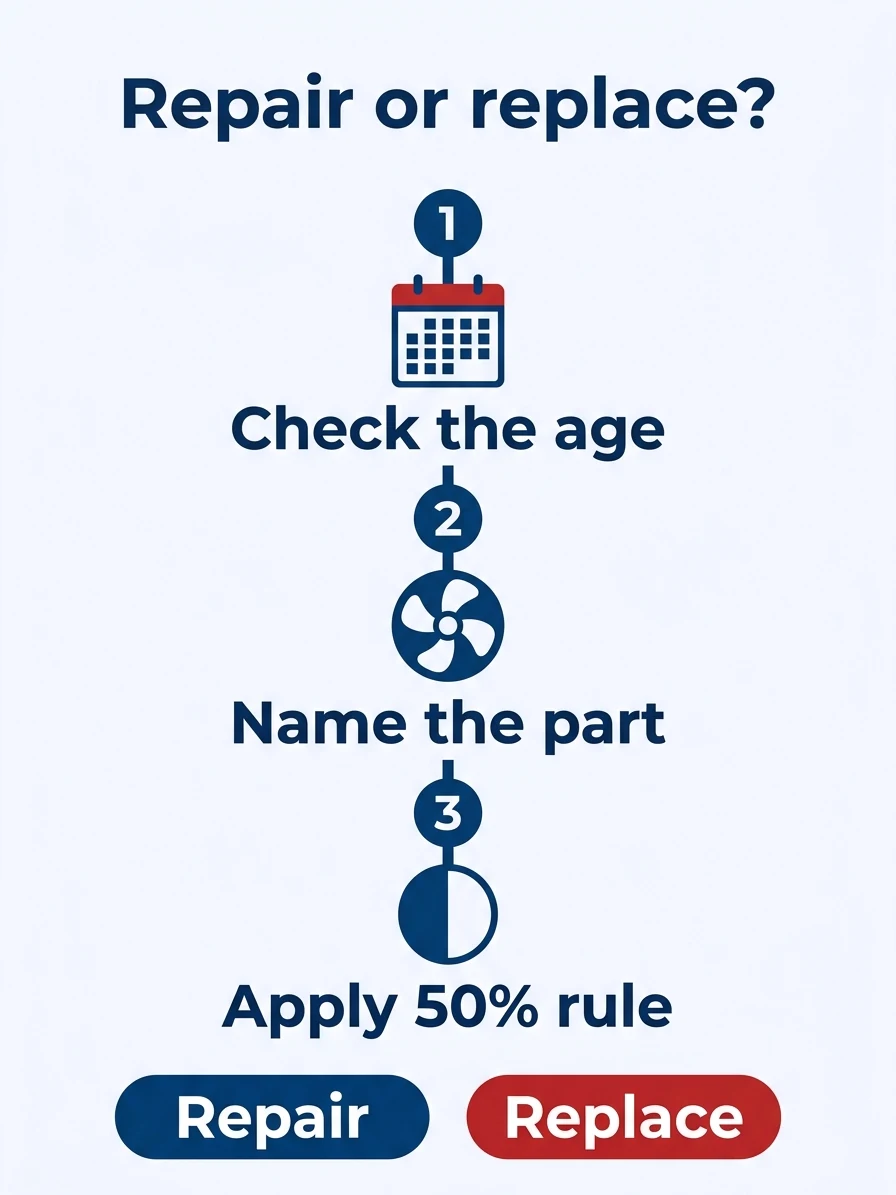
The pattern is simple. Fans, defrost parts, sensors and gaskets are small parts that fail on fridges of every age, and replacing one puts the fridge back to normal. The compressor and the sealed system are the heart of the fridge; on an older unit, fixing them costs a large share of a new fridge, and the rest of it is still old.
On lifespans, the U.S. Department of Energy puts the mean life of a standard-size refrigerator at 14.3 years and a compact one at 8.8. That is an average, not an expiry date: a well-kept fridge can run past it.
The 50% rule, and where it misleads
The rule: if a repair costs more than half the price of a comparable new refrigerator, replacing usually makes more sense. "Comparable" matters. Compare against the same size and style (a French-door with a dispenser, not a basic top-freezer).
The rule is a good start, but it ignores a few things:
- Remaining life. A repair at half the price on a 3-year-old fridge can buy a decade or more of use. The same repair on a 12-year-old fridge buys far fewer years.
- The full cost of new. Delivery, hauling away the old fridge, and the food you lose while you wait for a new one all count on the replace side.
- The opening. Built-in and counter-depth fridges have fewer replacements that fit, and some kitchens need cabinet work for a different size.
- Energy. ENERGY STAR says certified refrigerators are about 9 percent more efficient than models that meet the federal minimum. That is a nice bonus on a new purchase, but on its own it rarely justifies replacing a fridge that can be fixed with one part.
Signs a refrigerator is near the end
Some fridges tell you the answer before anyone gives you a quote.
- The compressor runs almost nonstop and the fridge still warms up, even after a coil cleaning.
- It needs a second sealed-system repair, or the compressor fails on a fridge past 10 years.
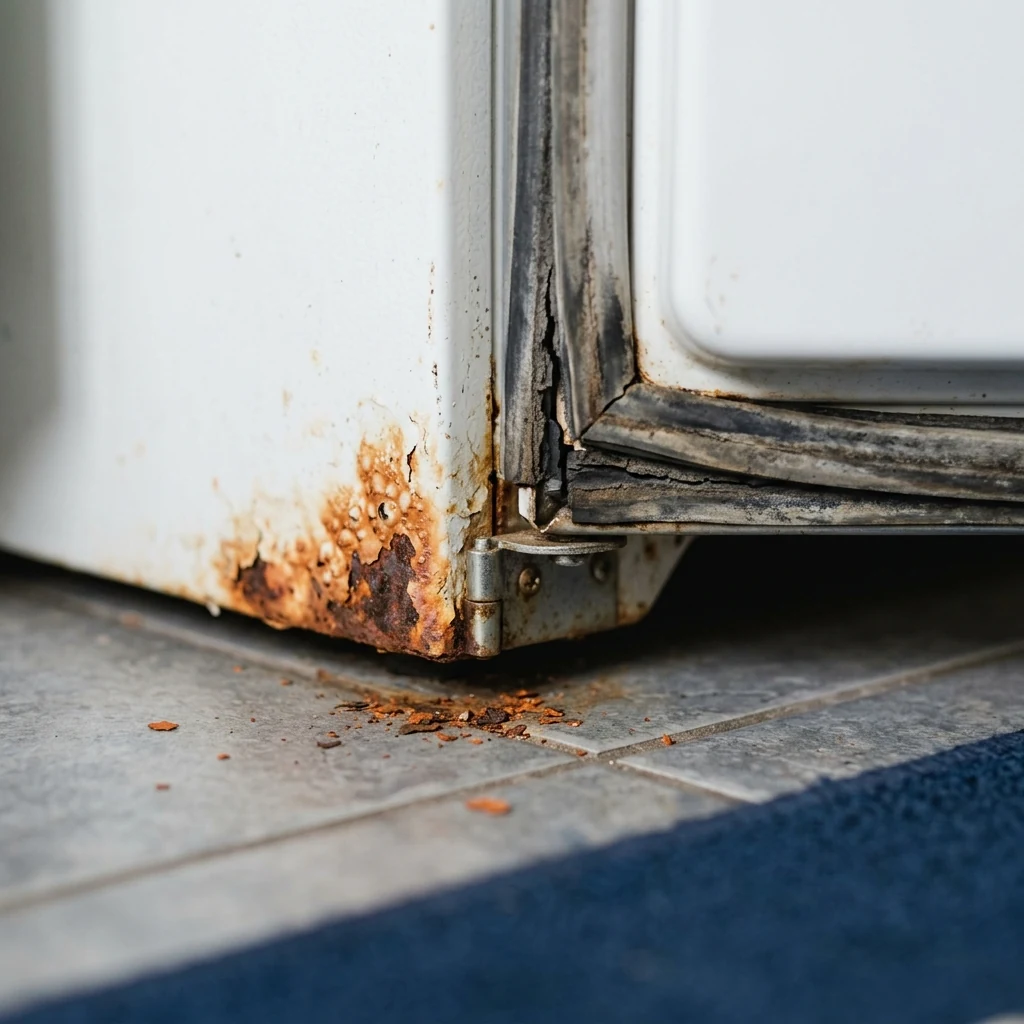
- Rust is coming through the cabinet, the inner liner is cracked, or the cabinet sweats on the outside.
- It has needed several unrelated repairs in a short time.
- The parts it needs are no longer made.
- Food spoils faster than it used to, even with clean coils and sealing gaskets.
- Your electric bill has crept up with no change in how you use the fridge.
If the warming came on slowly over days with no other clue, read our guide to the signs of a Freon leak before you decide. If the display shows a code, our Frigidaire refrigerator error codes and LG refrigerator error codes tables tell you which part it points to.
When repair makes sense even on an older fridge
The age column isn't the whole story. Three situations tip the answer toward repair.
It is still under warranty. Check your paperwork before anything else. Some makers cover the compressor and sealed system longer than the rest of the fridge. For LG owners, we are LG-authorized and handle in-warranty LG repairs.
It is a premium built-in. Replacing a Sub-Zero, Viking, Thermador, Miele or GE Monogram built-in costs far more than replacing a freestanding fridge. A sealed-system repair that would be a poor buy on a basic fridge can be a good one here.
The failed part is small. A 13-year-old fridge with a dead evaporator fan is still a 13-year-old fridge with one bad fan. If the cabinet is sound and the compressor is healthy, a cheap part can buy years.
The visit starts with the service call, a fair, upfront fee that depends on your location and appliance, confirmed before we come. Nothing is done without your approval, and qualifying repairs carry our 90-day limited parts and labor warranty. If you'd rather start with an honest look and no commitment, our diagnosis and inspection visit is built for exactly this decision.
Before you decide: safe checks and food safety
Sometimes the repair-or-replace question disappears after ten minutes of checks. These are all safe with the power off.
Safe checks before you call it dead
- Unplug the fridge first. Do every check below with the power off, then plug it back in.
- Check the outlet and breaker. Make sure the cord is fully in and the breaker hasn't tripped. Don't test the outlet with tools; that is electrical work.
- Clean the condenser coils. Use a coil brush and a vacuum through the bottom grille or at the back. Packed coils make a fridge run warm and nonstop.
- Test the door gaskets. Close each door on a sheet of paper. If it slides out with no drag, that spot isn't sealing.
- Clear the vents. Move food away from the air vents inside the fridge and the freezer.
- Measure after a full day. Put a thermometer in a glass of water on the middle shelf. The FDA says the fridge should be at 40°F or below.
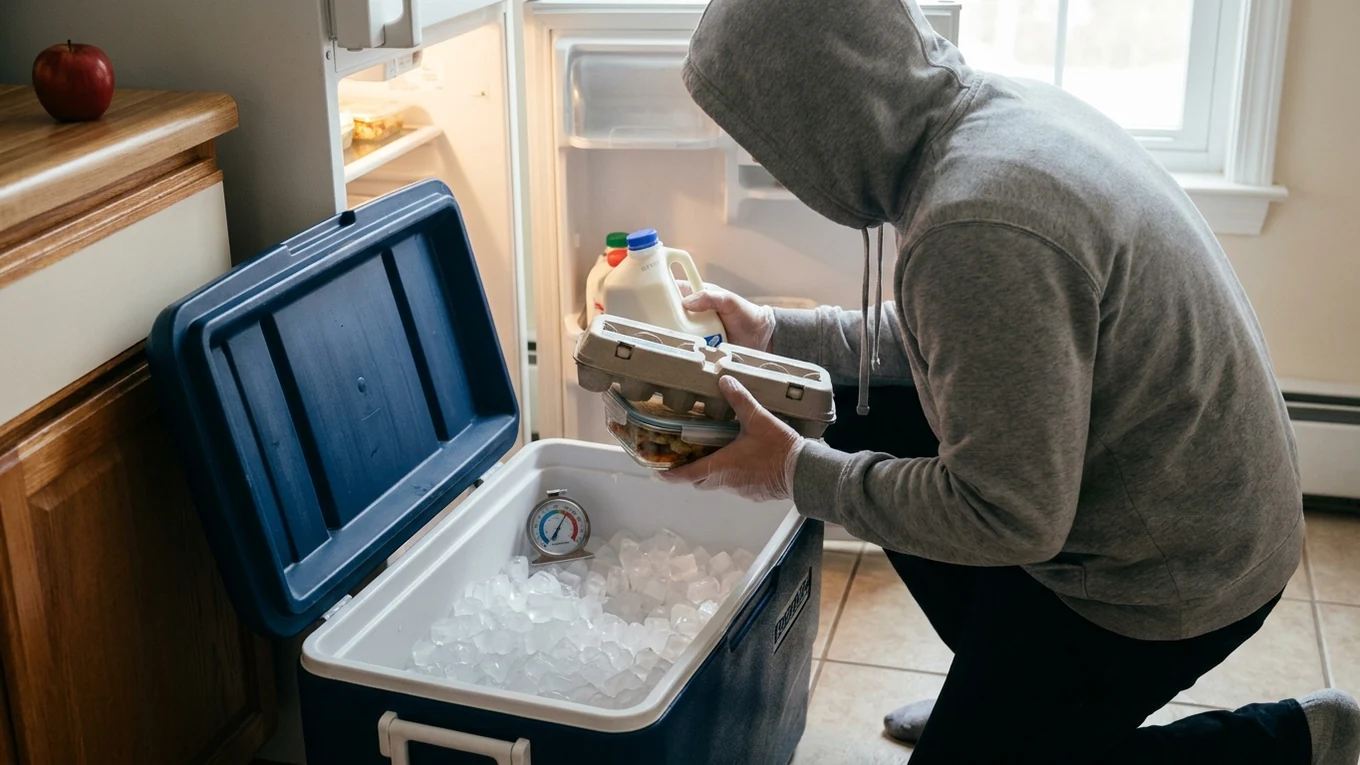
While you decide, protect the food. The FDA says perishables that sat above 40°F for 4 hours or more should be thrown out, so move meat, dairy and leftovers to a cooler with ice if the fridge is warm.
Our fridge cleaning guide covers the coils in more detail. The same thinking applies to other appliances: see repair or replace a dishwasher.
Frequently asked questions
Is it worth repairing a 10-year-old refrigerator?
Often, yes, if the failed part is small: a fan, a defrost part, a sensor, a gasket or the ice maker. Those repairs put the fridge back to normal and can buy several more years. If the compressor or the sealed system has failed at 10 years or more, replacing usually makes more sense, unless it is a premium built-in or still covered by a warranty.
How old is too old to repair a refrigerator?
There is no single cutoff. The U.S. Department of Energy puts the mean life of a standard-size refrigerator at 14.3 years and a compact refrigerator at 8.8. That is an average across brands and models, not a limit. Clean coils, sealing gaskets and a fridge that isn't crammed against a wall or in a hot garage all help it last longer, while repeated sealed-system repairs are a sign it is near the end.
Is it cheaper to repair or replace a refrigerator?
Repair is usually cheaper when the fault is a small part such as a fan, a sensor or a defrost component. Use the 50% rule: if the repair costs more than half the price of a comparable new fridge, replacing usually makes more sense. Count delivery, removing the old fridge, lost food and whether a new model fits your opening.
Is it worth replacing a refrigerator compressor?
It depends on the age and the type of fridge. On a fridge under about 5 years old, or one still under warranty, a compressor replacement is usually worth doing. On a standard fridge past 10 years, it usually isn't, because the job costs a large share of a new fridge and the rest of the fridge is still old. Premium built-ins are the exception.
How do I tell if my fridge is broken or just needs cleaning?
Unplug it, clean the condenser coils, test the door gaskets with a sheet of paper, clear the vents inside and plug it back in. Check a thermometer in a glass of water after a full day. If it is back to 40°F or below, it needed cleaning. If it still runs warm, or you hear no fan in the freezer, a part has failed and a technician should test it.
Will a new refrigerator save on energy?
A little. ENERGY STAR says certified refrigerators are about 9 percent more efficient than models that meet the federal minimum standard. That is worth having when you are buying anyway, but on its own it rarely pays for replacing a fridge that one small part would fix. Energy matters most when you are choosing between a big repair on an old fridge and a new one.
What to do next
Start with the two facts that decide it: the fridge's age and the part that failed. A small part on any age is usually worth fixing; a compressor or a leak on an older fridge usually isn't, unless it is a built-in or under warranty.
If you don't know which part failed yet, find out before you buy. Book a visit through our refrigerator repair page and you'll get a written estimate and a straight answer on whether the repair is worth it.
Sources
- U.S. Department of Energy: Energy Conservation Standards for Refrigerators, Refrigerator-Freezers, and Freezers, final rule (Federal Register, govinfo.gov): Mean lifetime of 14.3 years for standard-size refrigerators and refrigerator-freezers and 8.8 years for compact refrigerators, estimated from shipment data and the age of installed units
- ENERGY STAR: Refrigerators: ENERGY STAR certified refrigerators are about 9 percent more energy efficient than models that meet the federal minimum standard
- U.S. Food and Drug Administration: Food and Water Safety During Power Outages and Floods: Fridge at 40 F or below; discard perishables held above 40 F for 4 hours or more
Written by
About us
MS Appliance Repair Services
Honest Repairs, Right at Home
Rated 5 stars on Google by 190+ homeowners in the Chicago suburbs
- Open 7 days, 8 AM to 7 PM
- Same-day service available
- 5-star Google rating from 190+ reviews
- 90-day limited parts and labor warranty on qualifying repairs
- LG-authorized
Serving Aurora, Naperville, Plainfield and 30+ cities across the Chicago suburbs.
Keep reading
All articles →
Signs of Freon Leak in Refrigerator: The Real Ones and the Look-Alikes
Fridge and freezer both warming while the compressor runs nonstop? The signs of a Freon leak, the look-alikes, and what to do next.
Repair or Replace Dishwasher? An Honest Rule of Thumb
Age, the part that failed and the 50-50 rule: how to decide whether to repair or replace your dishwasher, with the checks to do before you spend.
Frigidaire Refrigerator Error Codes: Meanings, Resets and When to Call
H, HI, PF, DI SP, Sb or SY CE on a Frigidaire fridge? What each code means, how to clear it, how to keep food safe, and when to call a technician.