



















10 Energy Saving Tips for Home Appliances, From Repair Technicians
The settings and habits that cut appliance energy use, plus the hidden faults that make a fridge, dryer or washer run longer than it should.
On this page
Quick answer
The biggest energy saving tips for home appliances are settings and upkeep, not new appliances. Keep the fridge at 35 to 38°F and the freezer at 0°F, wash in cold water, run full loads, clean the dryer lint screen every load, and fix faults like a torn fridge door seal or a crushed dryer vent.
Key takeaways
- Heating water is about 90% of the energy a washer uses, so cold washes are the single biggest laundry saving.
- A fridge set colder than it needs to be, with dusty coils or a leaky door seal, runs longer every day.
- Full loads matter: washers and dishwashers use about the same energy whether they're full or half empty.
- A fault often shows up on the bill first: a fridge that never stops running, or clothes that need two dryer cycles.
- Call a technician if the fridge runs nonstop and still isn't cold, the dryer gets very hot, or you smell gas or burning.
Most energy saving lists stop at "unplug things and buy new appliances." We repair fridges, washers, dryers, dishwashers and ovens in homes across Aurora and 30+ nearby cities, and a small fault that nobody has noticed can make an appliance run longer than it should.
The 10 tips below start with the settings and habits that cost nothing, then cover the warning signs that an appliance is wasting power. If you'd rather have someone check everything at once, our maintenance tune-ups include cleaning, like fridge coils and the dryer lint path.
The 10 energy saving tips at a glance
Start with the fridge and the laundry room. The fridge runs all day, every day, and most of a washer's energy goes to heating water.
| Appliance | Tip | Why it saves energy | Sign something is wrong |
|---|---|---|---|
| Refrigerator and freezer | 35 to 38°F and 0°F; clean coils; tight seals | The compressor runs fewer hours | Runs nonstop, warm spots, frost on the back wall |
| Washer | Cold water, full loads | Heating the water is most of its energy use | Clothes come out soaking wet |
| Dryer | Clean lint screen, clear vent, sensor dry | Air moves freely, so loads dry faster | Two cycles to dry, very hot outside |
| Dishwasher | Full loads, scrape don't rinse, no heated dry | Fewer cycles, less hot water | Cycles getting longer, dishes not clean |
| Oven and stove | Lids on, right-size burner, door closed | Less heat lost to the room | Slow preheat, heat escaping at the door |
| Whole home | Power strips for idle electronics | Cuts standby power | Warm chargers and adapters |
Refrigerator and freezer: tips 1 to 3
The fridge is the only appliance that never switches off, so small fixes here add up every hour of the year.
1. Set the right temperature, then check it
ENERGY STAR recommends keeping the refrigerator at 35 to 38°F. The FDA says the fridge should stay at 40°F or below and the freezer at 0°F for food safety. Running colder than that uses more energy and isn't needed for food safety.
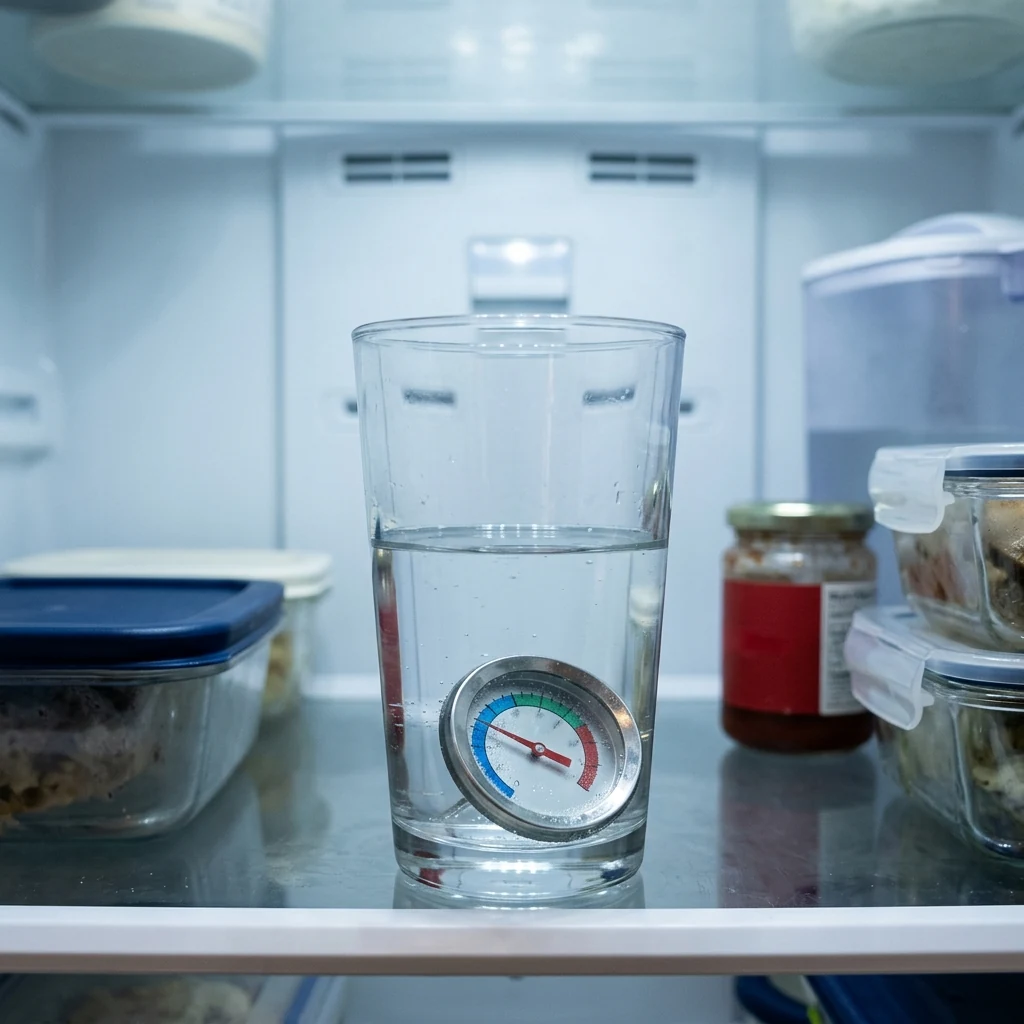
Don't trust the dial alone. The Department of Energy suggests putting an appliance thermometer in a glass of water in the middle of the fridge and reading it after a day (DOE, Energy Saver booklet). Then adjust one step at a time.
2. Keep the door seals tight and the coils clean
A door gasket that's torn, flattened or loose lets cold air out, so the compressor keeps running to replace it. ENERGY STAR says to make sure the seals are airtight and to replace them if they're not. Wipe the gasket with warm soapy water so it seals cleanly, and check the corners, where tears usually start.
On older fridges, the condenser coils sit behind the bottom grille or on the back. Dust on them traps heat, and the fridge runs longer to get rid of it. ENERGY STAR advises keeping them clean on older models. For the shelves and drawers, our fridge cleaning guide covers the full deep clean.
3. Give it room, keep it away from heat, and cover what's inside
A fridge beside the oven works harder all day. ENERGY STAR suggests placing it away from a heat source such as an oven. Leave the clearance at the back and top that your manual asks for, so warm air can escape.
Cover liquids and wrap food, too. The Department of Energy says uncovered foods release moisture and make the compressor work harder. If you have a manual-defrost freezer, defrost it before the frost builds past about a quarter of an inch, because frost lowers the efficiency of the unit (DOE, Energy Saver booklet).
Washer and dryer: tips 4 and 5
Laundry is where the heat is. These two tips cover most of the saving.
4. Wash in cold water and run full loads
ENERGY STAR says heating the water uses about 90% of the energy it takes to run a washer. Switching from hot to warm can cut energy use in half, and cold saves even more. Washers also use about the same energy whatever the load size, so run full loads: two half loads use roughly twice the energy of one full load.
Save the sanitary or extra-hot cycle for the loads that really need it. ENERGY STAR notes it raises energy use significantly.
5. Clean the lint screen every load and keep the vent clear
ENERGY STAR says to clean the dryer lint filter after every load to improve air circulation. Air that can't get out means heat that can't carry moisture away, so the dryer simply runs longer.
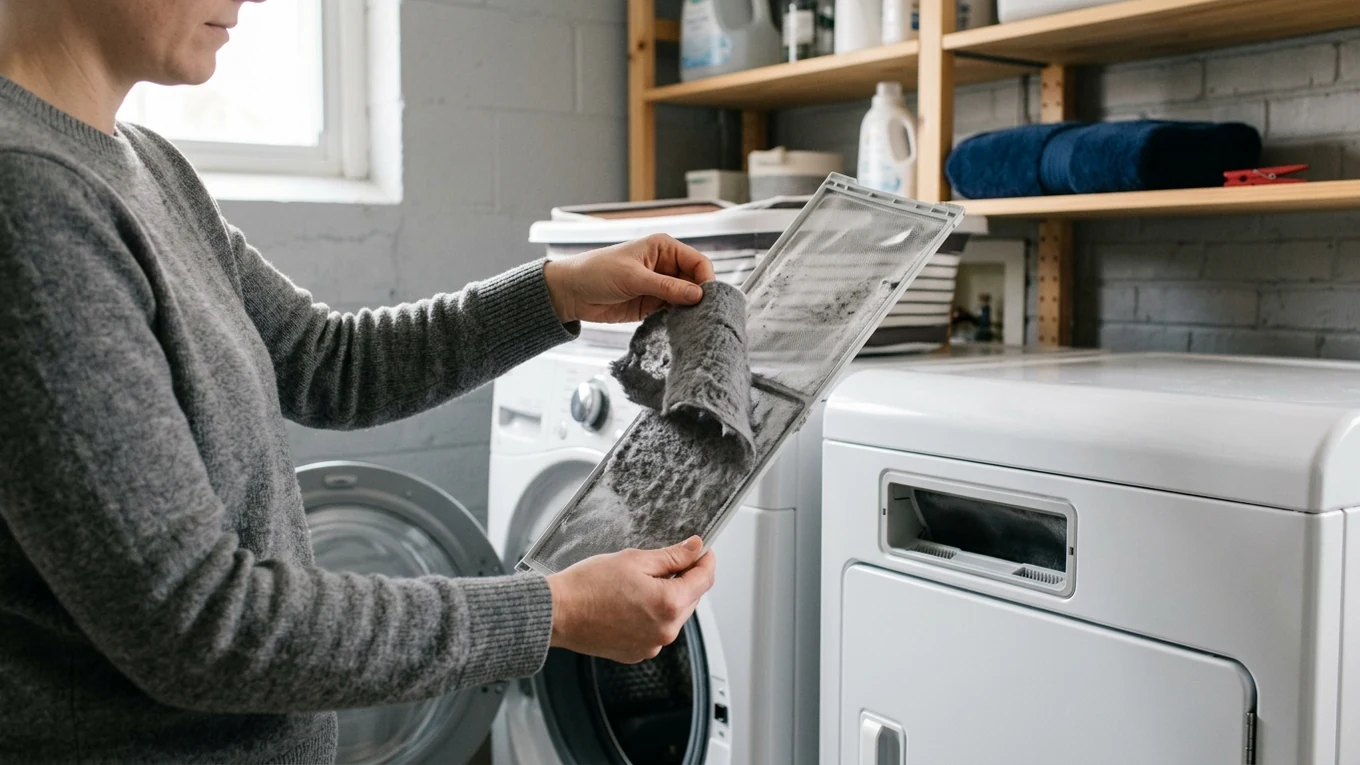
Use the moisture sensor setting if your dryer has one, so it stops when clothes are dry. The Department of Energy also suggests drying towels and heavy cottons apart from lighter clothes, and using the cool-down cycle to finish the load with the heat left in the dryer. With the dryer unplugged, a long vacuum nozzle can pull lint from the lint screen slot.
It also says to check the dryer vent now and then, because a blocked vent wastes energy and may cause a fire (DOE, Energy Saver booklet). If loads still take forever, see our guide on a dryer that takes too long to dry.
Dishwasher, oven and stove: tips 6 and 7
6. Run the dishwasher full, scrape instead of rinsing, skip heated dry
A dishwasher uses about the same energy and water no matter how many dishes are inside, according to ENERGY STAR's dishwasher page. So wait for a full load. ENERGY STAR also says rinsing dishes before loading raises the total water and energy used: scrape the food off instead, and use the rinse feature if dishes will sit overnight.
Turn off heated dry if your model offers the option, or let the dishes air dry. If your utility offers time-based rates, running the dishwasher and laundry in the off-peak hours can lower the bill further, and your utility can tell you whether you have them. And skip hand-washing to save: ENERGY STAR says a certified dishwasher uses less than half the energy.
7. Cook with the smallest appliance that does the job
For small meals, use the microwave, a toaster oven or a convection oven instead of the full-size oven. The Department of Energy says a toaster or convection oven uses one-third to one-half as much energy (DOE, Energy Saver booklet). On the stove, match the pan to the burner and use a lid. When the oven is on, keep the door closed and check through the glass.
On a gas range, look at the flame. The Department of Energy says blue flames are what you want, and that yellow flames mean the gas is burning inefficiently. Don't adjust it yourself. A yellow flame is a reason to call a technician, and if you ever smell gas, the steps in the stop-and-call box below come first.
Standby power and older appliances: tips 8 and 9
8. Cut standby power with power strips
Chargers, TVs, game consoles and countertop gadgets draw power even when they're off. The Department of Energy says TVs and DVD players in standby mode still use several watts, and suggests plugging electronics into a power strip and switching it off when they're not in use. Leave the fridge, freezer and any appliance with a clock or delayed start plugged in normally.
9. Replace an old appliance only when the numbers say so
ENERGY STAR notes that refrigerators over 15 years old could be costing you more to run, and it suggests replacing an old second fridge with a certified one. But a 7-year-old fridge with a failed fan is usually worth repairing, not replacing.
Our guides on how long a refrigerator lasts and repair or replace a washing machine give an honest rule of thumb for each. If you're shopping, learn to read the labels first with our guide to ENERGY STAR and EnergyGuide labels.
Tip 10: fix the faults that quietly raise your bill
This is the tip most lists skip. A failing part often makes an appliance run longer before it stops, and that can show up on the bill first.
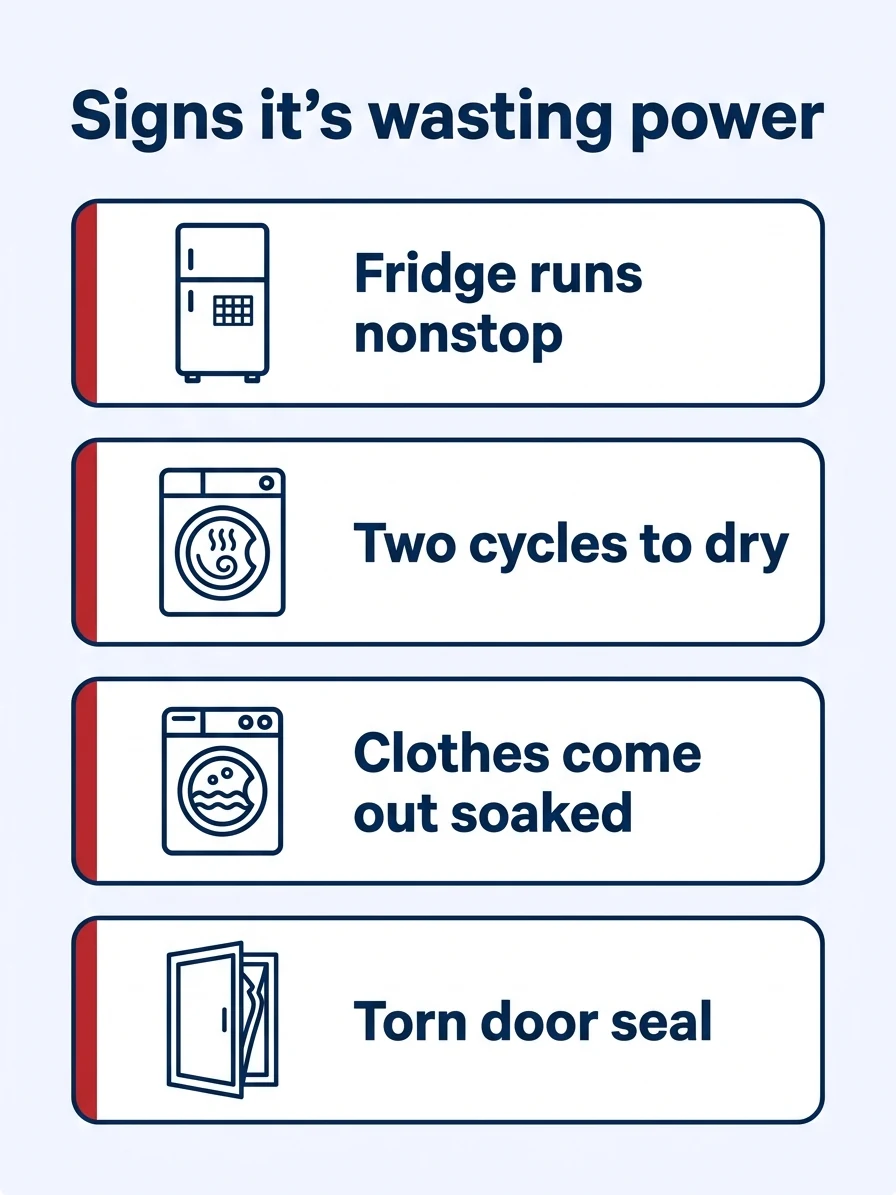
- A fridge that runs nonstop. Common causes are dirty coils, a torn door gasket, a failing fan, or a defrost problem that lets frost build up on the freezer's back wall.
- Clothes that need two dryer cycles. Usually a packed lint path or a crushed vent hose, sometimes a heating fault.
- Laundry that comes out of the washer soaking wet. A washer that doesn't spin out hands the dryer extra water to remove.
- An oven that's slow to preheat or leaks heat at the door. A worn door gasket or a weak heating element are the usual causes.
Safe checks you can do first
- Turn off the power. Unplug the appliance or switch off its breaker before you reach behind it or touch the coils.
- Read the fridge temperature. Use the thermometer test from tip 1.
- Test the door seal. Close the door on a sheet of paper at several points. The Department of Energy says that if you can pull it out easily, the seal may need replacing.
- Vacuum the condenser coils. With the fridge unplugged, use a brush attachment on the coils behind the bottom grille or on the back.
- Clear the dryer lint path. Clean the lint screen, then check that the vent hose behind the dryer isn't kinked or crushed, and that the outside flap opens when the dryer runs.
- Check the washer load. Rerun the spin with a balanced load. If clothes still come out dripping, note it for the technician.
Fans, defrost parts and heating parts sit behind panels with live wiring, so those are technician jobs. Our technicians are EPA 608 certified for refrigerant work. In Chicago, the gas utility is Peoples Gas.
The visit starts with the service call, a fair, upfront fee that depends on your location and appliance, confirmed before we come. You get a written estimate before any work, and if a fault turns up we repair it, from refrigerator repair to dryer repair.
A simple appliance energy checklist
Print it or save it on your phone. Most of it takes a few minutes.
Appliance energy checklist
- Every dryer load: clean the lint screen
- Every wash: cold water unless the load really needs hot
- Every dishwasher run: full load, scraped not rinsed, no heated dry
- Monthly: wipe the fridge door gasket and check the corners for tears
- Twice a year: check the dryer vent hose and the outside flap
- Yearly, or more with pets: vacuum the fridge condenser coils (unplugged)
Frequently asked questions
What temperature should my fridge be to save energy?
ENERGY STAR recommends 35 to 38°F for the refrigerator, and the FDA says the freezer should be at 0°F. Colder settings use more energy and aren't needed for food safety. Check with an appliance thermometer in a glass of water, read it after a day, and adjust one step at a time.
Does washing in cold water really save energy?
Yes. ENERGY STAR says heating the water uses about 90% of the energy it takes to run a washer. Switching from hot to warm can cut energy use in half, and cold saves more. Washers use about the same energy for a small load as a full one, so pair cold water with full loads.
Does unplugging appliances save electricity?
For electronics and chargers, yes. The Department of Energy says devices in standby mode still use several watts, and a power strip you can switch off makes it easy to cut. Don't unplug the fridge or freezer, and leave appliances with a clock or delayed start alone.
Which home appliances use the most electricity?
In the Department of Energy's chart of typical yearly use, the water heater and the clothes dryer sit at the top, with the refrigerator/freezer close behind. Among the appliances we repair, the dryer and the fridge are the two to watch. The washer, dishwasher and microwave use far less, and a washer's use is mostly the water it heats.
Is it cheaper to run the dishwasher than to wash dishes by hand?
Usually, yes. ENERGY STAR says a certified dishwasher uses less than half the energy of hand washing. The saving depends on how you fill it: a dishwasher uses about the same energy and water whether it is full or half empty, so run full loads, scrape instead of rinsing and skip heated dry.
Can a broken appliance raise my electric bill?
Yes. A fridge with a failing fan or a defrost problem can run nonstop, a dryer with a blocked vent needs two cycles, and a washer that doesn't spin out leaves the dryer more water to remove. Each one runs longer than it should, so the bill can rise with no change in your habits.
What to do next
Start tonight with the easy wins: a thermometer in the fridge, cold water in the washer, a clean lint screen and full loads in the dishwasher. Then watch for the four signs from tip 10.
If you'd rather have it all checked at once, book one of our appliance maintenance tune-ups. We're out 7 days a week across Aurora and 30+ nearby cities, and same-day service is available.
Sources
- ENERGY STAR: Refrigerators: Keep the fridge at 35 to 38 degrees Fahrenheit; keep condenser coils clean on older models; airtight door seals, replace them if not; position away from a heat source such as an oven; refrigerators over 15 years old could cost more to run; replace an old second fridge
- U.S. FDA: Refrigerator Thermometers, Cold Facts about Food Safety: Fridge at 40 degrees Fahrenheit or below, freezer at 0 degrees Fahrenheit; use an appliance thermometer and check it often
- ENERGY STAR: Clothes Washers: Water heating is about 90% of the energy a washer uses; hot to warm cuts energy use about in half and cold saves more; washers use about the same energy regardless of load size; skip the sanitary cycle unless needed; certified washers use about 20% less energy and 30% less water
- ENERGY STAR: Clothes Dryers: Clean the lint filter after every load to improve air circulation and increase efficiency; certified dryers use automatic termination (moisture sensing); smaller loads can take longer to dry
- ENERGY STAR: Dishwashers: Dishwashers use about the same energy and water regardless of the number of dishes inside; rinsing before loading increases water and energy use; scrape instead; use the rinse feature if dishes sit overnight; the ability to turn off heated dry; a certified dishwasher uses less than half the energy of hand washing
- U.S. Department of Energy: Energy Saver, Tips on Saving Money & Energy at Home: Thermometer in a glass of water read after a day; paper test for a fridge door seal; scrape, don't rinse; let dishes air dry; cold water; clean the dryer lint screen after every load and inspect the dryer vent; match the pan to the heating element, use a covered pan, microwave for faster cooking, toaster or convection oven uses one-third to one-half the energy of a full-sized oven; plug electronics into a power strip and switch it off, because devices in standby still use several watts; cover liquids and wrap food; defrost manual-defrost freezers before frost passes a quarter of an inch; dry towels and heavy cottons apart, use the cool-down cycle, and vacuum the lint screen slot; blue gas flames are efficient and yellow flames mean inefficient burning; time-based rates
Written by
About us
MS Appliance Repair Services
Honest Repairs, Right at Home
Rated 5 stars on Google by 190+ homeowners in the Chicago suburbs
- Open 7 days, 8 AM to 7 PM
- Same-day service available
- 5-star Google rating from 190+ reviews
- 90-day limited parts and labor warranty on qualifying repairs
- LG-authorized
Serving Aurora, Naperville, Plainfield and 30+ cities across the Chicago suburbs.
Keep reading
All articles →
How Long Should a Refrigerator Last? Fridge and Freezer Lifespans
How long should a refrigerator last? About 14 years, and 18 for a freezer, per the DOE. Which parts fail first, and when to repair or replace.
Dryer Takes Too Long to Dry? Find the Cause From How It Feels
Two cycles for one load? Feel the clothes and the vent air to tell an airflow problem from a heat fault, then work through the safe checks in order.
Repair or Replace Washing Machine? The Rule Our Technicians Use
Washer broke and you're not sure it's worth fixing? The age, part and cost rule we use, plus the repairs that usually mean it's time for a new one.