




















Why Is My Fridge Making Loud Noise, and How Do I Fix It?
Most fridge sounds are normal. The trick is telling a working hum from a grinding fan, and knowing which few noises mean it is time to call.

On this page
Quick answer
A fridge making loud noise is often just a normal hum, gurgle or defrost hiss. A new loud noise usually comes from a fridge that isn't level, an ice maker with no water, or ice hitting the freezer fan, and you can check all three. Grinding, screeching or clicking with a warming fridge needs a technician.
Key takeaways
- Most fridge noises are normal: a compressor hum, refrigerant gurgles, a defrost hiss and plastic parts cracking.
- Where you hear it is the most useful clue. Freezer noises point to the fan or ice maker; bottom-back noises point to the compressor or condenser fan.
- Rattling usually means the fridge isn't level or something is touching it, and buzzing often means the ice maker has no water.
- Grinding from the freezer is often ice hitting the fan. A full defrost stops it, at least for a while.
- Call a technician if the noise comes with a warm fridge, a burning smell, or clicking every few minutes.
The kitchen is quiet, and the fridge isn't. If the checks below don't quiet it, our refrigerator repair service can diagnose the noise in your kitchen. Often, though, the answer is "that's normal" or a quick fix.
A hum, a gurgle, a rattle and a grind come from different parts, so start by naming the sound.
Below: a sound-by-sound table built from the makers' own noise guides, the safe checks in the order we do them, and the noises that mean it's time to call.
Normal fridge sounds vs. problem sounds
Every fridge makes noise. Frigidaire, GE and LG all publish lists of normal sounds, and they agree on most of them.
| Sound | What usually makes it | Normal? | What to do |
|---|---|---|---|
| Steady hum, louder after the door was open or after shopping | Compressor and fans pulling the temperature down | Yes | Nothing; it settles once the fridge is cold |
| Gurgling, boiling or hissing while it runs | Refrigerant flowing through the coils | Yes | Nothing |
| Hiss or sizzle, then a pop | Defrost water dripping on the defrost heater | Yes | Nothing |
| Cracking or popping | Plastic parts expanding and contracting | Yes | Nothing |
| Buzzing about every 15 minutes, or rattling, with the ice maker on | Ice maker trying to fill with no water supply | No | Turn the water on, or switch the ice maker off |
| Rattling or vibrating | Fridge not level, or something touching it | No | Level it and clear the top, sides and back |
| Chirping or barking, then quiet | The damper door opening and closing | Yes | Nothing |
| A thump or bang as the ice maker cycles | Ice dropping into the bucket | Yes | Nothing |
| Grinding only while you dispense ice | The ice maker motor pushing ice forward, more with crushed ice | Yes | Nothing, unless it grinds when you are not dispensing |
| Squeak when you open a door | A dry door hinge, or a door that was reinstalled unevenly | No | Check the leveling legs; food-grade silicone on the hinge, never WD-40 |
| Constant grinding or scraping from the freezer | Ice hitting the evaporator fan, or a worn fan motor | No | Full defrost; call if it returns |
| Squealing from the bottom back | A worn condenser fan motor | No | Call a technician |
| Clicking every few minutes and the fridge is warming | Compressor not starting | No | Call a technician |
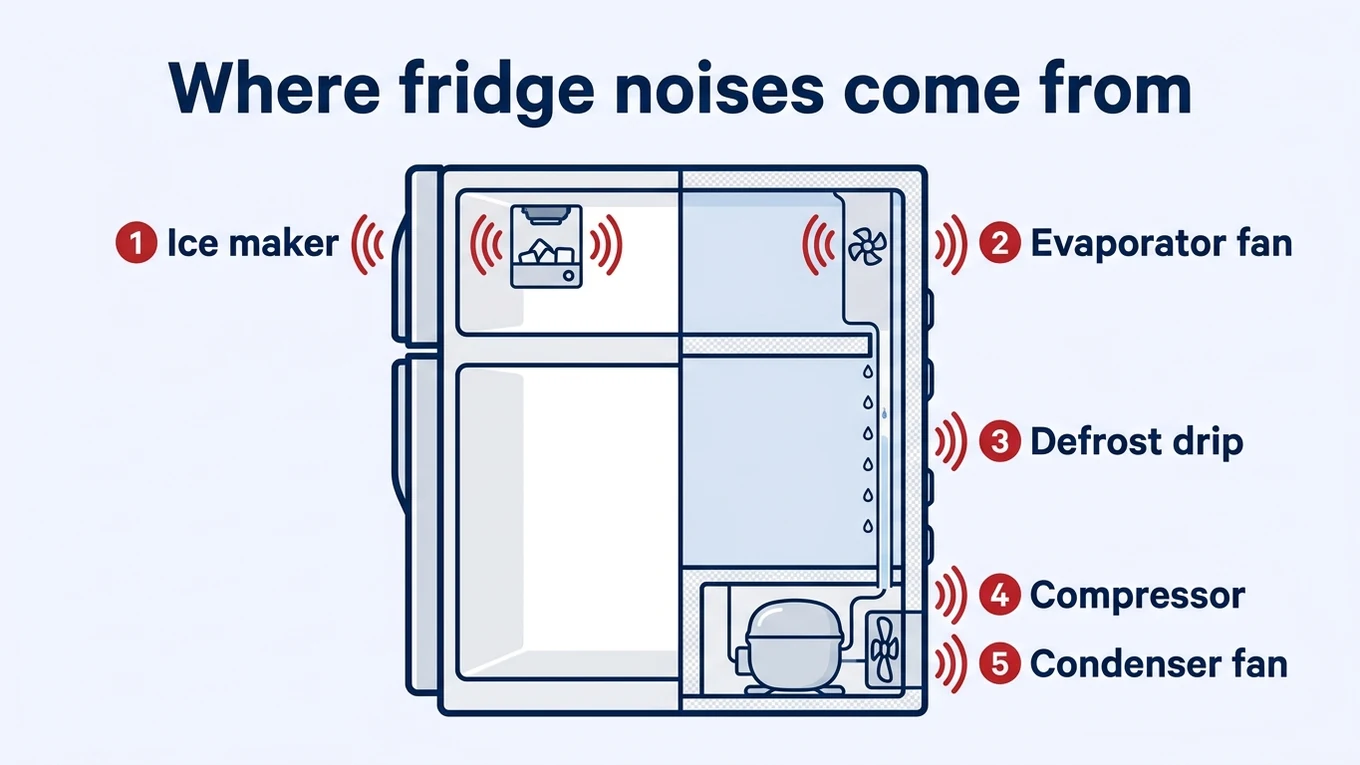
Frigidaire describes the compressor sound as a "high-pitched hum or pulsating sound" and says water dripping onto the defrost heater causes a "hissing or sizzling" sound (Frigidaire, Refrigerators Noise Guide). GE lists clicking from the defrost timer, gurgling from circulating refrigerant and chirping from the damper door as normal, and says buzzing after you use the dispenser "should not last longer than 7 seconds" (GE Appliances, refrigerator sounds).
Why is my fridge so loud all of a sudden?
A sudden change is the useful clue, because normal sounds don't appear overnight. The usual reasons, from easiest to hardest:
- It was moved or bumped. A fridge pulled out for cleaning often goes back slightly off level, and then it rattles against the cabinet or the floor.
- Something is touching it. A bottle on top, a pan wedged at the side, a box behind it, or a water line resting on the back panel all vibrate with the compressor.
- The ice maker lost its water. GE says rattling or vibrating can mean the ice maker is on but no water is supplied to it.
- Ice reached the freezer fan. A door left ajar or a weak seal lets moist air in, frost builds behind the back wall, and the fan blade starts hitting it.
- A fan motor is wearing out. Worn bearings squeal or scrape.
Safe checks to quiet a noisy fridge
Work through these in order and stop when the noise does.
Safe checks for a fridge making loud noise
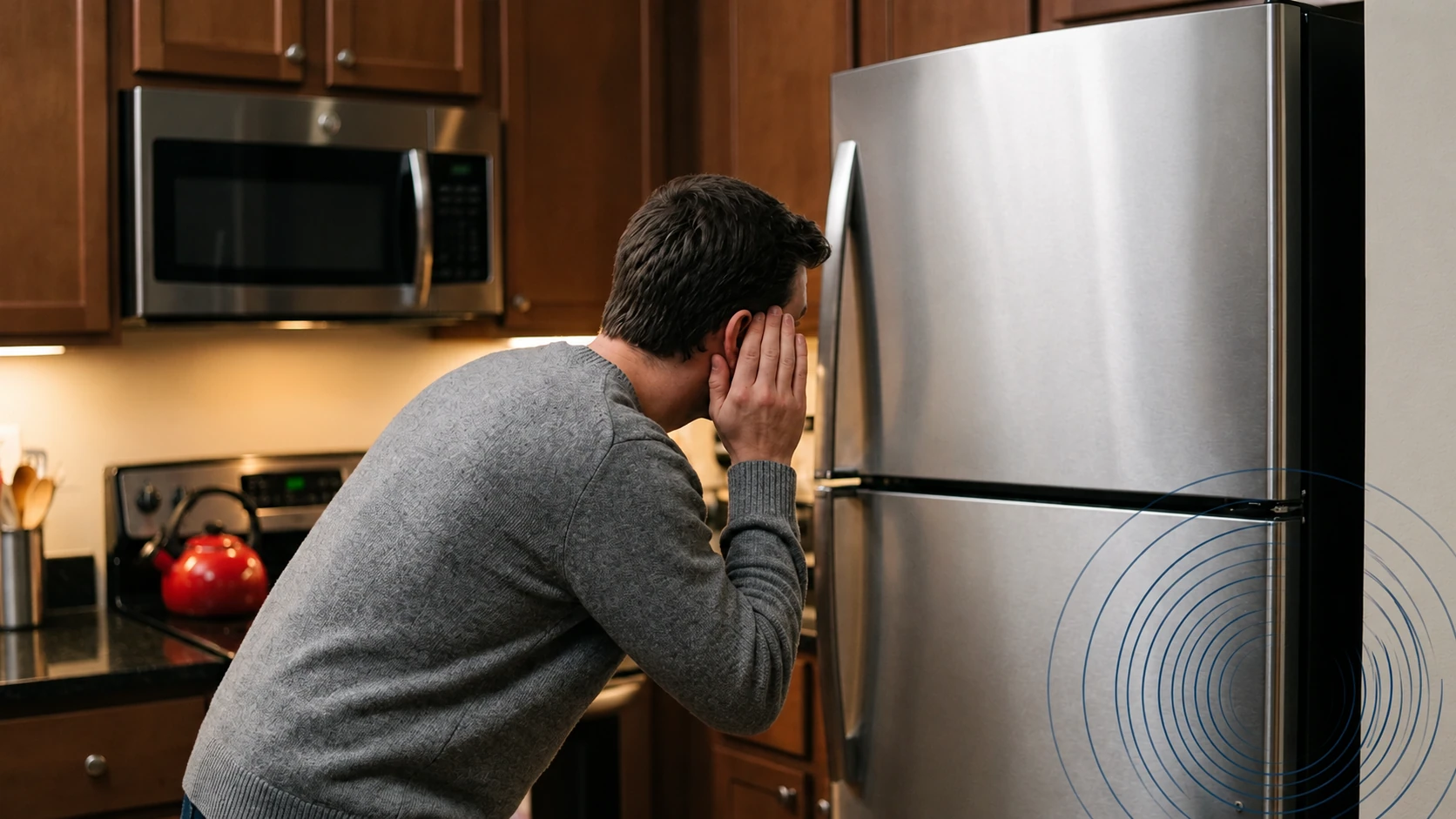
- Listen and locate. Stand by the fridge with the door shut. Is the noise in the freezer, at the bottom back, or in the door? Does it start when the fridge kicks on, when the ice maker fills, or after the door closes? Then open the freezer door. If the noise stops, the evaporator fan is the likely source, because Samsung's guide ties a noise that stops when the door opens to a fan hitting ice. Note what you hear for the technician.
- Clear the top, sides and back. Take items off the top, make sure nothing touches the sides, and move bottles that clink against shelves. Samsung suggests leaving about 2 inches of clearance on the top, sides and back, and moving the fridge about an inch if it touches the wall.
- Check it is level. LG says rattling comes from an unbalanced fridge or a floor that isn't hard and level (LG, A strange sound is heard). Adjust the leveling legs as your manual shows so the cabinet doesn't rock.
- Check the ice maker. If the ice maker is on, make sure the water is turned on to it. If your fridge has no water line, GE recommends turning the ice maker off.
- Unplug, then clean the condenser area. On models with the coil behind the bottom grille, pull the grille off and vacuum the dust with a soft brush tool. Dust makes the condenser fan and compressor run longer and louder. Keep your hands and the brush away from the fan blade.
- Defrost a grinding freezer. If the grinding comes from the freezer, move the food to a cooler, unplug the fridge, and leave the doors open until all the frost has melted. Never chip ice off the back wall: the cooling coil is right behind it.
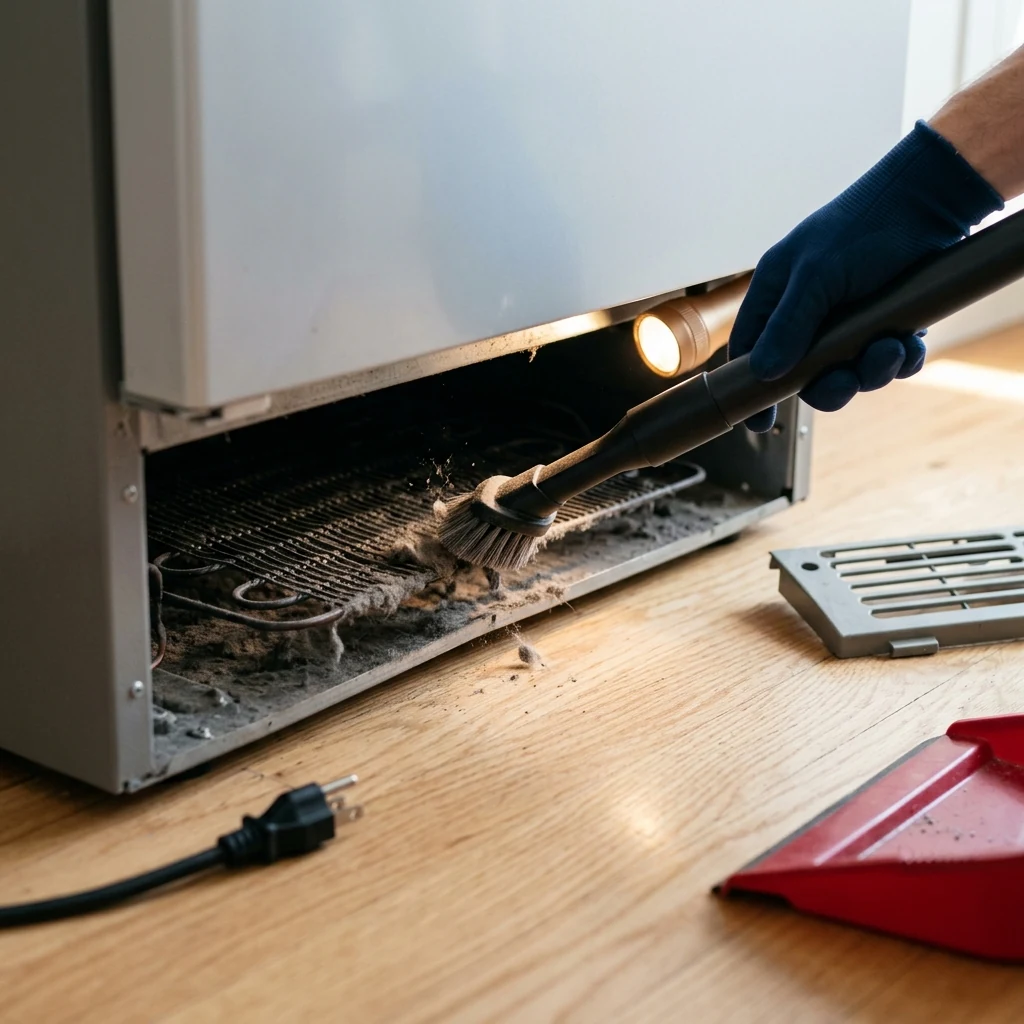
Noise gone? Plug the fridge in. After a defrost it runs hard and loud for a while, which is normal.
Loud humming, grinding and the parts behind them
When the checks don't quiet it, the noise is coming from a working part. Here is what our technicians look at, by sound.
A loud hum or buzz from the bottom back. The compressor hums whenever it runs, and LG compares start and stop sounds to "the sound that occurs when you start or stop a car engine." It runs harder and louder right after a big grocery load or a long door opening.
A hum that stays loud after the fridge has cooled down, or a hum with a warm fridge, points to the compressor or its start parts. That is technician work, and if it involves the sealed system, our technicians are EPA 608 certified for refrigerant work.
Grinding or scraping from the freezer. Ice on the evaporator fan, or a fan motor on its way out. If a defrost stops it and it returns, something keeps letting frost build: a door seal, a defrost part, or the fan itself.
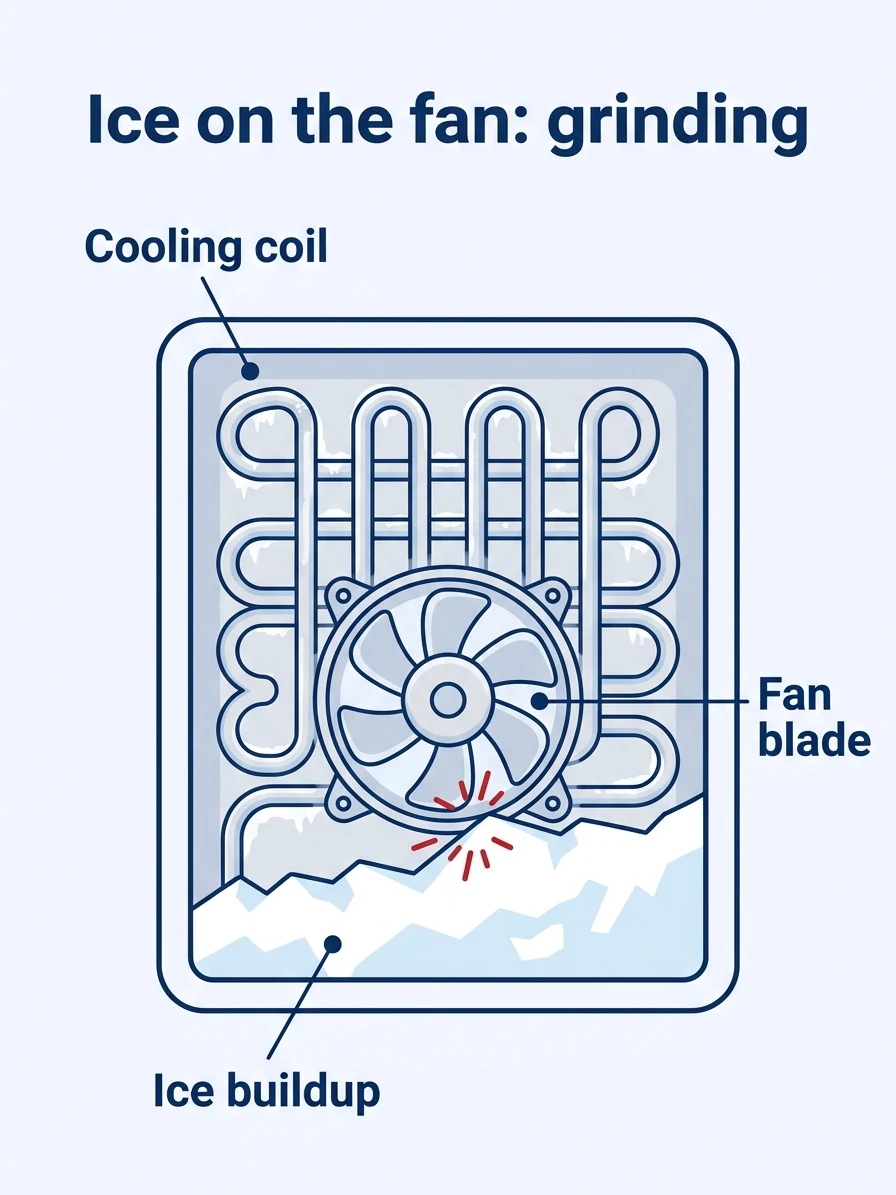
Squealing from the bottom back. The condenser fan cools the compressor. When its bearings wear, it squeals, and a dusty coil makes it work harder.
Why is my new fridge making a loud humming noise?
New fridges often run louder for the first day or two while they pull down to temperature. GE also notes that a new fridge can whistle or squeak because the door gasket seals tightly, and that this "will stop in a few days once the gasket becomes more pliable."
Check that the new fridge is level and has the clearance its manual asks for. If a new fridge stays loud after a week, call the seller or the maker while it is under warranty.
The visit starts with the service call, a fair, upfront fee that depends on your location and appliance, confirmed before we come. You get a written estimate before any work, and if you decide not to go ahead, you pay only the service call and we give you the part number.
Is a noisy fridge dangerous?
A useful test for "too loud": Samsung says ice maker or compressor noise "should never get so loud that it's interrupting conversation." If you have to raise your voice in the kitchen over the fridge, book a check.
Safety-wise, a noisy fridge is usually not dangerous. The exceptions are electrical: a burning smell, buzzing at the outlet, or a breaker that trips. Unplug the fridge if you can reach the plug safely, or switch off its breaker, and call.
The other risk is to your food. A failing fan or compressor often gets loud before it stops, so if the fridge is warming, check it with a thermometer. Hissing plus poor cooling can point to a refrigerant problem; see the signs of a refrigerant leak.
Is a loud fridge worth repairing?
A fan motor is usually a simpler repair than a compressor, and a compressor problem is a bigger decision where the age of the fridge matters. Our guide on whether to repair or replace a refrigerator walks through it, and we'll tell you straight if a repair isn't worth it.
A dusty condenser is one of the easiest noise causes to prevent. Our maintenance tune-ups include cleaning the fridge coils. If your fridge is leaking as well as loud, start with our LG refrigerator leak guide, and if an LG display shows a code, check our LG refrigerator error codes.
Frequently asked questions
Why is my fridge making a loud humming noise?
A steady hum is the compressor and fans running, and it is louder after the door has been open or after a big shop. If the hum is new, check that the fridge is level and nothing touches it, then clean the condenser area with the fridge unplugged. A hum you can hear across the house, or a hum with a warm fridge, needs a technician.
Why is my fridge so loud all of a sudden?
Sudden noise usually means something changed: the fridge was moved and isn't level, something is touching it, the ice maker lost its water supply, or ice has reached the freezer fan. Check those in that order. If the noise is a grinding or squeal that doesn't stop, a fan motor may be wearing out.
Is a noisy fridge dangerous?
Usually not. Most noise is normal operation or a loose, rattling part. It becomes a safety issue when you smell burning, hear buzzing at the outlet, or the breaker trips. Unplug it or switch off its breaker and call a technician. A loud fridge that is also warming puts your food at risk, so check the temperature.
Why is my new fridge making a loud humming noise?
A new fridge runs hard for the first day or two while it cools down, so some extra hum is normal. GE notes a new fridge can whistle or squeak until the door gasket softens, which takes a few days. Make sure it is level with the clearance its manual asks for. If it stays loud, contact the seller or maker under warranty.
Why is my fridge making a grinding noise?
Grinding while you dispense ice is normal: Samsung says the ice maker motor pushes ice forward. Grinding that happens when you aren't dispensing, or comes from the freezer wall, is usually ice hitting the evaporator fan or a worn fan motor. A full defrost quiets it for a while. If it comes back, the fan or the frost source needs a technician.
Why does my refrigerator buzz and then stop?
Usually the ice maker water valve opening to fill. GE says buzzing after you use the dispenser should not last longer than 7 seconds. No water line connected? Turn the ice maker off. A buzz that runs on, or comes with a warm fridge, points to the valve or the compressor and needs a technician.
Why is my refrigerator making noise and not cooling?
Noise plus poor cooling usually points to a fan or the compressor. An iced or failing evaporator fan stops cold air reaching the fresh food section, and a compressor that clicks without starting can't cool at all. Check the fridge is level and the condenser is clean, then call a technician, because both faults need testing.
What to do next
Name the sound first. Hums, gurgles, hisses and cracks are normal. For rattles, buzzing and grinding, clear and level the fridge, check the ice maker's water, clean the condenser area with the fridge unplugged, and defrost a grinding freezer.
If the noise is still there, or it comes with a warm fridge or a burning smell, book our in-home refrigerator repair. We're open 7 days, 8 AM to 7 PM, and same-day service is available across Aurora and 30+ nearby cities.
Sources
- Frigidaire Owner Support: Refrigerators Noise Guide: Sound sources: refrigerant boiling or gurgling in the evaporator, evaporator and condenser fan air, hissing or sizzling from water on the defrost heater, popping after defrost, ice maker clunks, water valve buzzing, compressor high-pitched hum or pulsating sound, water dripping into the drain pan during defrost
- GE Appliances Support: Normal refrigerator sounds: Normal sounds and causes: defrost timer clicking, refrigerant gurgling, drain pan drip, buzzing after dispensing no longer than 7 seconds, icemaker buzzing or rattling with no water supply (turn the water on or turn the icemaker off), whistling on a new fridge stops in a few days as the gasket softens, water hammer from high household water pressure, other sounds may need a technician
- Samsung Canada Support: Understand the noises coming from your Samsung refrigerator: Noise that stops when the door opens points to a fan hitting ice, grinding while dispensing ice is the ice maker motor, banging as ice drops, 2 inches of clearance, hinge squeak and food-grade silicone not WD-40, compressor or ice maker noise should never interrupt conversation
- LG USA Support: Noise (hissing, gurgling, cracking, clicking, rattling, thumping and humming): Plastic parts cracking as temperatures change, refrigerant and oil flow sounds, compressor and fan start-up noise that attenuates once the temperature stabilizes
- LG USA Support: A strange sound is heard: Start and stop sounds compared to a car engine, louder running while it pulls the temperature down, rattling from an unlevel or soft floor, leveling
Written by
About us
MS Appliance Repair Services
Honest Repairs, Right at Home
Rated 5 stars on Google by 190+ homeowners in the Chicago suburbs
- Open 7 days, 8 AM to 7 PM
- Same-day service available
- 5-star Google rating from 190+ reviews
- 90-day limited parts and labor warranty on qualifying repairs
- LG-authorized
Serving Aurora, Naperville, Plainfield and 30+ cities across the Chicago suburbs.
Keep reading
All articles →
Repair or Replace Refrigerator? A Technician's Rule of Thumb
Warm fridge and a repair quote? How the age, the failed part and the 50% rule decide repair or replace, with a part-by-part table and honest examples.
Signs of Freon Leak in Refrigerator: The Real Ones and the Look-Alikes
Fridge and freezer both warming while the compressor runs nonstop? The signs of a Freon leak, the look-alikes, and what to do next.
LG Refrigerator Leaking Water? Here's How to Find and Fix It
Water behind, under or inside your LG fridge? Match the spot to the cause, run LG's own safe checks, and know when to call.