




















How Long Do Microwaves Last? Lifespan and When to Replace One
The average microwave lasts about 9 years. Here is why yours may not, the signs it is failing, and how to decide between a repair and a new one.

On this page
Quick answer
How long do microwaves last? Most last 7 to 9 years. The National Association of Home Builders says about 9, and a major manufacturer says 7 to 8 with regular upkeep. Heavy use shortens that. Replace one that sparks, rusts inside or won't latch; one failed part on a built-in unit is often worth fixing.
Key takeaways
- Most microwaves last 7 to 9 years; heavy daily use shortens that.
- Slower heating, a loud hum with little heat and a loose door are the main wear signs.
- Skip any repair that costs more than half the price of a new microwave.
- Over-the-range and built-in units are often worth fixing for a single failed part.
- Call a technician for sparks, burning smells, no heat or a door that won't latch, and never open the cabinet.
The popcorn button takes two rounds now. The hum sounds louder than it used to. Or the microwave just went dark in the middle of reheating dinner. How long do microwaves last, and is yours done?
The honest answer depends on the type you own, mostly because of what a replacement takes. Replacing a countertop microwave is a carry-out job. Replacing an over-the-range unit is a mounting job. If yours is a built-in or over-the-range model, our microwave repair service can tell you whether one part is the problem or the whole unit is tired.
How long microwaves last on average
Microwave ovens last about 9 years, according to the Study of Life Expectancy of Home Components by the National Association of Home Builders and Bank of America Home Equity. That figure is based on first-owner use, and the same study says the life of a typical appliance "depends to a great extent on the use it receives."
So treat 9 years as the middle of a range, not a deadline. A microwave that warms one coffee a day can go past it. One that runs breakfast, lunch and dinner for a family of five may fall short.
The study makes a second point worth knowing: many appliances are replaced before they're worn out, because people want a new look or new features. That's a fine reason to buy a new microwave. It's just a different decision from "it's broken".
Countertop, over-the-range and built-in: why type matters
The study gives one figure for microwave ovens, whatever the type. What changes is how much it takes to replace one, and that decides whether a repair is worth it.
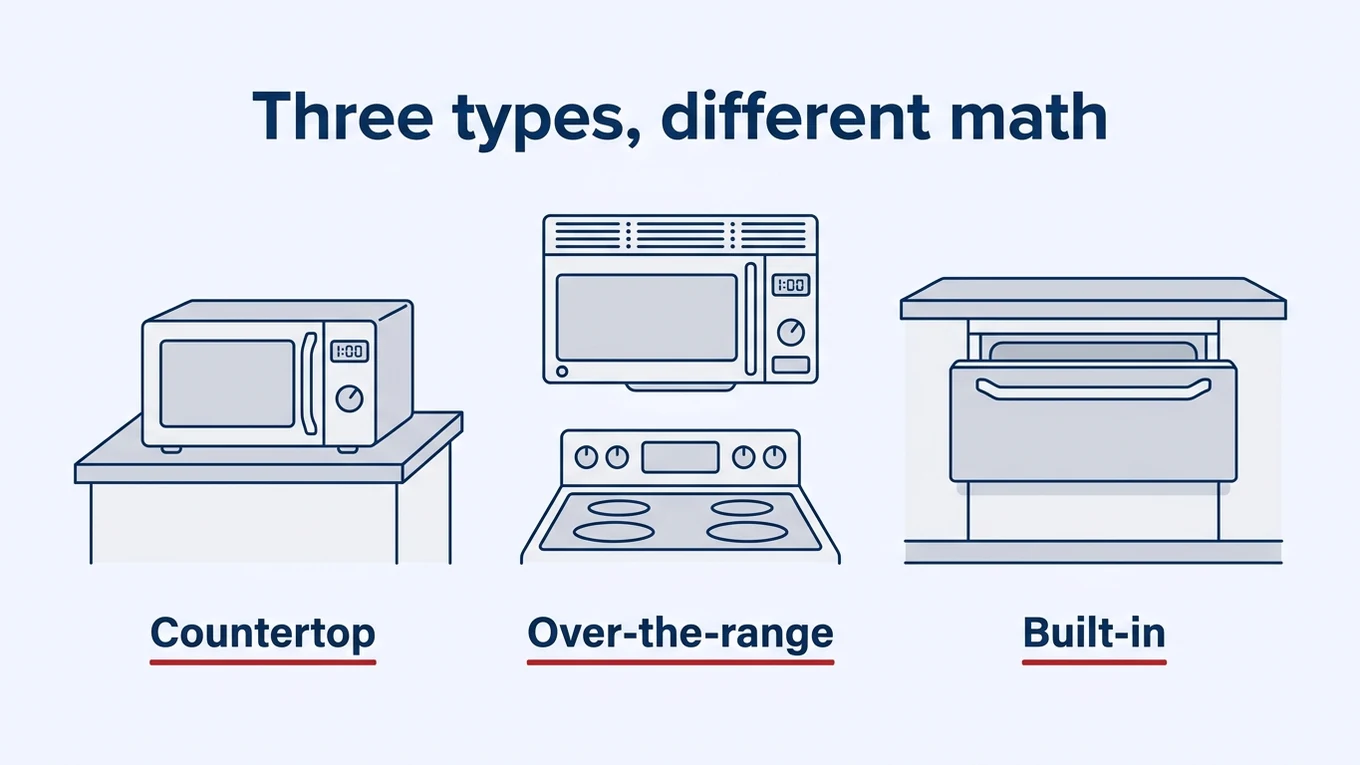
A countertop microwave is a box you unplug and carry out. When it fails past its first few years, a new one usually beats a repair. An over-the-range microwave is also the vent hood for your cooktop, bolted to the wall and the cabinet above, and replacing it means removing the old unit and mounting a new one that fits the same opening. A built-in or drawer microwave is sized to the cabinetry, so a replacement has to match the cut-out exactly.
That's why an over-the-range or built-in unit is often worth repairing when a countertop model with the same fault isn't.
| Problem | Countertop | Over-the-range | Built-in or drawer |
|---|---|---|---|
| Door switch or latch fault (won't start, stops when touched) | Repair if young | Usually repair | Usually repair |
| Keypad or touchpad dead or unresponsive | Usually replace | Often repair | Often repair |
| Runs but doesn't heat | Usually replace | Get a diagnosis | Get a diagnosis |
| Turntable stopped turning | Simple fix if young | Usually repair | Usually repair |
| Vent fan or light not working | Not applicable | Usually repair | Not applicable |
| Rust, chipped paint or sparking with no metal inside | Replace | Usually replace | Usually replace |
| Door bent, warped or seal damaged | Replace | Get a diagnosis | Get a diagnosis |
This is a guide, not a promise. The age of the unit, whether the part is still made, and the quote itself all move the line. A diagnosis gives you the real numbers before you spend anything on parts.
Signs your microwave is wearing out
Most microwaves give some warning first. These are the signs we look for, roughly in the order owners notice them.
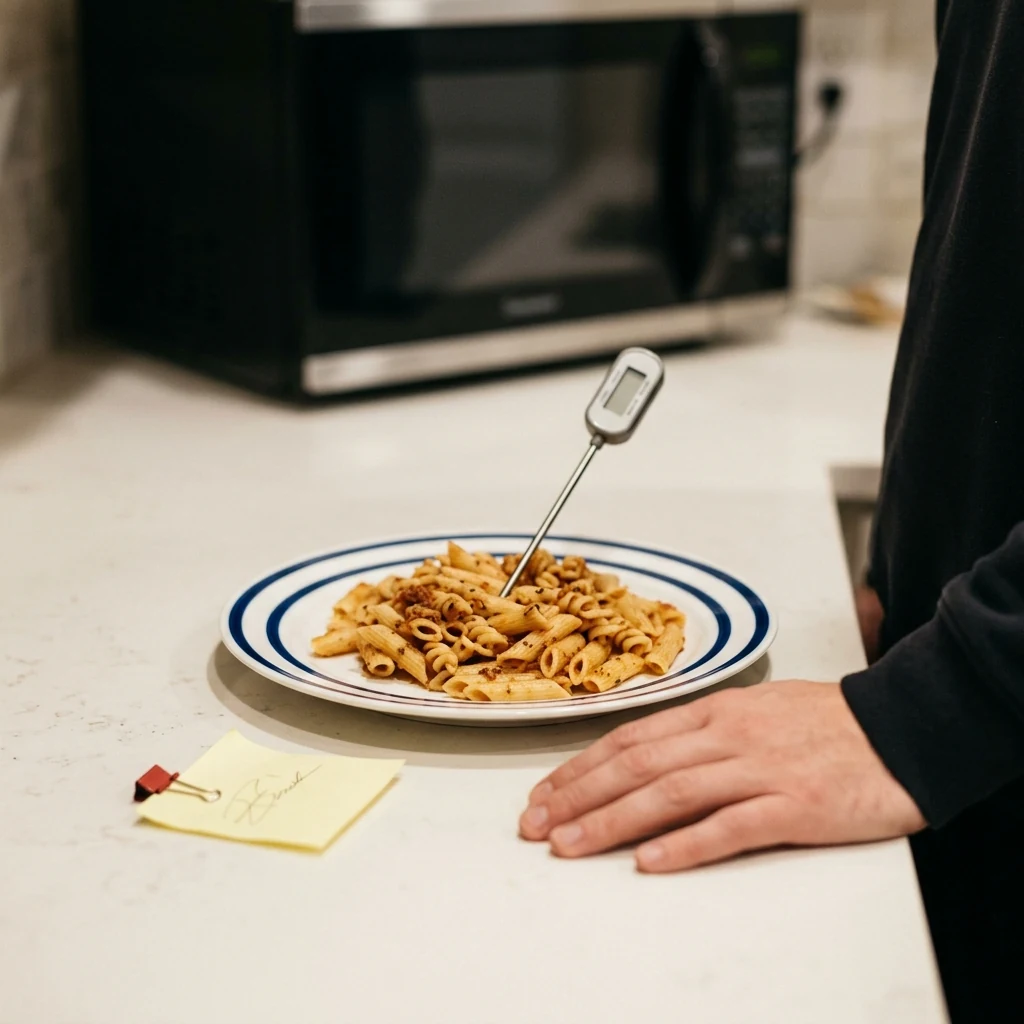
It heats more slowly. Do microwave ovens lose power over time? Many do, as the part that makes the heat ages. Here is a safe test: reheat the same plate of leftovers for the time you always use and check the middle. If it needs a second round and used to need one, the microwave has lost heating power. Skip boiling-water tests. The FDA warns that water heated alone in a clean cup can erupt when it is disturbed.
It hums loudly but barely heats. A louder buzz with cold food usually points to the high-voltage parts that make the heat. That's a technician job, not a DIY one.
The door won't latch firmly. The door switches tell the microwave it's safe to run. A worn latch, a sagging door or a cracked hinge causes stops, restarts and no-start problems.
The keypad skips or ignores presses. Membrane keypads wear out with years of the same buttons pressed.
Rust or chipped paint inside. Bare metal in the cavity can spark. Once the inside is rusting through, the microwave is near its end.
It stops mid-cycle or won't start. A blown fuse, a door switch or a control fault can all cause it, and only testing tells which.
Never open the outer cabinet of a microwave. The high-voltage capacitor inside can hold a dangerous charge even after the microwave is unplugged. The FDA also says not to operate a microwave if the door doesn't close firmly or is bent, warped or otherwise damaged, and to stop using one that keeps running with the door open.
When a microwave repair is worth it
Two rules sit behind most repair-or-replace calls. The first is a price rule. The second is age.
Consumer Reports advises to "skip any repair that costs more than half the price of a new product." It adds: "If your appliance is eight or more years old, usually it makes sense to buy a new one."
Use the half-price rule with the full cost of replacing, not just the sticker price. On a countertop microwave, a new one is a carry-out job, so the rule bites early: the same article quotes an appliance dealer who says a replacement glass tray alone can cost about as much as some new microwaves. On an over-the-range or built-in unit, replacing also means removing the old one and mounting a new one that fits the opening, and that belongs on the replace side of the scale.
Our own rule of thumb sits on top of those two. Under about 5 years old, most single-part failures are worth fixing on any type. Between about 5 and 9 years, repair over-the-range and built-in units for a single part and replace countertop units. Past about 9 years, or with rust inside, replace unless it's a built-in model that would be hard to match. When the quote lands, ask for the part and labor in writing and run the half-price test before you say yes.
If you decide not to repair it, you pay only the service call, and we give you the part number. You can also book a straight diagnosis and inspection if you just want to know where you stand before you shop.
How to make a microwave last longer
Most of what shortens a microwave's life is preventable, and none of it needs tools.

Microwave care that adds years
- Wipe splatter off the walls and ceiling after messy reheats; baked-on food can char and spark
- Keep metal, foil and dishes with metallic trim out of it
- Never run it empty; check your manual, since the FDA notes some ovens shouldn't run without food inside
- Close the door gently; slamming wears the latch and the door switches
- On over-the-range models, wash the metal grease filters every month or so
- Use the cooktop vent fan when you cook below it, so steam and heat don't build up under the unit
For a full cleaning routine, see our guide to deep cleaning your appliances. If you're leaning toward replacing, read how to check appliance energy efficiency before you buy, our energy-saving tips for home appliances, and how to pick a trustworthy appliance service if you decide on a repair. Our maintenance tune-ups include cleaning, too.
Frequently asked questions
How long do microwave ovens last?
Most last 7 to 9 years. A home components study by the National Association of Home Builders says about 9, and one manufacturer says 7 to 8 with regular upkeep. Light use can stretch that, while a microwave that runs several meals a day for a big family may wear out sooner. The type of microwave mostly changes whether a repair is worth it.
Do microwave ovens lose power over time?
Many do. As the parts that make the heat age, a microwave can take longer to heat the same food. A simple check: reheat the same plate of leftovers for your usual time and test the middle. If it needs a second round, the microwave has lost heating power, and age is a common reason. Avoid boiling-water tests, because the FDA warns that water can erupt when disturbed.
How long should you keep a microwave before replacing it?
Keep it as long as it heats well, the door latches firmly and the inside is clean and rust-free. Age alone isn't a reason. Replace it when it sparks, rusts inside, has a damaged door, or needs a major repair past about 9 years. Over-the-range and built-in models are often worth one more repair because replacing them is a bigger job.
Why does a microwave suddenly stop working?
The usual causes are a blown internal fuse, a failed door switch or a control fault, and sometimes the house breaker has simply tripped. Check the breaker and the outlet first. If the microwave is dead or stops whenever the door is touched, the fault is inside the cabinet, which holds a dangerous charge. That part needs a technician.
Is it safe to use a microwave that sparks?
No. Stop using it and unplug it. Sparking usually comes from metal inside, like foil or a dish with metallic trim, or from bare metal where the cavity paint has chipped. If removing a metal item doesn't stop it, or you see rust spots inside, have the microwave checked and plan on replacing it if the cavity is damaged.
Are over-the-range microwaves worth repairing?
Often, yes. An over-the-range unit doubles as the vent hood and is mounted to the wall and cabinet, so replacing it is a bigger job than swapping a countertop model. Door switches, keypads, vent fans and lights are common, worthwhile repairs. A unit past about 9 years with no heat or rust inside is usually better replaced.
What to do next
Check the age first: your purchase receipt or the model label will tell you. Then run the leftovers test and look for rust inside. A young microwave with one fault is worth fixing; an old one that sparks or rusts isn't.
If yours is an over-the-range or built-in model and you're not sure, book a visit through our microwave repair page. We'll find what failed and tell you straight whether to repair it or replace it.
Sources
- NAHB and Bank of America Home Equity: Study of Life Expectancy of Home Components: Microwave ovens about 9 years of life (first-owner use); appliance life depends to a great extent on use; appliances often replaced before they wear out because of styling and technology changes
- NBC Chicago: When it Comes to Appliances, Better to Fix or Replace?: Consumer Reports rules of thumb as quoted: skip a repair that costs more than half the price of a new product; at eight or more years old it usually makes sense to buy new; a dealer's note that a microwave glass tray can cost about as much as some new microwaves
- Danby: How long do microwaves last?: A manufacturer's figure of 7 to 8 years, or longer, with regular maintenance; monthly grease filter cleaning on over-the-range models
- U.S. Food and Drug Administration: Microwave Ovens: Do not operate a microwave whose door does not close firmly or is bent, warped or damaged; stop using one that runs with the door open; some ovens should not run empty; do not heat water longer than the manufacturer recommends (it can erupt when disturbed)
Written by
About us
MS Appliance Repair Services
Honest Repairs, Right at Home
Rated 5 stars on Google by 190+ homeowners in the Chicago suburbs
- Open 7 days, 8 AM to 7 PM
- Same-day service available
- 5-star Google rating from 190+ reviews
- 90-day limited parts and labor warranty on qualifying repairs
- LG-authorized
Serving Aurora, Naperville, Plainfield and 30+ cities across the Chicago suburbs.
Keep reading
All articles →How to Deep Clean Appliances and Keep Them Looking New
Room-by-room cleaning for the appliances you use every day, microwave included.
How to Check Appliance Energy Efficiency
Reading ENERGY STAR and EnergyGuide labels before you replace an appliance.
How to Pick a Trustworthy Appliance Repair Service
The questions to ask before you let anyone work on your appliance.